
In today’s world, being a great chef isn’t enough. Everyone is doing the same things, like using microgreens and buying local. So, what makes you stand out?
Imagine making a family’s mealtime worry-free. For parents with food allergies, eating out is a big risk. Your cooking skills are important, but keeping things clean is even more so.
This is where your branding journey starts. We’re not just talking about “dairy-free” anymore. It’s about building a safe and tasty brand. It’s about being trusted in a world where safety is key.
This guide is not about recipes. It’s about becoming a trusted expert. We’ll show you how to make your kitchen safe and your food amazing. You’ll become the go-to chef for parents everywhere. Are you ready to be the one everyone turns to?
Allergy Specialization Strategy: Choosing Your Niche Within Food Sensitivities
Kathlena, The Allergy Chef, doesn’t just cook; she navigates a personal map of over 200 food landmines. Her platform, RAISE, was built on a simple, powerful truth: inclusivity in the restricted diet world means understanding the connections between allergies, intolerances, and Celiac. It also means you can’t be the universal expert. Trying to be everything to every allergic diner is the culinary equivalent of a identity crisis.
The smart play? Specialization. This isn’t about limiting your market; it’s about sharpening your spear. In an era of infinite choice, specificity is credibility. Are you the wizard of top-9-free wizardry, like Kathlena, who turned a personal battle into a definitive professional credential? Or do you master the gluten-free, casein-free diet for autism families, understanding the nuanced science behind it?
Perhaps your niche is crafting nut-free celebrations that don’t taste like a punishment. This strategic focus allows you to go deep. You move beyond basic avoidance into the realm of cross-reactive proteins, the hidden sources of soy lecithin, and the emotional weight of a first safe birthday cake. Your niche becomes your narrative. It’s the difference between saying “I cook for allergies” and “I rebuild the joy of eating for celiac teens.” One is a service; the other is a story people pay to be part of.
Consider these possible focal points:
- The Top-9 Maestro: Mastering the FDA’s major allergens is a massive, in-demand skill set. It’s a clear, communicable specialty.
- The Medical Diet Specialist: Focusing on diets for EoE, Crohn’s, or autism requires deep collaboration with healthcare pros and serious recipe R&D.
- The Celebration Safeguard: Becoming the go-to food allergy chef for weddings, birthdays, and bar mitzvahs where the stakes (and emotions) are sky-high.
Choosing your lane isn’t a concession. It’s a declaration of expertise. It tells a terrified parent, “I speak your specific dialect of dietary fear.” That’s a story worth telling, and a service worth its weight in safe, delicious gold.
Safety Protocol Branding: Highlighting Cross-Contamination Prevention Measures
Branding your safety measures is like turning paranoia into a marketable asset for anxious families. In the world of food allergies, your allergy-safe kitchen practices aren’t just a backend operation. They are your front-line marketing, your unique selling proposition wrapped in a pair of food-safe gloves.
Cross-contamination isn’t a maybe. It’s a constant, silent threat. It happens through shared surfaces, a rogue utensil, communal fryer oil, or even airborne particles. For a client, spotting a single shared cutting board is an instant deal-breaker. Your culinary genius becomes irrelevant faster than you can say “contaminated toast.”
So, how do you brand vigilance? You document your process like a crime scene investigator. Don’t just do it; show it.
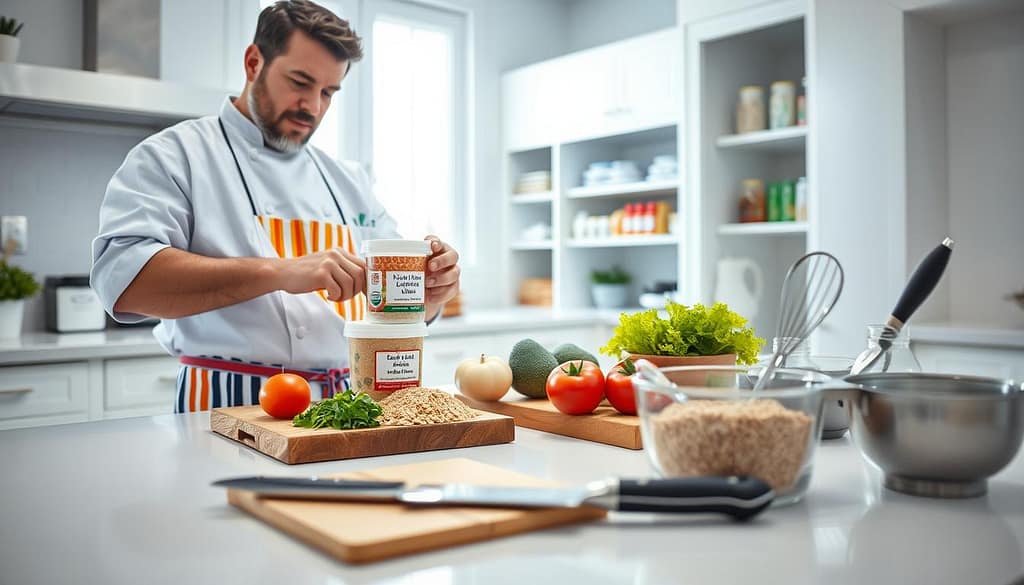
Start with the zone. Create an explicit “allergy-friendly zone” in your workspace. This means dedicated, often color-coded equipment. Think a bright red pan for dairy-free work only, a green cutting board for nut-free prep, and a separate toaster that has never seen a crumb of wheat. This visual coding isn’t just practical. It’s a spectacle of safety a client can immediately understand and trust.
Your cleaning protocol must be legendary. A simple wipe-down is amateur hour. We’re talking about a full “kitchen reset” before every allergy-specific client engagement. This is a triple-wash, sanitize-every-surface, blow-the-dust-out-of-the-vents level of clean. Flaunt this ritual. Make a short video showing your sealed-ingredient sourcing and your militant wash cycle. In an era where “may contain” labels are a terrifying roulette wheel, your explicit, obsessive cleanliness is pure currency.
Then there’s the gospel of label reading. You must read labels every single time, even on ingredients you’ve used for years. Formulations change. Suppliers switch. This non-negotiable habit should be a highlighted part of your client onboarding. It demonstrates a level of diligence that goes beyond the kitchen and into the supply chain itself.
For the analytically minded, consider adopting a modified HACCP (Hazard Analysis Critical Control Point) plan for your home kitchen. It sounds intense, but it’s simply a structured way to identify and control hazards. Mapping this out for clients transforms anxiety into assurance. You’re not just selling a meal; you’re selling a system. You’re selling peace of mind, which, in this market, carries a much higher margin than saffron.
| Aspect | Standard Kitchen Practice | Allergy-Safe Kitchen Protocol |
|---|---|---|
| Equipment | Shared utensils and cookware. | Dedicated, color-coded sets for major allergens (e.g., red for dairy-free). |
| Cleaning | General wipe-down between tasks. | Full “kitchen reset” sanitization before allergy-specific prep. |
| Ingredient Storage | All items stored together. | Sealed, labeled, and segregated storage for allergy-safe ingredients. |
| Label Verification | Checked once upon purchase. | Read every single time, with a focus on “may contain” warnings. |
| Staff/Training Mindset | “Be careful.” | Structured protocol (e.g., HACCP principles) and documented checklists. |
This table isn’t just a list. It’s a manifesto. It clearly shows the chasm between common practice and your professional protocol. It turns abstract fear into concrete, manageable steps.
Ultimately, your safety branding performs a culinary version of the Hippocratic Oath: first, do no harm. By making your paranoia public, you convert a parent’s worst-case scenario into a non-issue. You’re not a chef hiding your process. You’re a safety engineer who also makes a mean risotto. That’s the brand that gets remembered, referred, and revered.
Certification Showcase: Food Allergy Training and Specialized Education
The internet is full of ‘gluten-free’ experts, but many lack real knowledge. For those with celiac disease or severe peanut allergies, this is scary. Certification fills this gap, proving you’ve done your homework.
Anyone can slap a label on food. But a gluten-free personal chef knows the science behind it. They can explain why certain oats are safe, making you a trusted source.
Kathlena is a great example. She used her chef skills to create allergen-free French pastries. She didn’t just follow rules; she changed them. This shows the power of real knowledge.
But chefs also learn from experience. This is their real education, gained from helping others and navigating food challenges.
Your education section should highlight your certifications. Include your ServSafe Allergens certificate and FARE training completion. These show you’re qualified.
Then, share your experiences. This mix shows you know both the science and the emotional side of food. It’s key for building your personal chef brand online.
Certifications prove you know the rules. Your experiences show you understand why they’re important. Together, they build trust.
Emergency Preparedness: EpiPen Training and Allergy Action Plan Integration
Going from chef to first responder might seem big, but in nut-free meal planning, it’s key. The first step in a food allergy crisis isn’t just my prep work. It’s a doctor’s diagnosis and a detailed plan.
My job is to follow that plan without any mistakes. This is where your brand goes from comforting to life-saving. Always hope for the best but plan for the worst.
Being CPR and EpiPen trained is a must. I always review a client’s emergency plan before cooking. It’s not about being morbid; it’s about being responsible.
It’s like adding a new team member to your healthcare team. Talking about EpiPen expiry dates shows I understand the risks. This builds trust and shows I’m serious about safety.
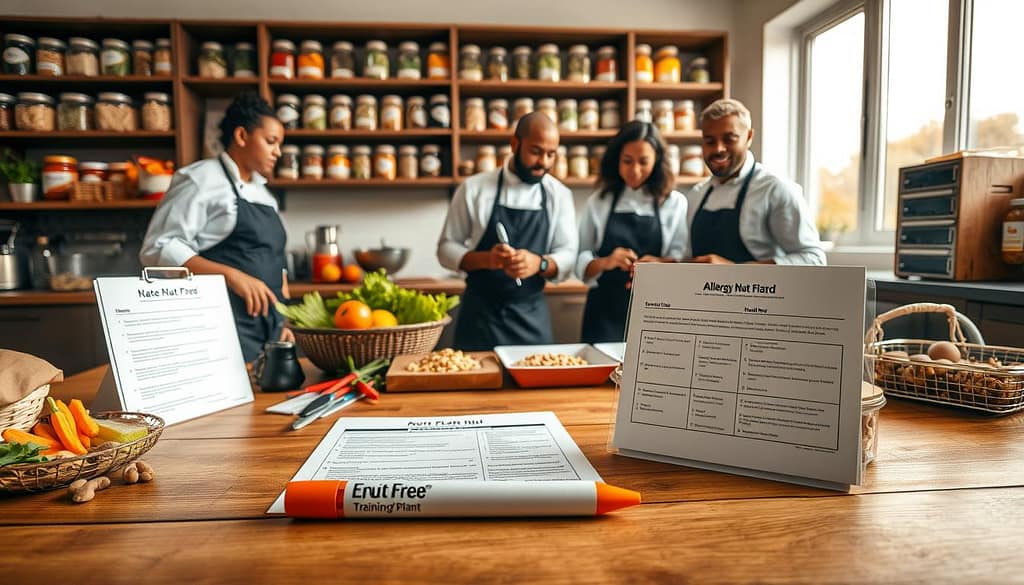
In the world of food allergies, I’m not just setting up the scene. I’m also ready to act as a first responder. This isn’t about scaring people. It’s about being smart and safe.
So, what does this look like in action? It’s mixing cooking skills with medical knowledge. The table below shows how we move from just cooking to being ready for emergencies.
| Service Aspect | Traditional Chef Service | Allergy-Prepared Chef Service |
|---|---|---|
| Medical Training | Basic food safety certification | CPR, First Aid, & EpiPen administration certified |
| Plan Review Process | May review dietary preferences | Requires and analyzes the formal Allergy & Anaphylaxis Emergency Plan |
| Ingredient Verification | Relies on standard labels | Direct supplier vetting for cross-contact risks, central to nut-free meal planning |
| Emergency Response | Calls 911 | Initiates first-response actions per plan while directing 911 call |
| Client Confidence Level | Confidence in taste | Confidence in holistic safety and crisis management |
This table shows more than just a comparison. It shows the value of being ready for emergencies. Families with severe allergies are buying peace of mind.
Discussing EpiPens should be as easy as talking about cooking techniques. By being prepared, you build a brand that’s safe and reliable. This is how you become the trusted chef.
Ingredient Sourcing Transparency: Highlighting Trusted Suppliers and Verification Processes
Think of your ingredient sourcing as a detective story, where every supplier is a character vetted for safety. In the world of allergen-free cooking, the real twist isn’t in the recipe. It’s in where the ingredients come from. Parents today are not just scanning menus. They’re diving deep into the fine print on food labels, just like a conspiracy theorist.
“May contain” statements are like cliffhangers in the food world. They create suspense, but it’s the bad kind. The key is to read every label, every time. But what if you could follow the ingredient back to the factory floor?
We’ve moved past the artisanal, localvore era. Today, the most compelling food story is one of forensic sourcing. Your brand’s story must trace the supply chain like a detective following a lead. Do you have a dedicated account with a flour mill that operates a gluten-free, nut-free dedicated facility? Can you trace your vanilla extract back to a plant that has never processed a single soybean?
This is where allergen-free cooking becomes exciting. It’s not just about substituting ingredients; it’s about investigation. Your transparency is a direct counter to the opaque world of industrial food production. You’re building a case for safety, not just assembling a meal.
So, who are your sources? Show off your relationships with suppliers who truly get the stakes. Feature them on your blog or social media. Share the PDFs of their allergen statements and facility audits. This turns every dinner into a curated exhibit of verified safety. You are no longer just a cook. You are a curator, a quality assurance officer, and a trusted guide.
This addresses the core parental anxiety head-on: “What’s *really* in this?” Your answer isn’t a vague reassurance. It’s a documented, verifiable trail of custody. It’s proof.
| Verification Aspect | Basic Supplier | Trusted Partner | Forensic-Level Source |
|---|---|---|---|
| Dedicated Facility Certification | May have shared lines | Dedicated lines for top allergens | Entire facility is allergen-specific (e.g., gluten-free, nut-free) |
| Allergen Statement Availability | Generic statement upon request | Detailed, per-product statement readily available | Publicly posts third-party audit reports and full ingredient dossiers |
| Direct Manufacturer Contact Policy | Contact through distributor only | Can speak to a quality assurance manager | Provides direct line to production head for real-time verification |
| Traceability Documentation | Lot numbers on packaging | Full batch history available | Origin documentation for every raw material component |
| Regular Third-Party Audits | Internal audits only | Annual third-party food safety audit | Bi-annual, unannounced audits for allergen controls |
How do you make this happen? Start by contacting manufacturers directly. If a label is unclear, pick up the phone. A five-minute conversation with a quality control manager is worth more than a thousand assumptions. Document these conversations. Build a supplier dossier.
Then, share the journey. A post about your single-origin, soy-free cocoa powder isn’t just food porn. It’s a security briefing. It tells clients you’ve done the legwork so they don’t have to. This level of ingredient sourcing transparency doesn’t just build trust; it builds a fortress of it.
In the end, your curated supply chain is your brand’s backbone. It transforms anxiety into confidence. It turns a meal into a masterpiece of verified security. That’s the true art of modern, responsible allergen-free cooking.
Recipe Adaptation Expertise: Showcasing Successful Allergen Substitutions
Creating a creamy sauce without milk is a real challenge. It’s where a regular cook and a food allergy chef differ. It’s like cooking magic.
Every substitution is a fun puzzle to solve. It’s about finding creative solutions for safe, tasty meals. For families with allergies, this skill makes mealtime exciting.
Your recipe collection should show “before and after” dishes. This visual proof is very powerful. It proves you can make delicious food without common allergens.
The secret is in the science. For example, aquafaba can replace egg whites for meringues. Xanthan gum helps gluten-free baking by adding structure.
Adapting recipes teaches families about food science. It’s like a mini lesson, like in I’m the Chef Too! You’re not just cooking; you’re teaching.
Here’s a quick guide to common swaps in allergy-friendly cooking:
| Major Allergen | Common Substitute | Best Used For | Pro Tip |
|---|---|---|---|
| Egg (binding) | Flax Egg (1 tbsp ground flax + 3 tbsp water) | Brownies, muffins, quick breads | Let it gel for 5 minutes. It adds a nutty flavor. |
| Dairy Milk | Oat Milk or Pea Protein Milk | Sauces, baking, cereals | Oat milk creams beautifully. Pea milk is high-protein. |
| Peanut Butter | Sunflower Seed Butter | Sandwiches, cookies, sauces | It can turn baked goods greenish—a harmless chemical reaction! |
| Wheat Flour | Gluten-Free Flour Blend (with xanthan gum) | General baking | Don’t sub 1:1 with single flours like almond. Blends work better. |
| Tree Nuts (for cream) | Blended Sunflower Seeds or Oats | Cheese sauces, creamy soups | Soak seeds/oats first for ultimate smoothness. |
This table is just a starting point. A food allergy chef knows when to follow rules and when to break them. Can you make a béchamel with sunflower seed roux? Or a creamy soup with cashew base?
This is the key shift. Food allergy cooking is about innovation. It shows that safe food can be the most exciting. This skill builds trust and makes you a family’s go-to chef.
Support Group Connections: Building Relationships with Allergy Parent Communities
Food allergies can make you feel like you’re on your own. As a chef who cooks without allergens, joining support groups changes everything. You become a key resource for others.
It’s not just about finding clients. You become a trusted advisor. Kathlena’s RAISE platform aimed to create a community where everyone has the help they need. Your role is to add the culinary piece to that puzzle.
These groups are close-knit and wary of newcomers. You earn trust by being useful, not by promoting yourself. It’s about sharing your knowledge freely to build your reputation.
To avoid being seen as spam, start by giving, not selling.
- Offer a Free Q&A: Help out at a local FARE chapter or online group. Share your knowledge on safe cooking and baking. Your expertise is the gift.
- Sponsor a “Safe Snack” Drive: Organize a meeting where all snacks are safe. It shows you care about their well-being, not just making a sale.
- Share Content as Tools: Post recipes and guides that help, not just promote. Say, “Here’s how I solved this problem for you.”
Building trust in these online communities is priceless. When you act genuinely, you become part of the group. You’re not just a chef; you’re a fellow traveler in the journey of food allergies.
Your work in allergen-free cooking is more than just food. It’s about giving parents peace of mind. That’s the kind of connection that turns your kitchen into a safe haven.
Medical Professional Network: Collaborating with Pediatric Allergists and Dietitians
Getting a doctor’s referral is the best way for a chef to win over allergic families. A Yelp review is just an opinion. But a doctor’s recommendation is a seal of approval. It moves you from the crowded online world to the trusted world of healthcare.
Why is this important? Parents first turn to their allergist after a new diagnosis. Their advice is the gold standard. Your job as a gluten-free personal chef is to support their care with delicious food.
Creating a meal plan that kids will love is your challenge. It’s where the science of diet meets the art of cooking. You’re not just cooking; you’re making a treatment plan tasty and fun.
To build your network, don’t wait for doctors to find you. Be proactive. Offer to help with meal plans for special diets. Share your ideas with local clinics and dietitians. Show them you’re a problem-solver, not just a chef.
Dietitians are your allies. They create the diet plan; you make it real. When a dietitian can say, “I know a chef who can execute this,” you’ve done something special. You’ve become the tasty solution to their advice.
This teamwork creates a cycle of referrals. Happy families tell their doctors about you. Doctors then recommend you to others. Your reputation grows within the healthcare world.
| Common Medical Dietary Protocol | Family Challenge | Chef’s Culinary Execution Solution | Outcome for Medical Partner |
|---|---|---|---|
| Top 8 Allergen Elimination | Extreme dietary restriction leading to food boredom and nutrient gaps. | Rotating, flavor-forward menu using diverse alternative grains, seeds, and proteins. | Improved patient adherence to the medical protocol, easing follow-up consultations. |
| Gluten-Free for Celiac Disease | Fear of cross-contact and lack of safe, appealing options. | Dedicated kitchen protocols and creative, whole-food based meals that go beyond packaged substitutes. | Confidence in referring families to a vetted, safety-obsessed gluten-free personal chef. |
| Eosinophilic Esophagitis (EoE) Elimination Diet | Overwhelmingly restrictive multi-phase diet causing severe family stress. | Phased meal planning that aligns with reintroduction schedules, maintaining palatability at each stage. | A tangible resource to support a challenging treatment plan, improving quality of life metrics. |
| Food Protein-Induced Enterocolitis Syndrome (FPIES) | Identifying and sourcing safe, novel proteins without triggering a reaction. | Expert sourcing and preparation of single-ingredient, minimally processed novel proteins (e.g., quinoa, ostrich). | A trusted partner to handle the complex “food as medicine” logistics, allowing focus on diagnosis and monitoring. |
Getting a doctor’s recommendation is more valuable than any Michelin star. By working with local allergy care, you become more than a chef. You become a key part of the solution.
Success Metrics: Measuring Family Confidence and Quality of Life Improvements
Forget the standard Yelp review. In this line of work, your five-star rating is a child asking for seconds of a dessert they were told they’d never eat. The real metric isn’t a covered dish; it’s an uncovered smile. How do you measure the success of your nut-free meal planning? You track the deep sigh of relief from a parent who feels safe at dinner.
Your case studies should document these emotional victories. A testimonial about a stress-free Thanksgiving dinner is priceless. It shows your allergy-safe kitchen practices create a safe space for normal life.
You’re not just a chef. You’re an architect of confidence. Your success is in the independence and joy you bring to families. When a kid tries a “forbidden” food safely, that’s your KPI. That’s the business you’re really in: restoring joy, one delicious bite at a time.