
Guessing your Personal Chef Pricing is like throwing spaghetti at the wall. It might stick, but you’ll end up with a mess. This mess can lead to burnout and financial trouble.
You can’t build a soufflé without a plan. It will always fall. Your business needs a solid framework for success. This section is your guide to making money.
We’re focusing on the numbers, not just the love for food. I’ll show you how to manage your workload. How many clients can you handle before you start to hate your kitchen?
We’ll look at five key costs that many chefs ignore: food, labor, overhead, travel, and rentals. This isn’t just about numbers. It’s about setting a financial foundation that you can’t ignore.
This is your plan to turn your cooking into a lasting business. Your profit margin is the most important ingredient.
Market Research & Competitive Analysis
Market research in the chef world is not about spying on neighbors. It’s a strategic mission to understand the whole market. You’re not just looking at the chef next door. You’re studying the entire market, from fancy caterers to meal kits.
First, you need to know what you sell. Are you a personal chef or a caterer? This choice is key to your pricing strategy. A personal chef brings the restaurant to your home. A caterer handles big events from a commercial kitchen. Mixing these roles can lead to underpricing.
| Service Model | Primary Venue | Production Style | Service Style | Typical Pricing Structure |
|---|---|---|---|---|
| Personal Chef | Client’s Home Kitchen | Cook-Serve (or Cook-Chill) | Intimate, Interactive, Customized | Per meal, per package, hourly + groceries |
| Caterer | Commercial Kitchen | Mass Production & Transport | Event-Focused, Buffet/Plated Service | Per person, per event flat fee |
After deciding your role, define your services with great detail. Are you making meals for busy families? That’s a volume game. Or maybe you offer private dinners? That’s a show. Each service has its own price and attracts different clients.
Your pricing should match your service. For meal prep, charge per meal. For events, use a package price. For small jobs, have a minimum fee. The goal is to keep things simple and clear.
Handling grocery costs is key. You can charge a markup or a flat fee for shopping. This makes your costs clear to clients. Also, have clear payment rules to keep things professional.
This research is not about copying others. It’s about finding your unique spot in the market. Understanding the big picture is vital, as shown in an industry analysis of personal chef services. This way, you can stand out and be seen as a valuable brand. You’re not just setting a price; you’re claiming your space.
Hourly vs Event-Based Pricing Models
The hourly rate model is a financial paradox. It makes efficiency your worst enemy. You start slow, billing for every minute. Then, you get better, but your pay goes down if you stick to hourly rates.
This is a personal finance nightmare. Early on, a full cook session took five hours. Now, I can do the same in half the time. If I stayed on the clock, my skill would have halved my income. It’s a Dickensian twist for freelancers.
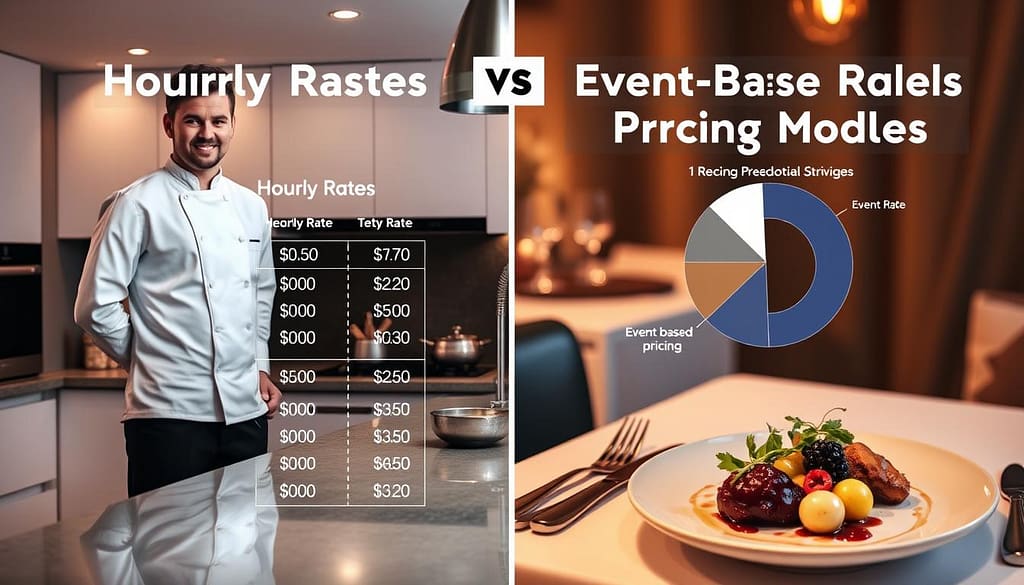
Hourly billing also changes how you relate to clients. It focuses on the clock, not the value of the outcome. Clients question every 15-minute block, not the amazing dinner you created. You’re seen as a metered taxi, not a partner in their success.
Event-based pricing is a game-changer. It’s not just slapping a flat fee on a service. It’s about pricing the result, the experience, and the stress you remove from clients. We use “capacity math.”
Capacity math calculates costs and profit per event, not per hour. Ask yourself:
- What are my fixed costs for this type of event?
- What is the market value of the experience I’m creating?
- How many of these can I realistically deliver per month?
This approach aligns your price with your business. You get paid for the magic, not the minutes.
Let’s make the contrast clear. The table below shows the main differences between these two pricing philosophies.
| Pricing Model | How It Works | Client Focus | Your Incentive |
|---|---|---|---|
| Hourly Rates | Price = Time Spent x Rate | Clock-watching, cost control | Work slower, bill more hours |
| Event-Based | Price = Value of Outcome + Costs | Quality of experience, results | Work smarter, deliver exceptional value |
| Value-Based | Price = Client’s Perceived Worth | Transformation, problem-solving | Deeply understand client needs, maximize impact |
See the difference? Hourly hourly rates make you and your client enemies. Event-based and value-based models make you allies. You win when they win. Your goal is to create unforgettable outcomes that justify their price.
So, ditch the timesheet mentality. Think in terms of events, projects, and transformations. Quote the dinner party, not the dicing. Price the wedding brunch, not the whisking. Your bank account—and your client’s satisfaction—will thank you for it.
Premium Service Pricing Strategies
Going from serving meals to creating experiences is more than just about money. It’s about the value people see. Tiered pricing is your best tool here. It’s not about charging too much. It’s about making clients feel special for paying.
The classic trio of Bronze, Silver, and Gold is more than a sales trick. It’s a psychological play. You offer a clear choice, making a big decision easier. The Bronze is solid but basic. The Gold is all-inclusive and stunning. The Silver, in the middle, is the irresistible default.
The Silver tier is like the center balcony seat. It’s not too cheap or too fancy. It’s just right.
Your package design sets the tone for the event. Family-style service is friendly, while plated service is fancy. Your prices should show the difference in effort and event costs.
| Service Style | Average Cost Per Guest | Labor Intensity | Client Perception |
|---|---|---|---|
| Family-Style | $$ (Lower) | Moderate | Warm, communal, interactive |
| Plated Service | $$$ (Higher) | High | Elegant, luxurious, precise |
Add-ons are where you really make money. They turn a service into a special journey. Think of them as value multipliers:
- Wine Pairings: Not just a bottle, but a sommelier’s story with each course.
- Specialty Decor: Thematic elements that turn a venue into another world.
- Additional Staff: Dedicated attendants for seamless, invisible service.
- Interactive Components: Chef’s tables, mixology stations, live cooking demos.
For your top clients, who value exclusivity, use dynamic pricing. This is strategic value capture. For example, increasing your Full-Service Daily Meals package from $4,500 to $5,300 by 2030 is not just inflation. It’s recognizing the high value of your expertise for demanding events.
You’re not just selling a meal. You’re selling a memory. And memories are worth more.
Seasonal Pricing Adjustments
Your profit margins shouldn’t sleep through the off-season. They should adjust and find new ways to thrive. A fixed price list in a changing world is like a snowblower in July—it’s useless. Smart pricing changes with demand and costs, and it matches the mood of your customers.
Think of your menu like a restaurant’s. You don’t serve heavy stews in summer or light salads in winter. Your prices should be just as smart, changing with the seasons.
Let’s get real. Imagine moving from mostly basic meal prep to more premium services. This could make up 40% of your business. It’s not just a shuffle; it’s a way to make more money.
The real magic is in the contribution margin. By changing your services, you make more money and keep more of it. This could increase your profits by 10% or more, turning your business into a real powerhouse.

Before you raise prices, think twice. A 4% increase might seem small, but it could upset your customers. Use price elasticity modeling to see how they’ll react. This way, you can keep your sales up while boosting profit margins.
Timing is key. Raise prices when demand is high, like before Thanksgiving or during festivals. Use seasonal produce to keep costs down and menus fresh.
Be proactive, not reactive. Don’t lower prices just because it’s slow. Use data to plan ahead and keep your business steady.
Mastering this rhythm makes pricing a powerful tool. It builds resilience and lets you thrive, no matter the season. Your profit margins will stay strong, even when the forecast is uncertain.
Client Budget Accommodation Tactics
So the client’s eyes glazed over at your quote. This isn’t a crisis; it’s a chance to negotiate. It’s about finding creative ways to fit the budget without cutting corners.
Your proposal is your first defense. Make it as solid as a legal contract. Be clear about what you offer and how you do it.
Be precise with what you’ll do and when. Show a timeline and your service standards. Explain your policies on cancellations and gratuities clearly. This shows your value before talking money.
Next, work on your operations. Cut costs that can change. Group clients together to save on travel. Use software to manage clients better. This can save you money and make your service more appealing.
Smart pricing is flexible. It keeps your profit in mind while being realistic for clients. For more on pricing, check out this personal chef pricing guide. Make room for flexibility in your operations, not your pride. That’s how you turn a budget shock into a signed deal.