
Let’s be honest. The first meeting with a private client isn’t like “Top Chef.” It’s more like “The Bachelor.” You’re both on a date, checking if there’s a spark.
They’re trying to see if you can turn their vague “make it festive” into a clear menu. You’re figuring out if they’re a great partner or a culinary nightmare dressed in human clothes. It’s not just about recipes. It’s about building a good relationship.
The key is active listening. You need to hear the anxiety behind a nut allergy, not just the allergy itself. This makes all the difference between a simple transaction and a lasting partnership.
Keeping them updated, like confirming the grocery run is done, helps calm their nerves. And setting clear times for responses? That’s not being rude. It’s good customer service that builds trust.
Master this dance, and you set the stage for true client retention. You turn a one-time job into a long-term partnership. It starts with understanding client expectations, not just guessing them.
Expectation Management & Communication
Think of expectation management as the script for your event planning partnership. Without it, you’re just winging it, risking disaster. Imagine ordering a “gourmet burger” and getting a bland patty on a stale bun. That’s what happens when expectations aren’t clear.
We aim for clear, detailed plans. Your proposal should be engaging, not a boring list. It’s your guide for a perfect event.
What should be in your plan? Everything. A timeline is key, like the story’s structure. Staff roles are like the cast. And clear cancellation policies are your safety net.
Verbal agreements are just the start. You must confirm everything in writing. This makes your plans official and clear.
But a contract is just the beginning. You need a smart communication plan. Use the right tools to talk to your clients.
Choosing the wrong tool is like using a sledgehammer for a picture. Here’s how to use each tool wisely:
| Channel | Best For | Formality Level | Documentation Strength |
|---|---|---|---|
| Text Message | Urgent, time-sensitive updates (e.g., vendor delay, ingredient crisis). | Low / Casual | Weak (but fast) |
| Formal approvals, contract changes, detailed itineraries, and final confirmations. | High / Professional | Ironclad (creates a permanent record) | |
| Video Call | Complex planning sessions, brainstorming, and building rapport. | Medium / Collaborative | Moderate (should be followed by a summary email) |
For a corporate admin, email is best. But for a planner, video calls are better. Knowing when to use each shows respect for their time.
Mastering clear communication is key. It keeps your event planning smooth and professional. It prevents misunderstandings and turns service into a true partnership.
Building Trust Through Transparency
Every problem is a chance to build trust with your clients. Trust is not just a feeling; it’s something valuable. Think of it like a bank account shared with your clients. Every time you’re open, you make a deposit. But hiding mistakes takes money out.
Being upfront about problems is key. Say, “The heirloom tomatoes didn’t arrive, but I’ve found great romas instead.” This shows you’re in charge, not out of control. It turns a bad situation into a chance to build trust.
This approach is essential for getting repeat business. In the food service world, it makes you more than just a supplier. Restaurants need someone who talks to them before problems start.
| Your Action | Perception | Impact on the “Trust Account” |
|---|---|---|
| Proactively informing of a problem with a solution ready | Reliable, professional, in control | Major Deposit |
| Waiting for the client to discover a mistake | Negligent, reactive, hiding | Catastrophic Withdrawal |
| Implementing a client’s feedback from a simple check-in call | Attentive, committed to excellence | Steady, Compound-Interest Deposit |
| Treating feedback as criticism to be defended against | Defensive, rigid, uninterested in growth | Slow Drain |

Feedback should be a chance to grow, not just criticize. Think of it as a way to improve, not an audit. It shows you’re serious about being better.
This way, you empower your team to trust you. It’s also key for building a strong network in the private chef world. Your reputation for being open will get you more clients.
Every honest move you make adds up. It turns a one-time customer into a loyal one. Being open is not expensive. It brings in repeat business.
Handling Special Requests & Changes
The true test of a service professional is not just following a plan. It’s about handling unexpected changes with grace. Think of that text about the vegan cousin and the champagne toast. It’s your chance to show you’re more than just a cook.
Dealing with these moments is all about understanding people. It’s about being quick on your feet and adapting to their needs. Whether it’s a fast email or a detailed plan, your approach shows you care.
Let’s look at different scenarios. For the Busy Family, you’re the calm and steady one. “The power’s out? I have backup warmers and a safe place nearby.” For the Corporate Manager, it’s all about being efficient. You present a clear plan and timeline. And for the Event Planner, it’s about working together to find creative solutions.
Having a “flex clause” in your agreements is key. It’s not about predicting every problem. It’s about having a plan for when things don’t go as expected. This removes confusion and turns challenges into chances to work together.
Why is this important for client retention? It’s because anyone can do well when everything goes smoothly. But keeping clients means impressing them when things don’t. Your ability to adapt is what sets you apart.
So, always have a plan B ready. It’s not being paranoid; it’s being prepared. When you solve a problem creatively, you become more than just a service provider. You become a trusted partner. And that’s how you create a story that will be told for years to come.
Long-Term Relationship Development
The magic isn’t in serving a perfect meal; it’s in serving the tenth perfect meal to the same client, each one feeling uniquely anticipated. This is where you graduate from a skilled vendor to an indispensable partner. It’s the difference between a one-hit-wonder and a legendary band with a decades-long career. Your goal shifts from completing a transaction to building a shared culinary narrative.
This evolution requires a fundamental mindset shift. You’re no longer just fulfilling an order. You’re becoming a source of stability, innovation, and growth for your client’s business. This elevated customer service philosophy transforms every interaction from a cost into an investment in mutual success.
Let’s break down this transformation. The table below illustrates the seismic shift in approach needed to cultivate true loyalty.
| Aspect | Vendor Mindset | Partner Mindset |
|---|---|---|
| Primary Focus | Transaction completion | Client business growth |
| Communication | Reactive; answers direct questions | Proactive; anticipates needs and shares insights |
| Value Proposition | The product (the meal itself) | The product + menu development support, cost-saving hacks, trend reports |
| Logistics & Reliability | Minimizes problems | Builds seamless, fault-tolerant systems that inspire absolute trust |
Notice the right column isn’t about working harder; it’s about working smarter. It’s about embedding your expertise into the client’s operational fabric. Becoming their culinary co-pilot.
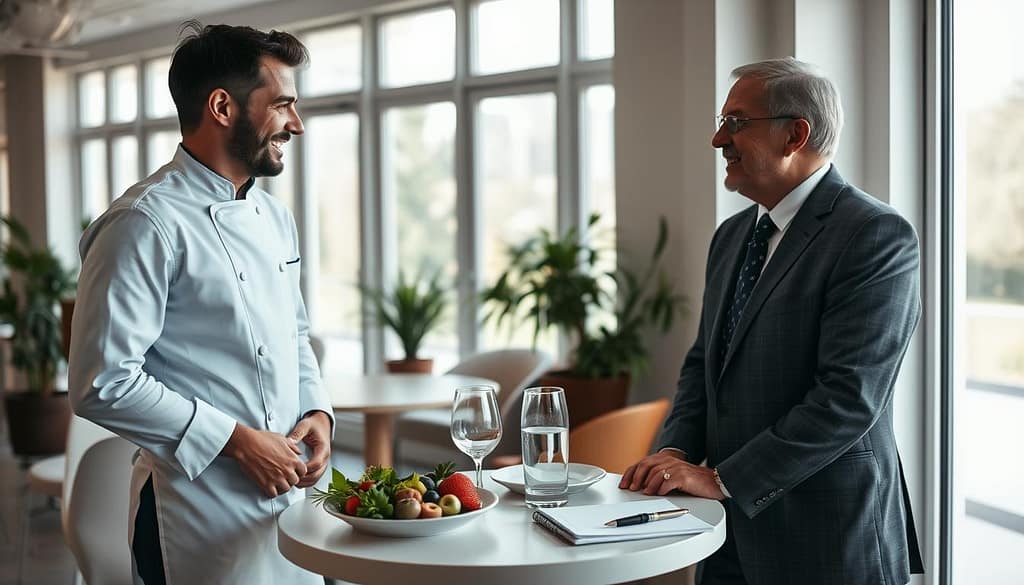
So, what do these “value-add plays” look like in practice? It could be sending a curated note on an emerging ingredient trend that fits their brand. It might be a quick, five-minute tutorial for their staff on a plating technique. It’s acting as a free, trusted consultant on kitchen efficiency. This proactive support is the bedrock of real customer service in the hospitality industry.
Digital tools are the force multiplier for this approach. A well-managed CRM isn’t cold automation; it’s your relationship’s warm, efficient nervous system. It reminds you of a client’s anniversary, tracks their favorite seasonal dishes, and helps you send the right recipe idea at the right time. This systematic, yet personal, touch is how you adapt to modern client habits. Leveraging platforms for better engagement, including using booking platforms to attract new, can be part of this seamless digital ecosystem.
This slow, smart cultivation creates a client who doesn’t just rehire you. They become your de facto marketing department, advocating for you with a credibility no ad can buy. That’s the ultimate ROI on a genuine partnership and the pinnacle of strategic customer service.
Referral Generation Strategies
If your growth strategy relies on luck, you’re not a chef—you’re a gambler. Let’s build a machine instead. The “Lead Sources Pyramid” isn’t just a theory; it’s your blueprint. At the top sits the high-value tier: warm referrals and strategic vendor partnerships.
Think of a trusted wedding planner’s nod as currency more valuable than a thousand social media likes. These event planning partnerships form the core of a sustainable ecosystem. Your happy clients and aligned vendors become your star talent scouts, a culinary Hollywood agency working for you.
This requires a tactical campaign. Map your local ecosystem like a general. Identify affluent neighborhoods, corporate hubs, and popular venues. Infiltrate professional circles like the ACF or WIPA not as a guest, but as a future board member. This systematic outreach fuels the engine.
The slightly awkward conversation? Compensation. Ethical referral fees for planners or thoughtful thank-you gifts for private households ensure your network feels valued, not used. This turns one-off gigs into a pipeline for repeat business.
Your goal isn’t just the next booking. It’s architecting a self-sustaining network where every satisfied client and professional ally actively fuels your growth. That’s how you shift from chasing leads to having them delivered, warm and ready, to your kitchen door.