
Imagine it’s 5:07 PM. The fridge light shines on a mess of condiments and dying greens. This is the daily “Scramble,” a ritual as common as binge-watching shows.
Educated, busy parents aren’t just hungry. They’re stuck in a tough equation: nutrition + taste + time = daily defeat. The guilt of another processed meal is overwhelming.
This isn’t just about hungry people. It’s about dual-income, time-poor professionals. Their problem isn’t a lack of food. It’s a lack of peace, certainty, and evening hours.
They want wellness without it feeling like a second job. That’s where chef-curated meal plans come in. They offer convenience with real health benefits.
Your true value isn’t just in selling dinners. It’s in selling sanity back to families. You bring back the calm, nourishing family meal. That’s the heart of a strong health-conscious chef brand.
Brand Positioning: Nutrition Expert vs Regular Personal Chef
Think of brand positioning as choosing your culinary chess piece. Are you a pawn or a queen? The pawn moves one square at a time, focused on the immediate task. The queen commands the board with strategy and purpose. In the world of personal chefs, this isn’t a game. It’s the fundamental choice that defines your business.
Most chefs believe their cooking skills are the ultimate differentiator. They’re wrong. Your ability to market yourself and secure new clients is what truly sets you apart. This is where nutrition-focused chef marketing becomes your queen’s gambit.
Let’s dissect the two archetypes. The Regular Personal Chef operates in the realm of convenience and taste. They’re the short-order cook of the home kitchen. The Nutrition Expert, on the other hand, operates in the realm of evidence-based science and long-term wellness. They’re the family’s dietary strategist.
This dichotomy isn’t semantic. It’s economic and psychological. One wins on fleeting cravings. The other builds legacy through transformative results. Parents today don’t just want a meal. They want a solution. They read ingredient labels with the intensity of a political analyst dissecting a bill.
Your competitive advantage isn’t a secret recipe. It’s a clearly defined position that allows you to charge higher prices and foster fierce loyalty. The table below breaks down the core differences.
| Aspect | The Regular Personal Chef | The Nutrition Expert |
|---|---|---|
| Core Value Proposition | Convenience, Time-Saving, Great Taste | Health Transformation, Dietary Strategy, Preventative Wellness |
| Client Mindset | “I don’t have time to cook.” | “I need to optimize my family’s health.” |
| Pricing Power | Competitive, Market-Rate | Premium, Value-Based |
| Marketing Message | “I’ll cook your favorite meals.” | “I’ll engineer your family’s nutritional safety.” |
| Long-Term Role | Service Provider | Trusted Authority & Partner |
Notice the shift? The Nutrition Expert’s entire framework is built on authority. This authority is what justifies the premium. It turns a transaction into a consultation. A regular chef might get a call for a dinner party. A Nutrition Expert gets a call when a child is diagnosed with a food allergy.
Weaving evidence-based principles into your brand narrative isn’t optional. It’s your entry ticket to the minds of health-conscious parents. They’re not looking for a cook. They’re looking for a guide who speaks the language of macronutrients, glycemic index, and gut health.
This is the essence of strategic nutrition-focused chef marketing. You stop selling meals. You start selling peace of mind, scientific understanding, and a tangible path to family wellness. The regular chef wins a client. The Nutrition Expert builds a disciple.
So, ask yourself: are you content moving one square forward, or are you ready to command the entire board? Your positioning answer will dictate everything that follows.
Core Brand Messages: Safety, Health, and Family Wellness
Imagine if ‘healthy meal planning’ was more about peace than kale. For a healthy meal planning brand aimed at parents, your core messages must be a mix of Safety, Health, and Family Wellness. These words sound great, but they need to be filled with real meaning.
Start with Safety. In today’s world, “safe” is key. But having a food safety certificate is just the start. Your story should be about your detailed hand-washing and allergy protocols.

Then, there’s Health. It’s a big claim, but your approach should be unique. Share how you sneak veggies into meals, making them healthy and tasty.
Lastly, Family Wellness is the emotional payoff. Your healthy meal planning brand is about more than food. It’s about giving parents a break and creating family time.
So, how do you turn these ideas into real messages? The table below shows how to go from a simple claim to a deep, meaningful story for parents.
| Core Pillar | Surface-Level Message (The Echo) | Deep Brand Narrative (The Signal) | Parent’s Emotional Takeaway |
|---|---|---|---|
| Safety | “We are ServSafe certified.” | “We treat allergy protocols with the seriousness of a bomb disposal unit. Every ingredient is vetted, every surface sanitized like an operating room.” | Trust and peace of mind. The ability to relax, fully. |
| Health | “We cook clean, healthy meals.” | “Our philosophy is ‘stealth nutrition.’ We engineer meals that are 70% vegetables by volume but taste like comfort food, balancing macros for sustained energy.” | Confidence that every bite is building their family’s health, without the dinner-table battle. |
| Family Wellness | “We give you back your time.” | “We replace the ‘witching hour’ chaos with calm. Our service is the catalyst for family connection, reducing stress and making mealtime a joy again.” | Relief and gratitude. The gift of presence over pressure. |
The shift is clear. Your deep narrative speaks to parents’ fears and desires. It’s not just about food; it’s about solving the family’s big problems. Your healthy meal planning brand is a guide, not just a vendor.
Make each message deep and meaningful. Safety shows your rigor, Health shows your knowledge, and Family Wellness shows your empathy. Together, they create a message that wins over clients and turns them into loyal followers.
Visual Identity for Family Appeal: Colors, Fonts, and Imagery That Resonate
Creating a visual identity for a family chef is more than just picking colors. It’s about using semiotics and psychology. Your logo, website, and social media are like your brand’s body language. They should be confident and reassuring, not loud.
For parents, we need to show trust and vitality through visuals. This is where your family chef branding comes to life.
Color psychology is a science, not magic. It tells us what your brand values before you even list ingredients.
| Color | Psychological Association | Perceived Message | Recommendation for Use |
|---|---|---|---|
| Earthy Greens | Growth, nature, health, freshness | “We use whole, natural ingredients.” | Primary brand color for logos and headers. |
| Warm Yellows/Ochres | Optimism, warmth, nourishment, energy | “Our food is comforting and energizing.” | Accent color for calls-to-action and highlights. |
| Soft Blues | Trust, calm, reliability, safety | “You can trust us in your home.” | Secondary color for backgrounds and icons. |
| Sterile Whites | Cleanliness, simplicity, emptiness | Can feel clinical, distant, or expensive. | Use for ample negative space, not as a dominant hue. |
| Aggressive Reds | Urgency, passion, appetite, danger | May signal fast food, not thoughtful nutrition. | Avoid as a primary color; use sparingly if at all. |
Typography matters too. Is your font friendly or too formal? A clean sans-serif font says “approachable professional.” It’s easy to read, even late at night.
Script fonts can feel elegant but exclusive. Decorative fonts are like complicated recipes—they confuse more than they appeal.
Imagery is key, but it must be authentic. Avoid clichés like perfect, laughing families. Instead, show real life and partnership.
Use visuals that tell a story of care and connection. Show a child placing a herb garnish or a meal prep session in a real kitchen. These images don’t just show food. They show process, care, and connection.
By combining colors, fonts, and imagery, you create a cohesive visual identity. This consistency builds recognition and trust. It turns a browsing parent into an inquiring client. Your visual identity is your first and most persuasive ingredient.
Certification and Credentials: Showcasing Nutrition Education and Food Safety
For health-conscious parents, a chef’s credentials are key. They counter the noise of Instagram food trends and wellness myths. In your nutrition-focused chef marketing, these credentials are not just resume lines. They are your intellectual shield. Let’s use your knowledge to your advantage.
Your nutrition education is like your brand’s research department. It’s the science behind every dish. You’re not just following trends; you’re using science. Talk about how you balance macronutrients for energy or reduce added sugars. This makes you a culinary scientist.
A food safety certification is your promise to the public. It shows your kitchen is safe. For parents, it answers their biggest fear: “Is your kitchen as safe as mine?” It’s not just a permit. It’s a sign of professionalism and care.
Building a strong business foundation is essential. As courses teach, being “Legal & Insured” and running your business like a pro is a must. This is the core of your nutrition-focused chef marketing trustworthiness. A business license and liability insurance are your first trust signals.
So, how do you show off your skills? Place your credentials strategically in your story, not just list them.
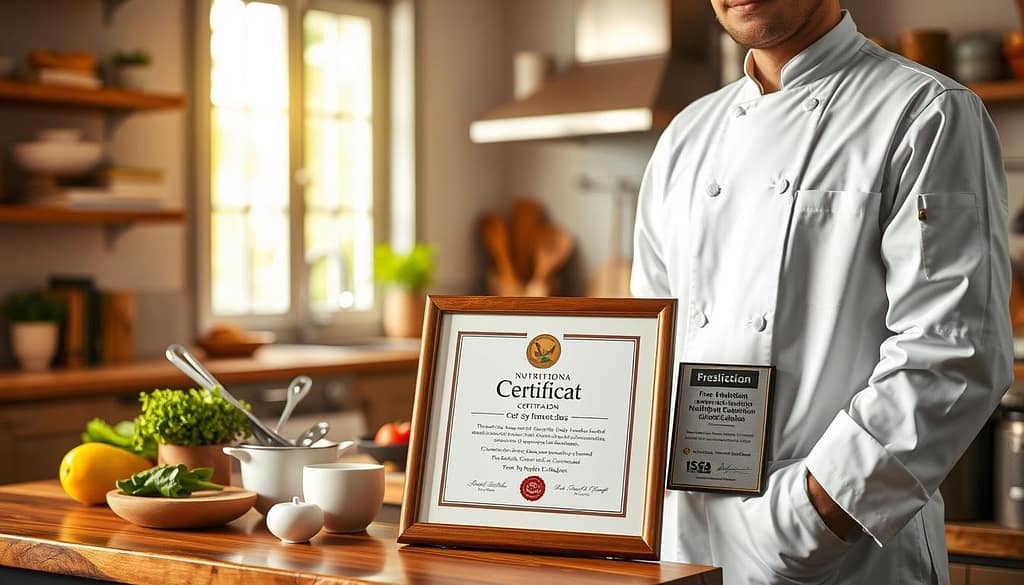
Think of it as mapping your credentials to what parents care about. The table below is not just a list of achievements. It’s a plan to build trust.
| Credential Type | Parent Concern It Addresses | Your Framing (The “Weaponized” Message) | Prime Placement/Showcase |
|---|---|---|---|
| Nutrition Certification (e.g., CNS, CNE) | “Can you translate complex dietary science into food my kids will actually eat?” | “I apply clinical nutrition principles to create family-friendly meals. It’s evidence-based flavor.” This is core to nutrition-focused chef marketing. | Website “About” page, initial consultation dialogue, featured in blog posts explaining meal rationale. |
| ServSafe® or State Food Handler Card | “Are your hygiene standards as obsessive as mine?” | “My kitchen operates under HACCP principles. Cross-contamination isn’t just avoided; it’s architecturally impossible.” | Logo badge, footer of all proposals, physical certificate visible during home kitchen assessment. |
| Business License & Liability Insurance | “What if something goes wrong? Is this a real business or a hobby?” | “You are hiring a legitimate, insured entity. My commitment to your family’s safety is legally and financially backed.” | “Why Choose Me” page, contract documentation, verbally confirmed before first service. |
| Specialized Training (Allergy, Pediatric) | “Do you truly understand the severity of my child’s allergy?” | “My protocol for nut-free cooking isn’t just ‘being careful.’ It’s a military-grade containment procedure.” | Dedicated service page, pre-service questionnaire, highlighted in client testimonials. |
This way of framing your credentials turns them into compelling stories. It gives parents the analytical proof they seek. Your credentials are like the peer-reviewed section of your personal brand. They show you’re not just a talented cook. You’re a trustworthy, knowledgeable partner in family wellness. This is the ultimate goal of smart nutrition-focused chef marketing.
Family Testimonial Integration: Real Stories from Health-Conscious Parents
Forget the usual ‘delicious and amazing’ review. The testimonial that really sells your family cooking services is like a short story. It’s about changing your family’s life. A generic five-star rating is just noise. But a quote like this stands out: “It is very important to us to have a sit down family dinner together, and we are able to do this because of Virginia.”
This isn’t just praise for a meal. It’s about the time and tradition you’ve brought back to their lives.
Your marketing’s strongest tool is the real, messy story from your clients. Anyone can say a meal was tasty. But only your clients can tell you about the life you’ve given them back. A testimonial like “You gave us our Tuesday nights back,” speaks to value and emotional payoff.
This section is your storytelling workshop. We’re moving beyond just collecting feedback to curating real-life stories.
The Anatomy of a Transformative Testimonial
Great stories have a structure. When asking for feedback, guide your clients to share a specific arc. You’re not looking for compliments; you’re exploring their lifestyle change.
- The Before Shot: Ask about the chaos. “What did weeknight dinners look like before we started working together?” The answers—”takeout containers,” “arguments over broccoli,” “me eating over the sink at 9 PM”—show the problem you solved.
- The After Calm: Then, show the new reality. “What’s different now?” This is where you get the gold: “Our kids actually ask what’s for dinner,” “My blood pressure is down,” “We talk about our days again.”
- The Specific, Unsexy Detail: The magic is in the details. A converted picky eater, a diagnosed allergy managed with ease, a parent’s stress level lowered. These are your proof points.
This framework turns a happy client into a compelling narrator. Their story becomes a blueprint for your prospect’s future.
From Static Page to Living Proof
Integrating these stories is where most family cooking services struggle. A buried “Testimonials” page is like a museum—static and visited only on purpose. Your client stories need to be living proof, woven into your brand.
Strategize their placement like a documentary filmmaker uses B-roll:
- Website Homepage: Feature a rotating quote that highlights a specific outcome—not just a name and a star rating. Pair it with a candid, happy-family-in-the-kitchen photo (with permission, of course).
- Service Pages: Match the story to the service. A testimonial about managing a nut allergy belongs on your “Allergy-Safe Meals” page. A story about introducing diverse vegetables to a toddler? That’s “Pediatric Nutrition.”
- Social Media: Turn a quote into a mini-video interview or a beautiful graphic. Use the caption to expand on the story. This is shareable, human content that builds community.
- Proposals & Consultations: This is your secret weapon. When a prospect hesitates, reference a past client’s similar initial concern and the resolution you facilitated. It’s not a sales pitch; it’s evidence-based reassurance.
The goal is to create a constellation of social proof, where a prospect encounters these real-life success stories at every touchpoint.
Curating Your Portfolio of Proof
Not all testimonials are created equal. Curate them. Seek diversity in the stories told—different family structures, different health challenges, different logistical nightmares solved. This shows the breadth and adaptability of your family cooking services.
Follow up with clients a few months in. The most powerful outcomes—improved lab results, consistent family meals, a child’s newfound love for salmon—often reveal themselves over time. This longitudinal data is marketing gold.
Ultimately, these integrated narratives do more than attract clients. They pre-qualify them. The parent who reads about another family’s journey from chaotic takeout to peaceful, nutritious dinners isn’t just looking for a chef. They’re seeking the same transformation. Your client’s story has already done half the selling for you, proving your service delivers a lifestyle upgrade, not just a grocery list.
Trust-Building Elements: Background Checks, Insurance, and Professional References
Let’s talk about trust. When a family lets you into their kitchen, they’re checking if you’re trustworthy. This is a big deal. It’s like entering a sacred space.
For health-conscious parents, it’s not just about food. It’s about trust. Moving from “please trust me” to “here’s why I’m trustworthy” is key.
This trust has three main parts. Forget soft promises; we need solid proof.
- The Background Check: Your Transparency Premium. A clean background check is basic. But showing it upfront is a big plus. It shows you’re open and have nothing to hide.
- Liability Insurance: The Unspoken Contract. Liability insurance shows you’re serious. It’s a sign you’re ready for anything. For a health-conscious chef brand, it’s essential for peace of mind.
- Professional References & Network: The Social Proof Layer. Good testimonials are great. But a strong network is even better. It shows you’re part of a community of quality. A referral from a respected nutritionist or chef is powerful.
The last piece is a customized chef-client contract. It’s not just legalese; it’s a blueprint. It outlines everything from allergy protocols to cancellation policies.
When you put these pieces together—background check, insurance, references, contract—you’re not just listing services. You’re building a strong case for your reliability. You show why you deserve trust. This is how you become a trusted, indispensable health-conscious chef brand.
Specialty Positioning: Allergy Management, Organic Focus, or Pediatric Nutrition
The ‘jack-of-all-trades’ chef might seem versatile, but for parents searching for ‘gluten-free kid meals,’ they’re hard to find. Trying to please every family is like whispering in a hurricane. It’s also a reminder that many businesses fail without even starting.
So, let’s focus. Specializing makes you a sought-after expert. It’s the difference between being a chef and being the chef for a specific, passionate, and often underserved community. Which tribe will you lead?
The Allergy Management Expert: This isn’t just about avoiding peanuts. It’s about being a culinary detective and a source of profound relief. You’re selling safety. The market? It’s vast and desperate—parents for whom a playdate is a logistical nightmare. Your brand becomes a fortress of protocols, certified knowledge, and cross-contination paranoia. Passion here is non-negotiable; it’s a mission.
The Organic & Regenerative Focus Specialist: This path is for the eco-conscious philosopher-chef. Your audience cares about soil health as much as soul food. Your healthy meal planning brand is built on transparency—sourcing stories, farm partnerships, and a staunch rejection of pesticides. It’s a lifestyle sell, appealing to parents who view their grocery cart as a political statement. The competition is with grocery stores and meal kits, not other chefs.
The Pediatric Nutrition Scientist: Here, you merge the kitchen with the lab. Your focus is on cognitive development, immune support, and turning nutritional science into delicious bites. You speak the language of pediatricians and anxious parents of picky eaters. Your leverage is authority. You create content on nutrient density, not just recipes. This path demands continuous education but positions you as the undisputed brainy choice.
| Specialty Area | Market Demand & Audience | Key Branding Leverage | Operational Considerations |
|---|---|---|---|
| Allergy Management Expert | High, urgent, and loyal. Parents of children with IgE-mediated allergies (e.g., peanut, dairy) and intolerances (e.g., gluten). | Peace of mind as a product. Highlight certified training, strict protocols, and insurance that covers specialty service. | Requires rigorous kitchen audits, dedicated equipment, and potentially higher liability insurance costs. |
| Organic & Regenerative Focus | Strong among millennial/Gen X parents in urban/suburban areas. Values-driven and willing to pay a premium. | Ethical consumption. Showcase direct farm relationships, organic certifications, and a narrative around environmental stewardship. | Sourcing can be costlier and less consistent. Menu flexibility based on seasonal, local availability is key. |
| Pediatric Nutrition Scientist | Growing, fueled by wellness culture. Appeals to data-driven parents and those with children facing developmental or focus challenges. | Authority and evidence-based results. Position your healthy meal planning brand as an extension of pediatric care. | Needs ongoing investment in nutrition education (courses, certifications). Menus are highly customized per child’s age and needs. |
Choosing your lane isn’t about limiting your audience. It’s about amplifying your signal to the right one. Analyze the table through your own lens: where does market demand intersect with your genuine passion? Where is the competition just a little… bland?
This strategic pivot defines everything. Your messaging, your visual identity, your pricing. It turns a generic service into a specialist’s practice. In the end, a focused healthy meal planning brand doesn’t just attract clients—it attracts believers.
Online Presence Strategy: Website Sections That Address Parent Concerns
Think of your website as a 24/7 therapist for anxious parents. Anyone can build a website. But making one that attracts leads while you’re busy with school lunches is truly magical. Your site should be a digital storefront, consultant, and FAQ sheet all in one.
This is your 24-hour lead-generating engine. It’s not about flashy graphics. It’s about creating a journey that replaces uncertainty with clarity and skepticism with trust.
Let’s blueprint the essential pages. First, the “Process” page. Forget a boring list of steps. Visualize the journey. Use a timeline infographic or short videos showing a typical engagement.
Show the initial consultation, the menu planning, the grocery haul, the cooking session, and the clean-up. This visual demystification is powerful. It answers the silent question, “How does this *actually* work in my home?”
Next, the “Philosophy” page. This is where you go deeper than any Instagram caption. Articulate your nutritional stance with the conviction of a food scientist and the warmth of a parent. Explain why you source locally and your stance on processed sugars.
This isn’t dogma. It’s your culinary constitution. It attracts families who share your values and repels those who don’t—a perfect filter.
The crown jewel is a dedicated “For Families” section. This isn’t a footnote. It’s a direct channel to the parent’s amygdala. Structure it to answer the unspoken questions that keep them up at night.
- “Are you used to cooking for kids?” Don’t just say yes. Show a sample kid-approved menu that’s nutritious and clever. Mention your techniques for “hiding” veggies or creating fun, balanced plates.
- “How do you handle allergies?” Be surgical. Detail your protocols for cross-contamination, ingredient verification, and certified training. This isn’t a liability disclaimer; it’s a safety manifesto.
- “Can you accommodate our chaotic schedule?” Here’s where you flex. Offer clear options: weekly meal prep, dinner-party service, or last-minute “fridge rescue” sessions. Show you understand the modern family’s rhythm.
This strategic architecture does more than inform. It pre-empts concerns. By openly addressing the biggest fears, you demonstrate empathy and professionalism. You’re not just selling family cooking services; you’re selling peace of mind.
Your online presence should build credibility autonomously. Integrate client testimonials about family meals. Feature logos of any nutrition certifications you hold. A blog with posts on “Balancing Macros for Teen Athletes” or “Easy Swaps for Picky Eaters” positions you as the sage, not just the chef.
Ultimately, a website built with this level of intention transforms your family cooking services from a luxury into a logical, stress-free solution. It works the night shift, answering questions and building rapport, so when a parent contacts you, the conversation starts at “How soon can you start?” not “What do you do?”
Brand Evolution: Growing with Changing Family Nutritional Needs
Kids don’t come with a nutritional roadmap. Your brand should. The final act for a health-conscious chef brand isn’t a fixed menu; it’s a flexible, long-term script.
Think of your brand as the family’s culinary biographer. You document the shift from first purees to teen athlete fuel. This evolution is your business model’s superpower. You have control over your hours and income, allowing you to design “life-stage” meal packages. Postpartum recovery meals morph into lunchbox prep. It’s a proven system for scaling trust.
Your role transcends cooking. You become the sage guide through every nutritional chapter. This mirrors the broader, evolving private chef market, where personalization and health are key.
A static brand is a forgotten one. A dynamic health-conscious chef brand is a lifelong partnership. It’s the intelligent answer to a family’s one constant: change.