
Forget everything you know about dropped-off chafing dishes. We’re talking about culinary theater in a client’s home. The planning phase is not just a checklist; it’s a deep dive into what the client wants.
This first consultation is key. It’s where you become a partner in creating unforgettable memories. We’re not just looking at dietary needs. We’re also tuning into emotional desires.
Is this a chance to make a big impression, or a cozy family dinner? Catering experts call this a strategic move for bigger events later. It’s about understanding the client’s needs and desires.
Get this right, and you’re not just cooking in someone’s kitchen. You’re creating a story with every dish. It starts with asking the right questions and knowing what’s needed for a smooth event.
Pre-Event Planning & Client Consultation
This is where the real event planning starts. It’s about assessing the kitchen, guest list, and the host’s goals. The aim is a seamless, effortless performance. That’s the plan. The rest is just the hard work.
Equipment Transport & Setup Protocols
Imagine a Michelin-starred meal in your cozy home. But, the reality hits you as soon as you enter. You frantically check for outlets and counter space. This is where your menu planning meets the real world of kitchen logistics.
You’re not just a chef anymore. You’re a mobile kitchen. Graham Overal of Food Fire + Knives says you learn to “carry your kitchen around with you.” It’s not just a saying; it’s a list of things to pack. Your goal is to make a commercial kitchen work in a space meant for weekend pancakes.
Knowing the kitchen beforehand is key. A quick “kitchen scout” is essential. It’s not about judging the decor. It’s about gathering vital information. Does the oven really heat to 350°F? Is there a garbage disposal? This info is your guide.
This scouting focuses on a few key areas. It’s like a chef’s home inspection, but with higher stakes for your dishes.
| Area of Focus | Domestic Kitchen Quirks | Pro Chef Workaround |
|---|---|---|
| Power & Appliances | One functional outlet; induction cooktop among electric coils; oven with a mysterious hot spot. | Bring heavy-duty extension cords. Pack a portable induction plate and an infrared thermometer. Always have a backup cooking method (e.g., a butane burner). |
| Surface & Space | Cluttered counters; fragile marble tops; zero room for a plating station. | Bring your own folding tables. Use silicone mats to protect surfaces. Implement a “staging area” in an adjacent room. |
| Water & Waste | Low water pressure; a sink the size of a mixing bowl; no clear waste stream. | Portable immersion water heater. Designate bins for trash, recycling, and compost with clear labels for the client. |
The right column in that table isn’t just a list of gear. It’s a mindset. Each “workaround” is a way to fight chaos. This is the analytical core of culinary logistics: anticipating problems and solving them before you start cooking.
The equipment transport phase is where planning meets action. Packing is a 3D puzzle. Heavy items go at the bottom, and fragile items at the top, wrapped in towels. Your vehicle is like a mobile kitchen, with every tool in its place. This prevents fumbling for tools in the dark.
Then, it’s time for on-site setup. This is like improvising jazz. You’ve seen the plan, but now you adapt to the space. Set up your table first, then conquer the kitchen. It should look like a well-organized space, not a mess.
Mastering these steps does more than prevent disasters. It builds trust with your clients. When they see you take control of their kitchen, they relax. They know they’re in good hands. The kitchen logistics are the silent introduction to your culinary show. Get this right, and cooking becomes the easy part.
Staff Coordination & Service Flow
Forget the military precision of a restaurant kitchen brigade; private event staff coordination is more like conducting a jazz quartet in a crowded elevator. Every move is consequential, and the audience is right there in the room with you.
You are, as Jason Hernandez of Blade & Tine Culinary wryly notes, a one-person army: chef, sommelier, server, dishwasher, and occasional therapist. When you add a team, the goal isn’t to build a hierarchy. It’s to cultivate a hive mind.
This is a social performance. You’re in a fishbowl, narrating the provenance of the heirloom tomatoes while simultaneously ensuring the Pinot Noir is poured and the used plates vanish. The service flow is an improvised dance, not a rigid march.
The magic lies in anticipation—seeing around corners. It’s reading a guest’s subtle glance toward the empty bread basket. It’s replacing a dropped fork before the guest even looks down. This anticipatory service is the invisible social lubricant of a great evening.
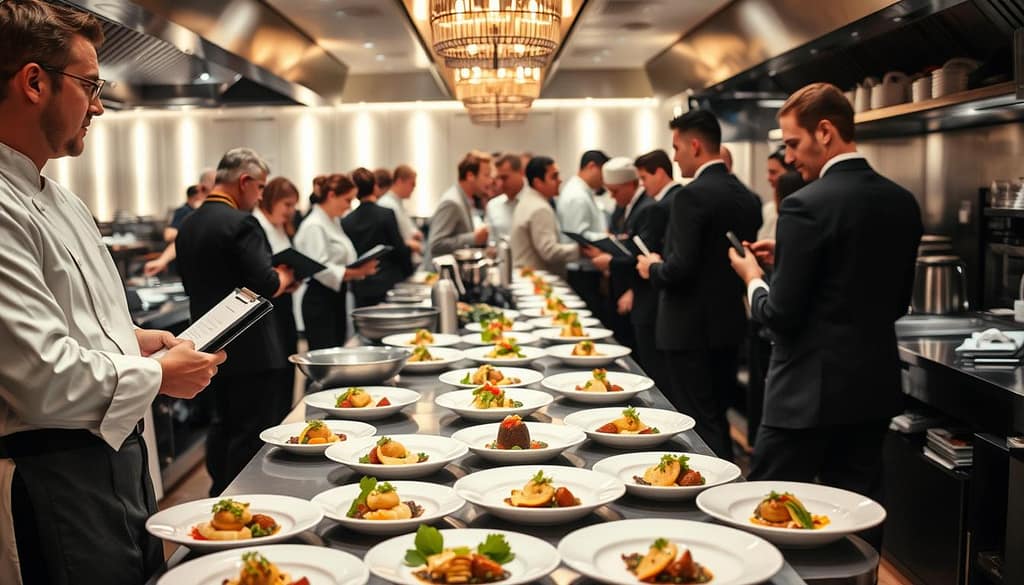
How does this differ from a traditional kitchen? The old model of shouting “Yes, chef!” doesn’t translate to a living room. Your communication must be silent, your movements efficient. The table below breaks down the shift in mindset.
| Aspect | Traditional Brigade System | Private Event Team Dynamics |
|---|---|---|
| Communication | Verbal commands, often loud. | Silent signals, eye contact, pre-established cues. |
| Hierarchy | Rigid, military-style chain of command. | Fluid, with a designated “point” or team leader for situational authority. |
| Primary Focus | Excellence and speed of food production. | Seamless integration of food, service, and guest experience. |
| Problem-Solving | Issues are handled by the station chef or sous. | Any team member must be empowered to solve discreetly, in real-time. |
| Guest Interaction | Minimal; front-of-house acts as a buffer. | Constant, with every team member as a possible ambassador. |
Efficient operations start with a clear, simple task breakdown. Who is on wine? Who clears? Who is the primary contact for the host? A designated team leader isn’t there to bark orders. They are the conductor, subtly cueing transitions and monitoring the overall rhythm.
Ultimately, this level of staff coordination transcends a schedule. It becomes the invisible architecture upon which an unforgettable experience is built. The guests shouldn’t see the wires. They should only feel the magic.
Timeline Management for Flawless Execution
Forget the Gantt chart; in a private kitchen, timeline management is a haiku. Every second matters. Bulk catering works on industrial time, but a private chef service runs on poetic meter.
The difference is clear. Bulk catering feeds many on a schedule. Private chefs create an experience, one course at a time. A wedding planner might plan “dinner service: 7:30-8:30 PM.” But for us, that hour is filled with tiny decisions.
We see each event as a story to be told in reverse. The climax is the last dish served. Every step before it is a part of the story. How long to clarify the consommé or sear scallops?
This isn’t just guessing. It’s culinary math. We use the task breakdown from big event management processes but with Swiss watch precision. Our timeline changes from the start and gets better until the last plate is gone.
The outcome? A smooth performance where time helps. Guests enjoy a slow, unfolding experience. Behind the scenes, it’s a well-timed ballet of controlled chaos.
| Timeline Phase | Large-Scale Catering Focus | Private Chef Service Focus |
|---|---|---|
| Prep Start | Days in advance, bulk prep in commissary. | Hours in advance, *mise en place* in client’s kitchen. |
| Service Flow | Simultaneous, buffet or plated bulk service. | Sequential, course-by-course pacing dictated by guest. |
| Critical Path | Logistics: delivery, setup, holding temps. | Execution: last-minute finishes, plating art, temperature precision. |
| Guest Perception | Efficiency, abundance, smooth schedule. | Theater, anticipation, personalized rhythm. |
| Flexibility | Low; menu is locked for headcount. | High; can adjust pacing and minor elements on the fly. |
To build this, start at the end and work back. Dessert is plated at 9:42 PM. The cheese comes out at 9:20. The main course is ready at 9:05. This planning turns panic into a smooth process. It’s the secret to making magic look easy.
Emergency Contingency Planning
If your event plan doesn’t account for the oven’s sudden demise or a last-minute vegan declaration, you’re not planning a dinner—you’re gambling. Murphy’s Law is the executive producer of every live performance, culinary or other. The question isn’t *if* something will go sideways, but *when* and *how*. Your response to that moment defines you.
This isn’t about pessimism. It’s about being smart. Contingency planning is the art of outsmarting circumstance, of having a deeper playbook than chaos. It’s what separates a competent cook from a sage culinary operator.
The foundation is the physical “Go Bag.” This isn’t just a toolkit; it’s a panic button. Every chef’s kit varies, but the essentials are non-negotiable:
- A neutral oil and basic vinegar: For dressing a salvaged salad or deglazing a pan in a pinch.
- A portable induction burner: When the client’s Viking range decides to take a personal day.
- High-quality stock cubes and dried pasta: The building blocks of an emergency menu pivot.
- Allergy-friendly staples: Think gluten-free soy sauce or nut-free “butter” spreads.

That last point is critical. The surprise severe allergy announced during plating isn’t a crisis; it’s a test you’ve already passed. Your adaptable menu and stocked “Go Bag” let you pivot without a flicker of panic. Spoiled turbot? You’re already mentally reworking the side dishes into a starring risotto. This is where legendary resourcefulness is born.
But gadgets and back-up ingredients are useless without the human element. This is where staff coordination under pressure becomes your most valuable asset. Your team must know their roles in a “Code Brown” scenario. A silent hand signal, a pre-arranged task delegation—this is the choreography of crisis aversion. Everyone moves, no one speaks unnecessarily. The guest sees seamless service, not a scrambling team.
This human protocol must be supported by a flexible timeline management structure. Your schedule should have strategic buffers—not just for traffic, but for the miraculous resurrection of a broken sauce or the swift assembly of a replacement canapé. A rigid timeline shatters under pressure. A fluid one absorbs the shock and keeps flowing.
The ultimate goal is to make the recovery look like part of the show. Flawless execution is impressive. Flawless recovery is unforgettable. It’s the story they tell: “You should have seen what they whipped up from nothing!” That story is built on proactive staff coordination, intelligent timeline management, and the quiet confidence of someone who has already solved tomorrow’s problem today.
Post-Event Cleanup & Follow-Up
The final curtain call in private chef service is the most revealing. Anyone can plate a beautiful dish. But the professional leaves the stage—and the kitchen—spotless.
This isn’t just about wiping counters. The non-negotiable standard is leaving the space cleaner than you found it. It’s like saying, “We respect your home,” louder than any amuse-bouche could shout.
This meticulous attention to detail is the unsung hero of smart kitchen logistics. It’s the silent partner to the flashier parts of event planning.
Then comes the strategic follow-up. Don’t just send an invoice. Send a note. Mention the guest who loved the wild boar ragù. Ask if the birthday girl enjoyed her surprise dessert.
This thoughtful follow-up is where event planning completes its loop. You’re not just closing out a job. You’re planting a seed. Was this dinner a “Trojan horse” for catering their daughter’s wedding? The best kitchen logistics plan always accounts for the future.
Encourage a feedback loop. It’s not about fishing for compliments. It’s a diagnostic tool. What worked? What could be sharper next time? This phase transforms a single night’s success into a long-term client. The sage knows the last impression is the one that sticks.