
Forget selling a service. In the luxury market, you’re auctioning a story. Think of it as crafting your own Michelin-starred biography before the first plate is even designed.
This isn’t about catering. It’s about being an experience architect. High-end food brand activations succeed because they create a sensory contract—a memorable, high-expectation moment that connects through taste and interaction.
Fine dining taught us that atmosphere, service, and curated dishes are the total package. Your culinary branding must communicate that same unique value. In a saturated market, standing out means you’re not a vendor; you’re a culinary artist.
So, how do you transform ingredients into exclusivity? How do you price your craft like the luxury good it is? We’ll dissect the alchemy of modern chef marketing.
Event Planner Relationship Building
Your goal is to be the first name planners think of when they need something special. They’re not just middlemen; they’re your key to success. A boring PDF menu is like a rejected manuscript. This is a strategic partnership.
To go from a mere vendor to a trusted partner, change your mindset. You’re not just selling a service. You’re solving their biggest problem: creating unforgettable experiences under pressure.
The old way was about having a list of contacts. Now, it’s about understanding the planner’s clients deeply. Use data to know their tastes and trends. This makes you a proactive partner, not just a vendor.
| Aspect | The Old “Rolodex” Method | The New “Insight-Driven” Partnership |
|---|---|---|
| Focus | Your menu, your availability | The planner’s client needs and event goals |
| Communication | Generic blast emails | Tailored proposals referencing past successful events |
| Value Proposition | “I cook great food.” | “I solve your client’s desire for a unique, seamless dining experience.” |
| Outcome | You’re a commodity. | You’re a strategic asset. |
At tastings, don’t sell. Collaborate. Say, “Let’s create something bold for your clients.” This shows you understand their business deeply. Recommending you is a way for them to protect their reputation.
This close work is the best way to promote your private dining. You’re not just selling food; you’re building a shared vision. The planner becomes your advocate, bringing new customers to you.
Mastering event networking is key. Focus on quality over quantity. For more tips on building strong industry connections, check out our guide on building a strong network. When you’re the planner’s go-to, you’ll get the best jobs.
Social Media Portfolio Development
Your social media feed is like your most valuable real estate. It’s where first impressions are made. It’s not just about posting your lunch; it’s culinary branding at scroll speed. Your Instagram is like a digital tasting menu, and it needs to be engaging.
A blurry shot of a finished plate is a sign of amateur hour. Your visual story is key in modern chef marketing. It shows a lifestyle worth buying into.
The Anatomy of a Mouth-Watering Image
Great food photography is not luck. It’s about physics and psychology. Natural light is your best friend, showing texture and color truthfully.
Think of the soft glow of a late afternoon window on a fresh soup. Next, consider color theory on your plate. An analogous color scheme feels harmonious. A complementary pop creates excitement.
Move past the cliché overhead shot. Tell a story. Frame a shot with a farmer’s hand placing the heirloom tomato on your board. Show the precise knife work on a julienne. Capture the delight on a guest’s face with the first bite.

A powerful social portfolio complements a comprehensive chef portfolio guide. It’s the dynamic, living proof of your static credentials.
Hashtags: Your Digital Billboard Space
Posting a stunning image without hashtags is like opening a restaurant in a desert. You need a mix of branded and discovery tools. Branded hashtags build your community and archive. Generic hashtags help new eyes find you.
Geotagging is non-negotiable. It connects you to local seekers and tells the algorithm you’re relevant. And never underestimate user-generated content. When a client shares their experience, that’s social proof gold. Repost it. Thank them.
| Hashtag Type | Primary Purpose | Example | Best Use Case |
|---|---|---|---|
| Branded | Community Building & Curation | #ChefMariaKitchen | Every post to create a searchable brand archive. |
| Niche Generic | Targeted Discovery | #PrivateChefNYC | To attract a specific, high-intent clientele. |
| Broad Generic | Mass Visibility | #Foodie | Sparingly, on your most exceptional, viral-worthy content. |
| Geographic | Local Client Acquisition | #AustinEats | Essential for all posts when targeting local events or clients. |
This table isn’t just a suggestion—it’s a strategic map. Deploying hashtags without a plan is noise. Deploying them with this logic is a signal.
Curating this level of feed requires more than instinct. It demands a strategy. For those ready to level up, exploring advanced social media strategies is the logical next step.
Ultimately, your social portfolio is the public face of your culinary branding effort. It doesn’t just show food. It showcases a point of view, a standard of excellence, and an invitation to a unique experience. That’s how you transform likes into leads and followers into clients.
Networking at Industry Events
Industry events are more than just parties. They are stages for your culinary brand to shine. The old way of handing out business cards is outdated. Today, event networking is about making smart connections.
Imagine yourself as an actor and director. Your goal is to meet the right people, not everyone. Choose events that will boost your private dining promotion efforts. Is it a big food festival or a small charity gala?
Local events can be a goldmine for marketing. Joining in on Restaurant Week or major holidays can increase visibility. Events at city festivals or colleges also offer great reach. But how do you pick the best ones?
Not all events are equal. Your time is precious. Should you be at a street fair or a museum fundraiser?
| Event Type | Primary Audience | ROI Potentia | Best For |
|---|---|---|---|
| Local Food Festival | General Public, Food Enthu | High Volume, Lower Ticket | Brand Awareness, Sample Menus |
| High-End Charity Gala | Affluent Donors, Corporate Planners | Lower Volume, High Value | Private Dining Promotion, Elite Clientele |
| Restaurant Week | Local Diners, Reviewers | Moderate Volume & Value | Showcasing Signature Style |
| College Campus Event | Students, Young Professionals | Future Clientele, Social Buzz | Building a Youthful Following |
The table is more than data—it’s a strategic guide. Your role should grow beyond just serving food. Aim to be a featured speaker or host. This makes you an expert, not just a vendor.
Turning a brief chat into a booking requires a strategic pivot. Listen more than you talk. Find a problem they mentioned and offer a solution. “I specialize in plant-based gourmet. Can I send you three menu ideas tomorrow?”
Every event is like a live social portfolio. People see your food, but also how you handle pressure and interact with staff. This is your chance to shine.
Your performance must be real yet polished. Have a great “elevator story” but share it naturally. Your value should shine through stories, not just facts. Aim to be memorable, not just marketable.
Successful event networking is about being strategic. Choose your events wisely and own them. For more on strategic networking, the key is to grow intentionally. Now, go out there and own the room.
Referral Program Implementation
In the culinary world, a referral is more than just praise. It’s a valuable asset, and savvy chefs know how to harness it. Unlike amateurs who rely on chance, true culinary branding involves creating a system to turn satisfaction into sales.
This isn’t about quick fixes like discounts on flyers. It’s about crafting a tiered system of rewards that feels special and valuable. Imagine creating a VIP club for your most loyal customers.
Start by identifying your MVPs—the clients who always book your private dinners and rave about you. These are your natural advocates. Your program should make them feel like true partners, not just customers.
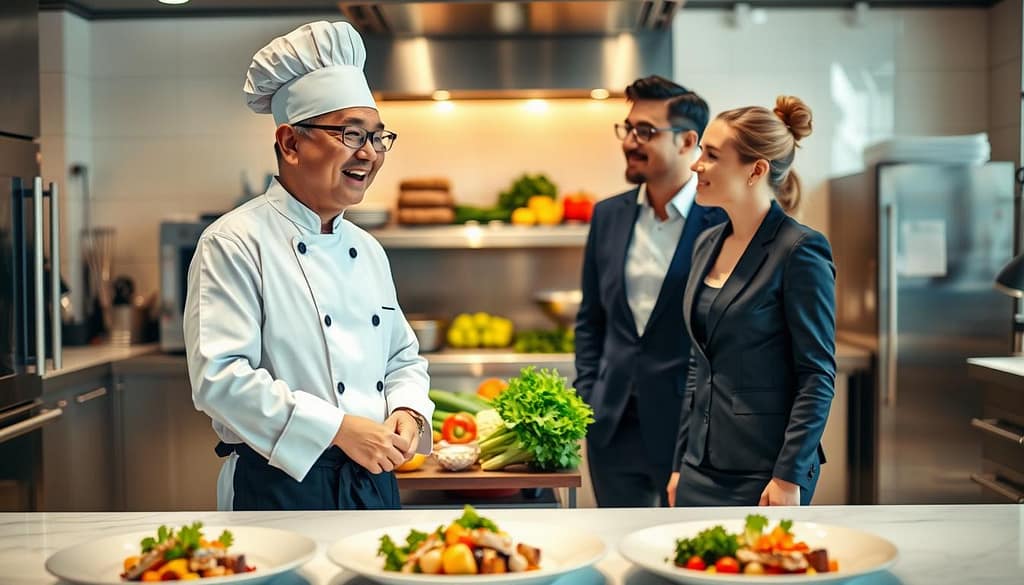
To structure it, create incentives that reward both the referrer and the referee. This creates a positive cycle. The friend gets a good reason to try you, and your loyal client gets something special.
What makes a reward stand out? Avoid generic gift cards. Offer unique experiences like a cooking class, signed cookbooks, or priority booking for your next event. This approach to chef marketing feels personal, not just transactional.
Now, let’s talk about the numbers. Data shows it’s cheaper to keep a guest than to find a new one. A referral program is like a supercharged loyalty engine. Use data to predict who’s likely to book again or who might be at risk.
Integrate this system with your email marketing, as experts suggest. When a client reaches a milestone, send them an invite to your “Inner Circle” referral program. This turns casual praise into a reliable, scalable growth channel.
You’re not just giving away free meals. You’re turning your reputation into a valuable asset. You’re transforming casual word-of-mouth into a formal, trackable growth channel. That’s the power of a well-implemented referral strategy in modern culinary branding.
Digital Marketing for Culinary Professionals
Your digital presence is key in today’s world. It’s like the prep work for your online image. Without it, even the best private dining offers go unnoticed.
Begin with local SEO. Claim your Google Business Profile and make it search-friendly. Use keywords like “private chef for wedding in Austin.” Also, make sure your website works well on phones. Fast loading times are as important as a great dish to a mobile user.
Next, create engaging email campaigns. Share stories, not just menus. Use digital ads to reach out to planners and clients. This is like networking online, connecting before meeting in person.
Your online reviews are like your new referrals. Use platforms like Bloom to manage them. Ask for feedback and respond to criticism with grace. This is about building your reputation, not just fixing problems.
This strategy makes your online image as good as your cooking. By mastering these digital channels, your next big opportunity might find you.