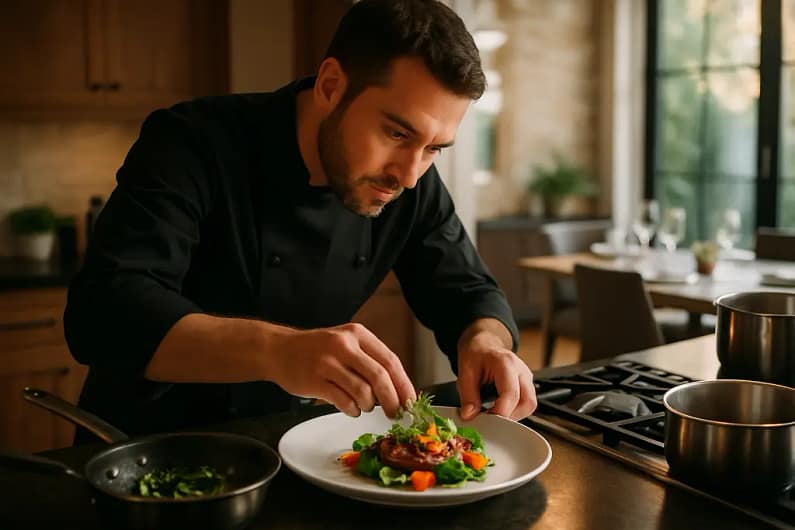
Personal chef demand in New York City and San Francisco is being shaped by two forces at once: clients want more private, flexible dining, while chefs face tighter pricing conversations, higher expectations, and crowded city markets. For chefs building calendars in these metros, the next step is not simply taking more inquiries. It is sorting which inquiries fit the service model, which menus can be priced clearly, and which clients are likely to book again.
The data supports a wider growth story. Fortune Business Insights estimated the global personal chef services market at US$18 billion in 2025, with North America representing about 42% of that share, and projected the market to reach about US$32.6 billion by 2034 at a compound annual growth rate near 6.8% from 2026 to 2034 personal chef market forecast. That does not mean every chef in every city will grow at the same pace. It does mean the category has moved beyond a narrow luxury niche and into a broader set of dining occasions.
What Personal Chef Demand Signals Show
National Growth Sets The Context
A 2024-2025 industry survey cited about 6,500 personal chef businesses in the United States, with estimated growth of 5.7% per year from 2019 to 2024 and a forecast of 6.5% annual growth from 2025 to 2030 FLIP economic trends report. For NYC and San Francisco chefs, that national growth is encouraging, but it also points to more competition for attention, referrals, and premium bookings.
That means Personal Chef Demand is not a single sales channel. It can come from weekly meal prep, anniversary dinners, family celebrations, small corporate meals, full-time household roles, seasonal retainers, and event-based cooking. Each one has different prep needs, staffing needs, cancellation risk, and client communication demands. A chef who treats all requests the same will usually spend too much time quoting and too little time qualifying.
Personal Chef Demand In Dense City Markets
New York City and San Francisco share some practical traits: high housing density, busy work schedules, strong restaurant cultures, and clients who may already be comfortable paying for convenience. They also differ in housing layouts, kitchen access, commuting patterns, and expectations around local sourcing. A Manhattan dinner in a compact apartment may require a different prep plan than a Bay Area home dinner with more space but longer travel time.
City-specific public data for direct chef-client bookings remains uneven, so chefs should avoid building plans around one isolated rate quote or one busy event week. A better approach is to track your own local funnel: inquiry source, party size, requested date, menu style, budget range, conversion rate, and repeat booking rate. After 60 to 90 days, a chef can see whether demand is coming from dinner parties, recurring prep, corporate clients, or high-effort one-off requests that rarely convert.
Pricing Pressure And Personal Chef Demand
Use Clear Minimums Before Menu Design
Pricing gets harder in expensive cities because clients often compare personal chef services with restaurants, catering, meal kits, and grocery delivery. That comparison is not always fair. A private booking may include planning, shopping, travel, prep, cooking, service, cleanup, menu revisions, and administrative time. If those pieces are hidden, clients may focus only on the cost of ingredients.
A practical response is to publish or communicate minimums before detailed menu work begins. That is why Personal Chef Demand should be filtered through a short discovery process. Ask the date, neighborhood, guest count, kitchen access, preferred service style, dietary restrictions, parking or building rules, and budget comfort before proposing dishes. This protects the chef from unpaid menu development and gives the client a clearer sense of fit.
- For recurring meal prep, price around the number of servings, shopping approach, delivery or in-home cooking, and packaging needs.
- For private dinners, separate food cost, chef labor, service labor, rentals if needed, and travel or parking fees.
- For event-style work, require deposits, written scope, guest count deadlines, and clear change policies.
- For premium menus, explain why certain ingredients, staffing, or timing increase the quote.
Offer Choices Without Diluting The Brand
Clients in NYC and San Francisco may want different price points, but chefs do not need to become all things to all diners. A three-option structure can work well: a simple prep package, a seasonal dinner package, and a premium event package. Each option should have clear boundaries. If a client wants more courses, later service, wine pairing support, or sourcing from specific producers, those requests can move into a higher quote rather than stretching the base package.
This structure also helps chefs avoid awkward bargaining. Instead of discounting labor, adjust scope. Fewer courses, a simpler service format, a shorter menu, or a drop-off component may help a client stay within budget while keeping the chef’s time valued.
Booking Systems That Protect Chef Time
Qualify Inquiries Before Saying Yes
The busiest markets reward speed, but speed without boundaries can create calendar stress. Chefs should have a standard intake form or email template that gathers the basics before a phone call. If a client does not know the guest count, location, budget range, or date, the inquiry may not be ready for a full proposal.
A good booking system should also tag leads by source. Referrals, social media, event platforms, local partnerships, and repeat clients often convert at different rates. Once a chef knows which channels produce reliable work, marketing gets simpler. For example, a chef who books many family meal-prep clients should write and photograph around weekday value, fridge organization, and easy reheating. A chef who books private dinners should show course flow, table timing, and service style.
Build Repeatable Client Conversations
Many clients do not know what to ask before hiring a chef. They may ask for a menu first when the chef needs information about access, allergies, building rules, timing, and cleanup. A supportive sales process educates without overwhelming the client. It should explain what is included, what is not included, how changes are handled, and when payment is due.
Chefs can also learn from nearby dining businesses that make occasions easy to understand. A related dining site such as De Novo Montclair illustrates how clear positioning around meals and gatherings can clarify what kind of experience potential guests can expect before reaching out.
Service Design For NYC And San Francisco Clients

Match The Offer To The City Use Case
NYC chefs may see strong demand for apartment dinners, executive meal prep, small celebrations, and event-week bookings tied to the city calendar. San Francisco chefs may see demand connected to home entertaining, tech work schedules, wellness-minded menus, and Bay Area sourcing expectations. These are general planning patterns, not promises of guaranteed demand, so each chef should test them against booked clients rather than inquiries alone.
The offer should reflect the real operating costs of the city. Travel time, parking, bridge tolls, ingredient pickup, helper labor, and cleanup can change the profit on a job. A beautiful menu is not a good business decision if it requires three store stops, an unpaid site visit, and late-night cleanup for a price built around cooking time only.
Use Local Sourcing As A Booking Detail, Not A Vague Claim
Clients often like the idea of seasonal and local ingredients, but chefs should define what that means in service terms. Will the chef shop at farmers markets when the schedule allows? Are substitutions possible if a product is unavailable? Will the client approve premium ingredients before purchase? These details reduce confusion and make sourcing part of the value rather than a vague selling point.
Chefs working on their market position can also study how dining priorities are changing around convenience, home dining, and clearer pricing in this related piece on personal chef dining priorities. The key is to connect those shifts to booking language clients can act on.
Where Personal Chef Demand Goes In NYC And San Francisco
The next stage for chefs in these two markets is likely to favor operators who are clear, consistent, and selective. Growth alone does not protect margins. A chef needs a defined service area, written booking terms, minimums that reflect city costs, and a follow-up system for clients who may book seasonally or monthly rather than weekly.
For diners, the best booking experience will be one where the chef asks useful questions early and explains the quote in plain language. For chefs, the strongest business practice is to treat each inquiry as both a possible sale and a data point. Track what people ask for, what they decline, what they rebook, and what work leaves enough profit and energy to keep the business healthy.
NYC and San Francisco will remain demanding places to run a personal chef service. They also offer clients who value time, privacy, quality cooking, and well-managed meals at home. Chefs who build offers around those needs, rather than chasing every request, will be better positioned for steady bookings.