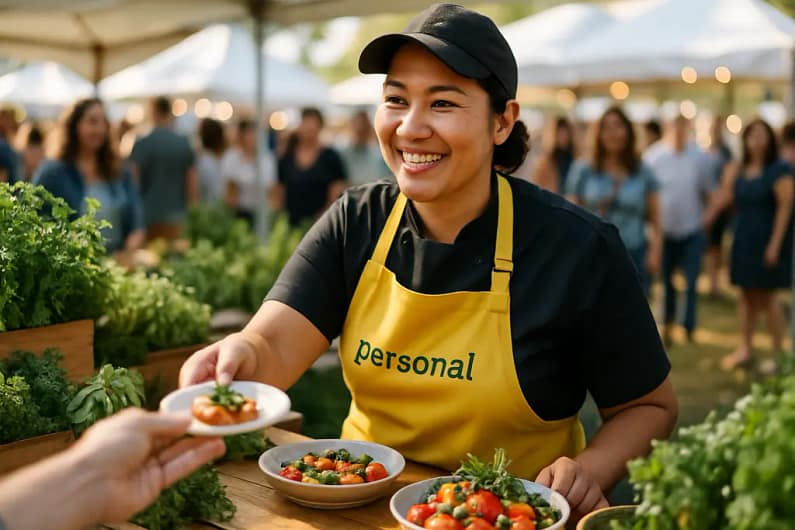
For a personal chef, local event presence is not just a weekend marketing tactic. It is a practical way to meet diners before they are ready to book, hear what households actually need, and become a familiar food professional in the community. Fairs, farmers markets, school fundraisers, neighborhood tasting nights, and seasonal festivals all give chefs a setting where trust can start in person rather than through a contact form alone.
I look at community events as relationship rooms. A chef may talk with a parent looking for weekly dinners, a couple planning a small anniversary meal, a local farmer seeking menu partners, or a nonprofit organizer searching for food support at a future gathering. Those conversations rarely happen in one clean sales line. They build through samples, clear service descriptions, calm follow-up, and a chef who listens well.
Why Local Event Presence Builds Trust
Local Event Presence Before The First Booking
Private dining is personal. Clients are often inviting a chef into their home, discussing preferences, sharing dietary limits, and trusting someone with an occasion that matters to them. A public event gives potential clients a lower-pressure way to observe the chef’s communication style, menu point of view, and professionalism.
That does not mean a chef needs a large booth or a full demo kitchen. A small tasting table, a seasonal menu card, or a short conversation about how weekly meal prep works can be enough. The key is to make the service understandable. Many diners still confuse personal chefs with caterers, restaurant chefs, or meal-kit companies. Events give chefs a chance to explain the difference in plain language: in-home service, private meal planning, prep days, small dinner parties, or other clearly defined offerings.
Read The Room Before Selling
The strongest event conversations start with questions. Ask whether the person cooks often, hosts at home, struggles with weeknight meals, or is planning a specific gathering. Those answers show which service path fits. A family asking about school-night dinners needs a different explanation than a couple planning a birthday dinner for eight guests.
A chef should also notice event context. A farmers market audience may care about seasonal sourcing. A charity tasting may bring donors who value hospitality. A street fair may include families who need approachable meal solutions. Each setting helps refine language for future booking pages, emails, and consultations.
What The Numbers Say About Local Events
Festival Traffic Can Be Serious Business
Local events can carry real economic weight. In 2024, 156 festivals in the Upper Midwest drew 9.5 million attendees, including 1.8 million out-of-town attendees. Those festivals generated US $1.3 billion in direct spending, US $2.8 billion in total economic impact, and supported 21,800 jobs, according to a South Dakota State University Extension review.
Those figures do not mean every personal chef should chase the largest festival in the region. They do show why event participation deserves serious planning. Even a modest local fair can place a chef near people who are already spending time, attention, and money in a food-and-community setting. That is different from interrupting a stranger online. At an event, the conversation starts with shared context.
Small Public Investment Can Signal Local Support
Fair systems can also reflect how communities support public gathering places. In Pennsylvania in 2024, every dollar invested by the Department of Agriculture in county and local fairs returned US $286 in economic impact and US $5 in state fiscal revenue, according to the state’s Pennsylvania fair impact report.
For personal chefs, the takeaway is not to expect automatic sales. The better lesson is that fairs and festivals often sit inside larger local systems: agriculture, tourism, small business, civic groups, and family traditions. A chef who appears consistently in those systems can become easier to remember and easier to refer.
How Chefs Can Show Up With Purpose
Match The Offer To The Setting
Treat local event presence as a service preview, not a full sales pitch. The offer should match the event size, audience, and practical limits. A chef at a busy outdoor market may need a simple tasting, one printed service sheet, and a quick way to collect inquiries. A chef at a smaller community supper may have more room for a short talk about sourcing, menu planning, or private dinner structure.
- Bring one clear service message, such as weekly meal prep, small dinner parties, or seasonal family meals.
- Use a limited sample or visual menu example that reflects the work clients can actually book.
- Prepare a short explanation of pricing structure without quoting unplanned custom menus on the spot.
- Collect permission-based contact details for follow-up rather than relying on memory.
- Thank event organizers and nearby vendors, since referrals often come through peers.
If a chef wants to test a menu before committing to a larger event, a smaller pop-up can be a useful practice step. The related article on community pop-ups explains how chefs can use smaller gatherings to learn from diners, control scope, and turn local interest into repeat bookings.
Prepare A Conversation Plan
A conversation plan keeps the chef from sounding scattered when the booth gets busy. Start with a warm greeting, ask one useful question, then explain the service in one or two sentences. Keep printed materials short. A one-page handout with service types, booking steps, and contact details is often more useful than a long brochure.
Chefs should also prepare for people who are curious but not ready. A friendly answer and an easy follow-up path matter. Someone who takes a card at a spring market may book a graduation dinner later, or mention the chef to a neighbor planning a small celebration. For readers comparing neighborhood food content across related dining sites, Hudson Street Cafe offers another point of reference within the same network for exploring similar culinary topics.
Measure The Value After The Booth Is Packed
Track Signals Beyond Immediate Sales
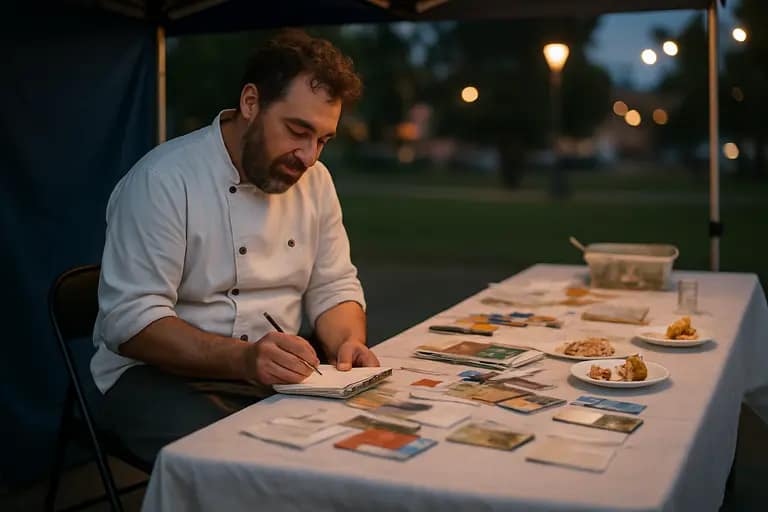
A practical local event presence plan should be measured by more than same-day bookings. Immediate sales are useful, but they can miss the longer value of community contact. Chefs should track how many qualified conversations happened, how many people joined an email list, which service questions came up most often, and whether vendors or organizers offered future introductions.
After each event, write a short debrief within 24 hours. Note which sample drew questions, which service sounded most relevant, and which objections appeared. If several people asked whether weekly meals could be prepared for two-person households, that is useful market feedback. If many asked about small birthday dinners, the chef may need a clearer private-dinner package.
Follow Up While The Memory Is Fresh
Follow-up should feel personal and specific. Reference the event, thank the person for stopping by, and offer a simple next step, such as a short consultation call or a menu planning questionnaire. Avoid sending a generic message that ignores what the person asked. The strength of event networking is the human memory attached to the conversation.
Chefs can also follow up with organizers. A thank-you note, a short recap of what worked, and a willingness to return in a right-fit format can help build repeat invitations. Over time, organizers learn which chefs arrive prepared, communicate clearly, and treat the event as a community setting rather than only a sales opportunity.
Local Event Presence As A Growth Habit
The value of local event presence grows when it becomes part of a steady networking rhythm. One event can introduce a chef to new diners. Several well-chosen events can create recognition across neighborhoods, local farms, civic groups, and small businesses. That recognition makes referrals easier because people can connect a face, a conversation, and a food experience.
Personal chefs do not need to attend every fair or festival. The smarter move is to choose events that match the services they want to book. A chef focused on family meal prep may prioritize school fundraisers, farmers markets, and parent-centered community nights. A chef focused on intimate dinners may choose wine tastings, art walks, or nonprofit gatherings where guests are already thinking about hospitality.
From a networking standpoint, the goal is simple: be visible, be useful, and be easy to contact after the event ends. That combination turns community engagement into a repeatable growth practice, not a one-time appearance.