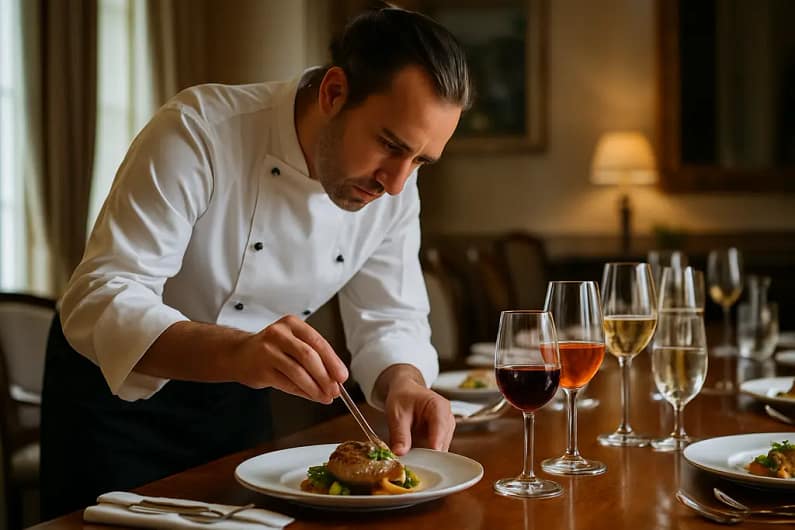
Premium beverages are becoming a practical planning point for personal chefs, not just a bar-cart detail added after the menu is set. As more clients host higher-end dinners at home, the drink plan can shape pacing, perceived value, and the story behind each course. For chefs who build private dinners, weekly service, small celebrations, or chef-led tastings, beverages now deserve the same clear thinking as sourcing, prep time, and service flow.
The data supports that shift. Grand View Research valued the global premium spirits market at US$253.8 billion in 2025 and projected it to reach US$546.7 billion by 2033, with a 10.3% compound annual growth rate from 2026 to 2033, according to its premium spirits report. In the United States, Emergen Research placed the premium spirits segment at US$42.80 billion in 2025 and projected US$78.90 billion by 2035, with a 6.3% compound annual growth rate in its U.S. premium spirits report.
Why Premium Beverages Matter For Private Dining
Premium Beverages Signal The Occasion
Clients often hire a personal chef because they want a meal that feels more considered than takeout or a standard restaurant reservation. A thoughtful beverage plan helps frame that occasion. It can begin with a low-alcohol aperitif, continue with a wine or spirit pairing, and end with coffee, tea, or a non-alcoholic digestif-style drink. The value is not only in the bottle price. It is in how the drink supports the food, the mood, and the client’s reason for gathering.
This matters for storytelling. A chef serving roasted fish with citrus, fennel, and herbs can explain why a crisp white wine, a dry vermouth spritz, or a chilled botanical zero-proof drink fits the dish. That short explanation gives the client language they can share with guests. It also makes the meal feel planned rather than assembled from separate parts.
Home Hosts Want Restaurant-Style Structure
The research points to a larger appetite for higher-end drinks at home, especially in premium spirits. Personal chefs can respond without pretending to be sommeliers or bartenders. The goal is to design a structure that is easy for the client to understand before booking: welcome drink, first-course pairing, main-course pairing, and an optional after-dinner pour or alcohol-free finish.
That structure also helps control cost. Instead of asking clients to buy several full bottles without direction, the chef can recommend a short list by style, not by hype. For example, “dry sparkling wine,” “aged rum with baking-spice notes,” or “non-alcoholic aperitif with citrus and bitter notes” gives the client useful buying guidance while leaving room for local availability and budget.
Building Beverage Pairings Without Overpromising
Start With The Dish, Then Match The Weight
A practical pairing starts with weight, acidity, sweetness, and texture. Lighter seafood, chilled vegetables, and fresh cheeses usually need drinks that feel clean and bright. Braised meats, grilled mushrooms, and spice-forward dishes can handle fuller-bodied wines, darker spirits, or drinks with warm aromatics. Dessert does not always need the sweetest option; coffee, tea, amaro-style flavors, or a lightly bitter non-alcoholic drink may work better if the dessert is already rich.
Chefs should describe pairings in plain language. “This drink refreshes the palate after the browned butter” is more useful than a long technical explanation. Clear wording protects the chef from sounding like they are making promises they cannot support and helps clients picture the meal before they approve the menu.
Offer Alcohol And Alcohol-Free Paths
The research notes supplied for this topic point to growing interest in non-alcoholic options, moderation, and adult-style drinks that are not simply soda or juice. A personal chef can answer that demand by offering two paths for the same menu: one with wine or spirits and one without alcohol. This approach also avoids making guests identify themselves at the table. Everyone receives a drink that looks intentional.
For alcohol-free pairings, think about acid, tannin, bitterness, bubbles, and aroma. Sparkling tea, shrub-style drinks, bitter citrus spritzes, herb infusions, cold brew coffee, and savory tomato or cucumber drinks can all carry a meal if they are balanced. Chefs should avoid medical or wellness claims unless those claims come from authoritative sources. It is safer and more useful to describe flavor: tart, dry, aromatic, smoky, floral, creamy, or refreshing.
Service Formats Personal Chefs Can Sell Clearly
Use Tiers So Clients Can Choose Comfortably
Premium does not have to mean the most expensive bottle on the shelf. The research notes also mention pressure in some super-premium categories, which is a reminder that clients may want quality without feeling pushed into luxury pricing. A tiered beverage menu can solve that tension.
- Classic pairing: simple wine, beer, tea, or spritz suggestions matched to each course.
- Premium pairing: higher-end spirits, wine, or craft non-alcoholic drinks with a short story for each selection.
- Tasting format: smaller pours across several courses, useful for clients who want variety without excess.
- Alcohol-free pairing: adult-style drinks built around acidity, bubbles, herbs, tea, coffee, spice, and seasonal produce.
This kind of menu helps with sales because it gives clients a decision path. It also gives the chef a cleaner way to quote labor. Preparing syrups, batching garnishes, chilling glassware, labeling bottles, and serving drinks all take time. If that work is included, it should be visible in the proposal.
Plan Around The Room, Not Just The Menu
A four-course tasting dinner for eight people has different beverage needs than a grazing table for a birthday, a brunch for twelve, or a weekly meal-prep client who wants drinks in the refrigerator. Before suggesting premium beverages, ask about glassware, ice, refrigeration, counter space, parking, timing, and whether a licensed bartender is needed for the event. Alcohol laws vary by location, so chefs should stay within local rules and avoid presenting themselves as alcohol retailers unless their business is licensed for that activity.
For off-premise or drop-off service, beverage planning should be even simpler. Label each bottle or batch with the course or meal it matches. Include serving temperature, garnish, and whether the drink should be shaken, stirred, poured over ice, or served straight from the refrigerator. Clear directions reduce client stress and protect the quality of the meal.
Storytelling That Makes Drinks Feel Worth It

Connect The Beverage To The Ingredient Story
Personal chefs often win repeat clients by explaining why a menu fits the person, the season, and the occasion. Beverage stories can follow the same pattern. If the first course uses local apples, a dry cider, apple shrub, or tea with orchard fruit notes can extend that idea. If a dish draws from coastal cooking, a saline white wine, fino-style profile, or cucumber-mint alcohol-free drink can support the theme.
Keep the story short and specific. A client does not need a lecture on production methods unless they ask for it. They need one or two sentences that make the pairing feel intentional: where the flavor connection is, why the drink was chosen, and how it changes the bite of food.
Use Visual Cues With Restraint
Presentation affects how clients perceive a beverage service. Clean glassware, a chilled bottle, a small tray, citrus peel, herbs, or a single edible garnish can make the drink feel finished. The key is restraint. Garnishes should match the aroma and flavor of the drink rather than sit there as decoration.
For chefs building their brand voice online, beverage storytelling also creates strong content. A short post explaining why a rosemary-grapefruit spritz works with lamb or why sparkling tea suits a seafood lunch can teach potential clients how you think. If you need a related dining-culture reference from the same network, Hudson Street Cafe is a useful place to keep an eye on cafe and hospitality themes.
Pricing And Booking Questions For Beverage Service
Ask Better Questions Before Sending A Quote
Chefs should not wait until the final invoice to discuss drinks. A few practical questions can prevent confusion and help clients choose the right tier. Ask whether guests drink alcohol, whether anyone prefers alcohol-free options, whether the client already owns bottles they want to use, and whether they expect the chef to shop for mixers, garnishes, ice, and glassware.
- How many guests will drink alcohol, and how many prefer alcohol-free pairings?
- Is the event seated, buffet-style, cocktail-style, or drop-off?
- Will the client supply wine, spirits, beer, or non-alcoholic drinks?
- Does the home have enough refrigerator space, ice, and glassware?
- Should the quote include batching, garnish prep, printed pairing notes, or service staff?
These questions also create trust. Clients see that the chef is thinking through the experience before the cooking begins. For chefs serving higher-spend households, the same clarity used for ingredient sourcing and service promises should apply to beverage planning; this connects naturally with broader expectations for premium personal chef service.
Premium Beverages In The Personal Chef Booking Conversation
Premium beverages give personal chefs a practical way to add value, but only if the offer is clear. The best version is not a vague promise of “pairings.” It is a defined service: what drinks are suggested, who buys them, how they are served, what alcohol-free choices are included, and how the story connects to the food.
Chefs who adapt well will treat beverage service as part of menu design, not as an afterthought. They will use tiers, plain-language pairing notes, flexible alcohol-free options, and honest pricing. They will also stay careful with claims, especially around functional drinks or wellness language. In private dining, the drink in the glass should support the plate, the host, and the pace of the evening. Done well, that support can make the whole service feel more complete without making the booking harder for the client to understand.