
Let’s be honest. The idea of a lone chef working alone in a kitchen is a myth.
Successful chefs know a key secret. They share their financial knowledge like they share meals. Chefs like Christine Cushing and Craig Wong didn’t just open restaurants. They built a strong entrepreneurial spirit and gained valuable experience.
This article isn’t about secret recipes. It’s about the shared knowledge needed to survive. We’ll explore how turning your peer network into a strategic group can protect you from market changes.
It opens up new chances. It turns shared knowledge into personal gain. Imagine having your own board of directors. But with better aprons and tips on finding cheap truffles.
The Value of Networking in Financial Success
Networking is more than just exchanging business cards. It’s about building a safety net against failure. In life’s high-stakes kitchen, being alone is a luxury you can’t afford.
Why do we find talking about money so taboo? We share recipes for 72-hour short ribs but keep quiet about getting a loan. It’s a strange, self-defeating habit.
Chef Christine Cushing says not to fear failure. It’s not just motivational talk. It’s a call to break the silence. Chef Craig Wong talks about getting 1,000 “no’s” before a “yes.” He’s showing a tough, real-world networking strategy for capital and opportunity.
Gordon Ramsay teaches that success is a team effort. He says teamwork is key for business success. This also applies to finances. Your financial health is a team effort.
Let’s see networking as a way to manage risks, not just schmoozing. Sharing knowledge on loans and investor relations creates a financial safety net stronger than any single loan.
It’s the difference between being alone in a recession and being part of a support group. One bad Yelp review can’t hurt a whole group.
The data shows the big difference between going it alone and using your network for financial tips for chefs.
| Financial Challenge | Solo Chef Approach | Networked Chef Approach |
|---|---|---|
| Securing a Business Loan | Relies on personal credit score and generic bank advice; high rejection risk. | Gets referrals to chef-friendly lenders and insights on successful application tactics from peers. |
| Negotiating with Suppliers | Pays sticker price; vulnerable to cost hikes without leverage. | Pools purchasing power with other chefs for bulk discounts and shares intel on reliable vendors. |
| Handling a Slow Season | Drains savings or takes on high-interest debt to cover payroll. | Organizes collaborative pop-ups or shares staff with other restaurants to maintain revenue flow. |
| Navigating Investor Relations | Learns from costly mistakes; may accept unfavorable terms due to lack of benchmarks. | Accesses shared knowledge on fair equity splits and red flags in contracts from experienced colleagues. |
This isn’t about charity. It’s about working together. The shared financial tips for chefs you gather are a living resource. They’re better than any guide.
Craig Wong’s 1,000 rejections? Imagine if he had a network to vet his pitch first. The path to a “yes” gets shorter. Your network becomes your early-warning system and brainstorming team.
So, stop keeping your balance sheet a secret. The real financial tips for chefs often come from your neighbor. Your next great idea for saving money might be just a conversation away.
Joining Chef Communities and Organizations
Joining a chef community is more than just adding to your resume. It’s about gaining a seat at a powerful table. The old chef model was about working alone, often for free, and then building your own restaurant. This approach was isolating.
Today, chefs focus on building a community. Leaders like Michael Solomonov say the future is about working together. Formal groups help avoid the isolation of the past.
These groups are not just for socializing. They act as a de facto union for chefs. They have a plan and a purpose behind their meetings.
What does this mean in real life? It means having a strong voice. A chef alliance can negotiate better prices with suppliers. They can also work with local government on issues like outdoor dining.
This change is key. It moves chefs from competing alone to working together. As Gerardo Gonzalez suggests, your community becomes your support system. It helps in many ways, from advice to innovation.
The table below shows the difference between old and new ways of working. It’s a blueprint for moving from being alone to being part of a community.
| Aspect | The Old “Lone Wolf” Model | The Modern Community Model |
|---|---|---|
| Philosophy | Scarcity & Secrecy | Abundance & Collaboration |
| Financial Leverage | Negotiating alone, paying retail | Collective bargaining for bulk rates |
| Knowledge | Trial, error, and guarded secrets | Structured peer learning and shared data |
| Support System | Yourself (and maybe your therapist) | A network for referrals, problem-solving, and advocacy |
Think of it as upgrading your business. The old way was for isolation. The new way is for connection. Your membership is an investment in your success.
This is the power of chef networking in action. It turns casual chats into valuable assets. You see other chefs as allies, not rivals. Together, you can change the industry for the better.
Exchanging Rate and Payment Info with Peers
What if your most valuable market research tool isn’t a spreadsheet, but a conversation with a peer over a post-shift drink? In the culinary world, we’ve been conditioned to treat financial talk like a state secret. This silence has a price tag—it’s called the passion tax.
When the GQ panel dissected line cook wages, they weren’t just venting. Amanda Cohen’s blunt admission—paying $20 an hour in NYC and struggling to find people—wasn’t a complaint. It was a data point. A revolutionary one.
Think about it. How can you benchmark your own costs if you’re operating in a vacuum? How do you know if your seafood purveyor is charging you 30% more than the restaurant down the street? This isn’t gossip. It’s culinary cartography.
Sharing pay rates with trusted peers creates something rare in our industry: a baseline. That $20-an-hour figure becomes more than a number. It’s a market signal. When several chefs openly discuss their struggle at that rate, it tells everyone something’s broken. Not in their kitchens, but in the entire ecosystem.
These discreet conversations yield the most valuable financial tips for chefs. You learn which vendors have fair fee structures. You discover regional payment norms for understanding international payment structures when sourcing ingredients globally. You get real numbers on what percentage of revenue should go to labor.

Let’s get practical. What should you actually exchange? Start with three categories: labor costs, ingredient markups, and operational fees. Compare notes on what you pay your sous chef. Discuss the percentage your POS system takes. Talk about what you charge for catering deposits.
This transparency does something magical. It stabilizes the market. When chefs collectively understand true costs, they can set menu prices that actually sustain their businesses. They can pay staff competitively without guessing. They can push back on predatory vendor contracts.
The old guard called this “unprofessional.” I call it strategic self-preservation. That whispered conversation about purveyor costs? It’s not betrayal. It’s due diligence. The shared spreadsheet of local line cook wages? That’s not collusion. It’s collective bargaining by another name.
Start small. Pick one chef you trust. Swap numbers on one thing—maybe what you pay for organic chicken breast. See how that data changes your next purchasing decision. That’s how you turn isolated struggles into shared intelligence. That’s the real power of financial tips for chefs.
Remember, silence only benefits those who think a living wage is an optional garnish. Your voice, and your numbers, are ingredients for change. Use them.
Collaborating on Events to Reduce Costs
Working together on events can make costs change from fixed to variable. This turns a possible loss into a chance to make money. You might have a busy schedule with pop-up dinners, festivals, and charity events. But doing it alone can lead to losing money.
Strategic business collaboration is not just a good idea. It’s essential for your business to stay profitable.
Let’s look at the numbers. Sharing the cost of a prime location can save a lot. Combining marketing budgets can make your message stronger. And, sharing staff costs can avoid overtime expenses.
This approach is like Gordon Ramsay’s “waste-not” principle, but for your whole business. It helps you save money and be more efficient.
| Cost Category | Solo Event | Collaborative Event |
|---|---|---|
| Venue Rental | $5,000 | $1,667 (split 3 ways) |
| Marketing & Promotion | $2,000 | $700 (shared campaign) |
| Staffing (Overtime Risk) | High | Distributed & Reduced |
| Equipment & Logistics | Full cost borne by you | Shared resources & costs |
| Total Estimated Outlay | $7,000+ | $2,500 |
The numbers show the benefits of working together. It’s like taking the carpool lane to success. You save money and reach your goals faster.
Collaboration also brings exposure. Your audience meets new people, helping your brand grow. It’s a way to increase your visibility.
So, when planning events, think about who you can partner with. A collaborative event can turn a solo effort into a team success. Your business will benefit greatly.
Building Referral and Support Networks
A refrigeration failure on a Friday night is more than a logistical nightmare; it’s a test of whether you’ve invested in business collaboration. Your next star line cook might not answer a generic job ad. They’ll likely come through a trusted colleague’s text message.
Your next angel investor might be a regular from a fellow chef’s dining room. They’ll be introduced to you warmly.
This is the power of social capital in action. A strong referral network acts as your best HR and business development team. It’s built on Nav Bhatia’s simple rule: treat people well. When you do, they become your biggest supporters.
This isn’t about collecting business cards or LinkedIn connections. It’s about building a support system. Who do you call when your walk-in fails at 9 PM? A peer with a spare cooler can help.
A friendly competitor who can take your last-minute reservations is more than kind. They’re helping with your business plan.
This shift means moving from a transactional to a relational mindset. The table below shows the difference.
| Aspect | Transactional Networking | Relational Networking |
|---|---|---|
| Primary Goal | Immediate gain (a job, a sale). | Long-term trust and mutual support. |
| Communication Style | Episodic, need-based. | Consistent, value-sharing. |
| Outcome in a Crisis | Radio silence; you’re on your own. | Active problem-solving from your network. |
| Long-term Value | Low; the connection fades after the transaction. | High; compounds into deeper business collaboration and referrals. |
Gordon Ramsay says a business is only as good as its people. This includes your peers. Your “team” includes that chef across town and the sommelier with great clients.
Building this isn’t hard, but it’s intentional. Start by being the source of value. Share a supplier tip or recommend a talented dishwasher. Celebrate a peer’s success. This builds trust and encourages others to help you.
For more on building these connections, check out this guide on how to build a robust referral.
The payoff is resilience. A strong network means you can handle setbacks easily. A staffing gap gets filled quietly. A broken piece of equipment finds a temporary fix.
This safety net makes your career sustainable. Your network isn’t just who you know. It’s who will support and grow with you.
Learning from Others’ Financial Journeys
Why should you pay for your own financial mistakes when you can learn from others for free? The best financial tips for chefs often come from real-life experiences. These stories are shared over drinks after service.
Christine Cushing teaches us that failure can be a valuable lesson. By seeing mistakes as learning opportunities, you can avoid big losses. Teresa Spinelli took the initiative to learn about investing, showing the power of peer learning. Craig Wong’s success came from observing what worked and what didn’t in other kitchens.
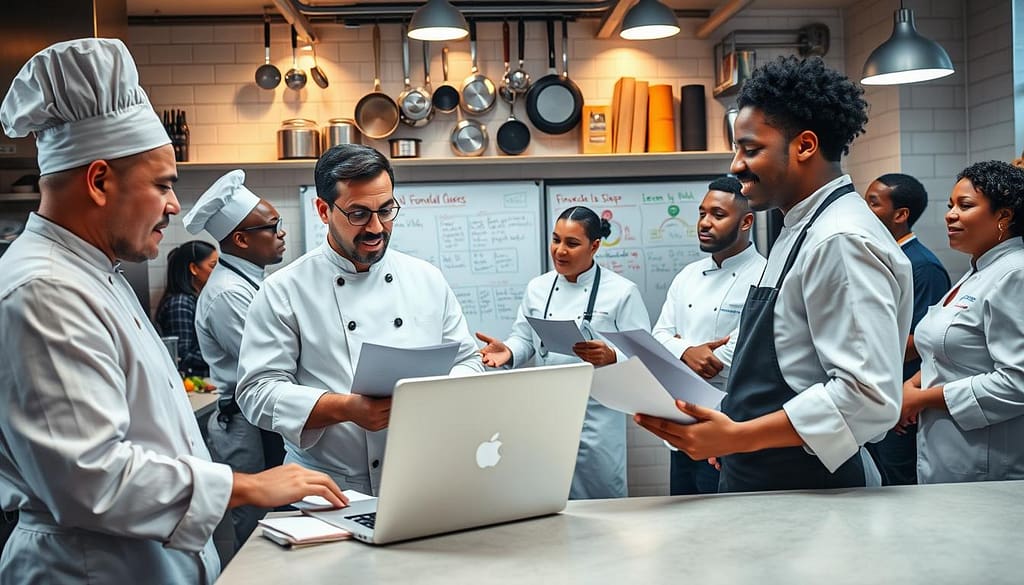
These stories are your secret weapon. A failed catering contract can teach you about liability. A successful expansion can show you how to grow your business. A simple bookkeeping trick can save you thousands. This raw, unfiltered peer learning offers insights that guides can’t match.
This approach helps you make smarter decisions. You won’t guess which point-of-sale system to buy. You’ll learn from someone who has already tried it. You won’t wonder if a food truck is a good idea. You’ll see the real financials from someone who has done it.
| Type of Financial War Story | The Core Lesson | The Financial Insight | Potential Impact |
|---|---|---|---|
| The Near-Disaster Contract | Always define “force majeure” and liability caps. | Legal vagueness is a direct cost center. A clear contract is preventative finance. | Can prevent losses of 10-20% of project value. |
| The Against-Odds Expansion | Community support and phased investment trump giant loans. | Growth capital isn’t just about banks; it’s about strategic, staggered reinvestment. | Reduces debt service pressure and increases long-term equity. |
| The Simple System Hack | Automating inventory tracking with a basic app. | Time saved on manual entry is labor cost recovered. Small tech investments have high ROI. | Can save 5-10 hours per week in administrative labor. |
So, the next time you’re at a chef’s table or scrolling a forum, listen for the scars, not just the accolades. The real curriculum for culinary finance is written in the ledgers of your peers. Actively seek out these journeys. Your bottom line will thank you for the borrowed wisdom.
Using Online Forums and Social Media
Imagine a 24/7 global staff meeting where every chef can share their thoughts. Welcome to the internet. It’s the world’s largest, messiest, and most opinionated kitchen. Forums, subreddits, and Facebook groups are where chefs’ collective thoughts come to life.
Need honest feedback on a new POS system at 2 AM? It’s there. Debating automatic service charges? The thread has 500 comments. This is the raw pulse of the industry. Many chefs also stay informed about regional culinary trends and tourism shifts through sources like Baja California travel new, which often highlights emerging food scenes, chef collaborations, and hospitality opportunities shaping the wider industry.
But, there’s also a lot of negativity. For every wise piece of advice, there’s a troll. The key is to be thick-skinned and picky. Avoid flame wars and focus on threads with real data and solutions.
Used right, these platforms are a global brain trust. They help you troubleshoot with chefs who’ve faced the same issues. They also let you spot trends early, giving you a competitive edge.
So, how do you engage? Start by learning the group’s culture. When you post, be specific and offer value. The best networking is a two-way street. It’s about building a reputation as a thoughtful contributor.
Ongoing Education and Resources
Amanda Cohen didn’t just open a restaurant; she created a learning hub. Her “Dirt Candy University” program makes learning fun. Staff earn points for learning, turning it into a game.
This isn’t just HR talk. It’s a smart strategy. If your kitchen stops learning, your menu becomes outdated.
Teresa Spinelli of Edmonton’s Italian Centre Shop also knew this. She taught her staff about money, not just handed out books. This made her team smart about spotting waste and opportunities.
This is the new way of business collaboration. It’s about sharing knowledge as a valuable asset.
So, how do you start this learning journey without spending a lot? You work together.
First, get group discounts on courses. Talk to sommeliers or trainers about rates for your team. Learning together saves money.
Second, start a mastermind group. Meet with colleagues to discuss financial topics. “How did that pop-up make money fast?” Analyze financial statements together.
Lastly, create a shared library online. A cloud folder for your team to share articles and tips. This way, everyone learns from each other’s successes.
The aim is to build a learning community. Your team’s collective knowledge grows with the market. Think of education as a key ingredient, not an expense.
Conclusion
The idea of a chef as a lone artist, always on the edge of bankruptcy, is flawed. It’s not something to be proud of. It’s a plan that keeps disappearing.
The way to success is through sharing knowledge. Your best tool isn’t a secret recipe. It’s your network. True financial success comes from chef networking—talking rates, learning from failures, and sharing costs.
Don’t chase the solo dream. Your financial safety comes from advice and shared plans. The big question is, can you handle going it alone?