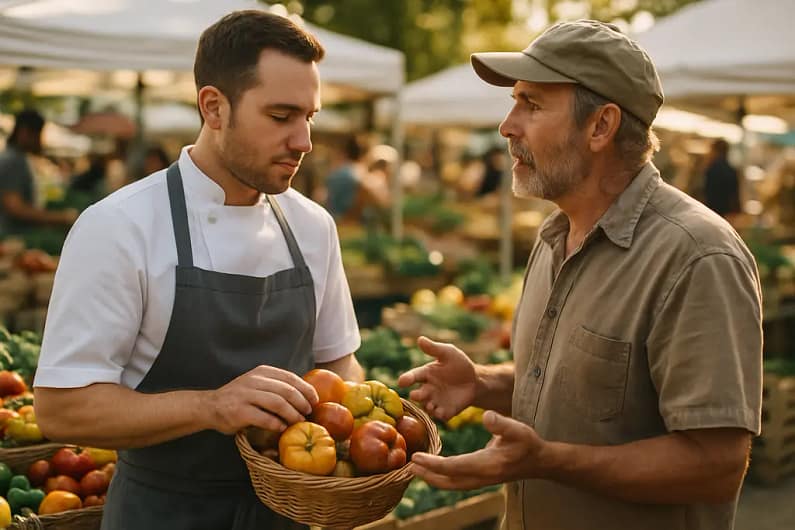
Eat Local Month in Washington gives personal chefs a practical reason to move supplier outreach from a vague wish list into a dated business plan. September 2026 was officially declared for Washington’s farmers, fishermen, ranchers, and artisans, and the fourth annual campaign began on September 1, 2026. As of September 18, 2026, some early activities had already taken place, while listed offerings continued through at least September 27, 2026. For personal chefs, that timing matters: the campaign concentrates public attention on local food, which can make producer conversations feel more relevant, less cold, and easier to connect to client menus.
From a financial management view, the value is not only in finding beautiful ingredients. A chef needs suppliers who can communicate availability, order windows, payment terms, substitutions, and delivery limits. From a marketing view, the same relationships can give clients a clearer reason to book: a seasonal dinner, a weekly meal-prep plan, or a small event menu built around Washington-grown and Washington-caught foods. The goal is not to claim every local ingredient is always cheaper or easier. The goal is to build sourcing options before a client request becomes urgent.
Why Eat Local Month Matters For Chef Growth
Eat Local Month As A Warm Introduction
Cold outreach to farms, fisheries, ranches, and artisan producers can be hard for a solo chef. Producers are busy, and personal chefs often work in smaller quantities than restaurants or institutions. The September 2026 campaign gives both sides a shared context. A chef can introduce themselves by saying they are building client menus around Washington sourcing during the campaign period, rather than asking a producer to interpret an open-ended request.
Research for the 2026 campaign noted a statewide platform for events such as farm tours, markets, festivals, and open houses. It also identified 12 listed events across Washington from early September through at least September 27, 2026. Not every event will fit every chef’s service area or menu style, but the structure is useful. A chef can use one event to meet growers, another to understand market pricing, and another to test how diners talk about local ingredients in person.
Turn Public Interest Into Specific Offers
During Eat Local Month, personal chefs can frame services around limited, seasonal menus without overpromising year-round availability. A chef might offer a September dinner for a private household, a small gathering menu based on regional produce, or a weekly meal-prep plan that changes as harvests shift. The strongest offer states what is flexible: the menu theme, protein choice, produce selection, or final side dishes.
This is where marketing and cost control meet. If a producer has a crop in strong supply, the chef may be able to plan around that item and reduce waste. If supply is tight, the chef can use the producer relationship to explain substitutions before a client sees a final menu. For more groundwork on meeting suppliers before making promises to clients, this related article on local producer networking offers a useful companion angle.
Build Producer Relationships Before Placing Orders
Ask Operational Questions First
Personal chefs should treat first conversations with producers as business discovery, not just ingredient browsing. The most useful questions are practical: What products are available in September? What quantities make sense for small professional buyers? Is pickup preferred, or is delivery possible? How much notice is needed? Are invoices available? What happens if weather changes the crop plan?
Those questions protect both sides. A chef who needs two pounds of herbs and six pounds of vegetables for a dinner party should not assume a wholesale system can handle that request without advance notice. A producer should not have to guess whether a chef is buying once for a themed dinner or trying to build a recurring account. Clear order language saves time and supports repeat business.
Use Institutional Demand As A Signal, Not A Guarantee
Washington’s Local Food Purchase Assistance pilot began in July 2022 and concluded on December 31, 2025. The program spent $10.9 million on locally produced food through hunger relief organizations, with purchases including fresh produce, animal protein and seafood, and dairy; it also reported producer benefits across all 39 counties, according to the Washington State Department of Agriculture. That does not mean personal chefs can copy institutional procurement models. It does show that local food channels in Washington have had organized purchasing activity beyond individual consumer sales.
For a chef, the lesson is to respect existing producer commitments. Some farms and food businesses may already be serving food banks, schools, restaurants, markets, or wholesale accounts. A smaller personal-chef order can still be attractive if it is predictable, paid on time, and easy to pack. The best opening pitch is not “Can you supply everything I need?” It is “Here is the service I provide, here are the quantities I usually buy, and here is how much notice I can give.”
Plan Menus Around Eat Local Month Supply

Design Menus With Substitution Room
Use Eat Local Month as a planning prompt, not a rigid script. Washington’s September food calendar can include a range of farm and seafood possibilities, but exact availability depends on producer, region, weather, harvest timing, and existing commitments. A personal chef should write client menus with categories rather than fragile promises: “seasonal greens,” “local stone fruit where available,” or “Washington seafood option pending supplier confirmation.”
That wording keeps the client excited while protecting the chef from margin damage. If a quoted menu depends on one ingredient that becomes unavailable, the chef may have to make a rushed purchase at a higher cost. If the menu allows approved substitutions, the chef can preserve the service promise and maintain the producer relationship.
Price The Story And The Labor
Local sourcing often adds communication work. A chef may spend time visiting a market, confirming harvest windows, coordinating pickup, revising menus, and writing client notes about producers. That labor should be part of the service price. It is not enough to pass along ingredient cost; the chef is also selling planning, access, and the confidence that the menu has been thoughtfully matched to the season.
A simple pricing method is to separate three figures before quoting: estimated ingredient cost, sourcing labor, and cooking or service labor. That makes it easier to explain why a seasonal local menu may cost more than a standard pantry-based menu. It also keeps the chef from absorbing unpaid hours in the name of good marketing. Diners comparing how independent dining brands present place-based identity can also review insights by visiting De Novo Montclair for another food-business perspective.
Washington Producer Connections For Personal Chefs
Make Follow-Up The Growth Step
The real business value comes after the first handshake. Within two business days of meeting a producer, a personal chef should send a short note with service area, usual client type, typical order size, preferred communication method, and expected buying frequency. If there is no immediate order, the chef can still ask to receive availability updates or market schedules.
WSU Extension reported that its Farm to Food Bank work in Clallam and Jefferson Counties distributed nearly $80,000 of local food from 23 farms and producers to 21 partner sites, and also supported $30,000 in local food purchases for six schools, according to Washington State University. Those figures are not personal-chef sales data, but they point to a wider network of producers, buyers, and community food channels that chefs can learn from.
Eat Local Month can help personal chefs connect with that network if they approach it with discipline. Attend or review campaign activities with a buying plan. Ask clear operational questions. Build menus that allow seasonal changes. Price the labor of sourcing. Then follow up in writing so producers know the chef is a serious buyer, not only an admirer of local food. For chefs trying to grow in Washington, that steady professionalism is what turns a September introduction into a supplier relationship that can support bookings well beyond the campaign period.