
Let’s face it. You became a personal chef to make amazing dishes, not to deal with unpaid invoices. Yet, here we are. The real nightmare for chefs is often dealing with spreadsheets, not broken sauces.
This isn’t just boring paperwork; it’s a big risk to your business. Small food businesses can lose up to 10% of their income because of invoicing mistakes. For a personal chef, where it costs $800 to get a new customer, a missed payment is a big deal.
It’s not just annoying; it’s a huge hit to your profit. Your earnings get taken away before you even serve the food.
So, let’s look at this financial mess with a clear eye. This is your guide to making your finances as smooth as a well-made sauce. We’re moving from spreadsheet stress to cash flow confidence.
The Importance of Efficient Invoicing
Efficient chef invoicing is more than just paperwork. It’s the key to your financial success. Without it, your business is like a kitchen without the right tools. It’s slow, inefficient, and can be dangerous.
Your invoice system is like the prep work for your business. Just as you wouldn’t start cooking without the basics ready, you shouldn’t run your finances without a solid invoicing system.
A smooth invoicing process is essential for your business to thrive. It helps money flow in on time, keeps errors low, and keeps your clients happy. It turns financial planning into a precise science.
Your goal of a 45%+ Gross Margin is not just a dream; it’s a must. Every mistake or lost invoice hurts your margin. A good invoicing system protects your profit margins.
It also helps you use your time better. Instead of dealing with paperwork, you can focus on what you do best. This means more time creating and less time chasing payments.
Your invoicing system is also key to keeping your clients. It’s about making sure the money you earn from them stays with you. A disorganized system can lose you money. That’s why effective invoice management is a must.
Bad invoicing is not just messy; it’s risky. It’s like serving a dish that’s not ready. Your business needs the right tools to succeed. Your profits depend on it.
Popular Invoicing Tools and Platforms
In today’s world, using a spreadsheet for invoices is outdated. It’s like using a sundial to catch a flight. Your financial management needs something better. This is your digital toolbox tour, without the marketing fluff.
Let’s look at a game-changer. Platforms like meez are the multi-tools of the culinary business. As detailed in industry insights, you can scan or snap a supplier invoice. The software automatically integrates that cost with your recipes. This makes managing food costs easy, not a weekly headache.
But meez is just one option in a vast ecosystem. Your choice depends on your kitchen’s size. If you’re a solo chef, a simple app is perfect. For deeper cost analysis and client history, you need a full-scale system. The goal is to save your time and increase your profit.
Choosing the right platform is key to a streamlined operation. It helps you attract new clients without getting lost in admin work. Here’s a breakdown to help you pick your perfect match:
| Platform Type | Key Features | Ideal For | The Kitchen Analogy |
|---|---|---|---|
| Simple & Speedy | Fast invoice creation, basic templates, payment links. | Chefs just starting out or with a very simple client list. | The indispensable chef’s knife. Does one job perfectly. |
| Integrated & Insightful | Links expenses to recipes, tracks food cost %, syncs with calendars. | Growing chefs who need to understand their real profitability. | A precision sous-vide circulator. It gives you control and exact data. |
| Robust & All-In-One | Full financial management suite: invoicing, accounting, tax prep, payroll. | Established businesses with teams and complex finances. | The commercial combi-oven. It’s an investment that does everything. |
The right tool turns accounting into a strategic advantage. It’s not about fancy features; it’s about what saves you time. Your financial management should work as hard as you do.
Setting Clear Payment Terms
‘Net 60’ isn’t a payment term; it’s a way to give money away. It’s like lending money to your clients without getting paid back. This isn’t smart money management; it’s just giving away money.
Payment terms are key to your business’s success. With a big monthly cost of $55,791, you need clear terms to make money. Delayed payments can block your path to success.
To succeed, set payment terms that are clear and firm. This shows you’re professional and serious about your work. It also shows you respect your clients’ time and money.
Make payment terms match your business’s needs. You wouldn’t buy all ingredients for a month before booking a client. Your payment terms should be the same.
Here are three key points for payment terms:
- The Non-Refundable Deposit: This secures the date and covers your initial planning and shopping. It turns a “maybe” into a “yes.”
- Milestone Payments: For big projects, tie payments to specific goals. Each goal has a price tag due when it’s done.
- The Final Balance: Pay this when the job is done, not later. This helps you start the next project.
Clear payment terms help you manage your money better. They make your income predictable, helping you cover your big monthly costs. This turns your money management into a strong strategy.
In the end, clear payment terms protect your business from money problems. They give you stability and let you focus on your work. This is smart business and good for your career.
Offering Multiple Payment Options
In today’s world, paying with a watch is common. But asking for paper checks is like asking for a fax for dinner. It slows down your money flow.
Think about the problems: clients who forget their checkbooks, or checks that take three days to arrive. Each problem is a small obstacle to getting your money.
Modern payment processing changes everything. It’s like switching from a slow road to a high-speed highway. By accepting credit cards, bank transfers, and digital wallets, you make paying easy. This removes excuses.
Behavioral economics calls this transactional friction. Every extra step, like finding a stamp, makes people less likely to pay. Making payments simple is not just nice; it’s a way to encourage people to pay right away. When paying is as easy as tapping a phone, they do it without hesitation.
What does easy payment processing look like? You send a digital invoice through Square or Stripe. Your client gets a link and chooses how to pay. The money usually arrives in your account within 48 hours. This makes the transaction almost invisible, which is the goal.
The other option is to chase your own money. Why would you do that? Using various integrated payment processing is smart. It helps you get paid faster, saves time, and shows you’re modern. Your clients will appreciate it, and so will your bank account.
Automated Reminders & Payment Tracking
Chasing payments manually is like washing dishes by hand in a big restaurant. You send the invoice, but then, nothing. You’re left wondering if you should follow up. This back-and-forth wastes your time and energy.
Automation is like having a sous-chef for your financial management. It sends reminders and tracks payments without being annoying. It does the boring work for you, every time.
Using automation is a smart move. It saves you a lot of time and reduces mistakes. No more late nights checking spreadsheets or forgetting to bill for extra ingredients.
This isn’t just about getting paid faster. It’s about freeing up your mind. Being a collections agent takes away from your creativity. By automating this, you can focus on growing your business and pleasing your clients.
A good system sends reminders at the right times. It keeps clients on track without feeling nagged. You get a clear view of who’s paid and who hasn’t.
This makes your cash flow smoother. You stop financing your clients’ forgetfulness. Your financial management becomes proactive, not reactive. You’re in control of your finances.
This change is a big step up for your business. You treat your business backend with the same care as your cooking. This means less hassle, fewer mistakes, and more time for creativity. It’s not just good accounting; it’s smart business.
Dealing with Late or Missed Payments
Late payments are like no-show reservations—they leave you empty-handed. We’ve all felt that anger. But, your business can’t afford to see it as a personal attack.
Let’s look at the numbers. Getting a new client can cost around $800. If they delay payment, that $800 is lost. Your business’s value takes a hit. The real cost of poor payment management isn’t just the unpaid bill; it’s the damage to your business’s core numbers.
To move past anger, set up a fair payment system. It’s like having a plan for financial ups and downs.
This isn’t about feeling mad; it’s about following a financial plan. Here’s how to handle it:
- The Friendly Nudge: Start with a polite email 24-48 hours after the due date. It should mention your great service and include the invoice. Using automation helps a lot here.
- The Formal Notice: If there’s no response in 5-7 days, send a clear notice. Mention the due date, the amount owed, and any late fees. This notice is a record, not a conversation starter.
- The Service Pause: If there’s no reply after that, pause services. Tell the client that all future work will stop until the bill is paid. This can prompt them to pay quickly.

This plan isn’t about ruining relationships. It’s about setting clear boundaries. You’re protecting your work’s value and the time spent on that $800 client. A tough vendor relationship is tough, but unpaid bills are a crisis.
Keep your tone professional, like a seasoned leader. You’re fixing a problem, not starting a war. Being clear and consistent is key to managing payments well.
Having a system for payments makes it easier to handle. It keeps your cash flow safe, respects your time, and might even earn you more respect from clients who know the rules.
Bookkeeping Best Practices
Think of bookkeeping as a detective’s notebook for your culinary empire. Every receipt and transaction is a clue. Your goal is to uncover your profitability.
Forget about just following rules. This is about gaining insights. The right approach turns data into powerful business knowledge. These aren’t just billing tips; they’re strategies that help you thrive.
Expense categorization is key, not just for taxes. It helps you see if certain ingredients are hurting your profits. By tagging every cost, you can understand the real effect of your choices. This makes your billing tips into a shield for your profits.
Adopting a few best practices can change your ledger. First, keep everything in one place. Scattered records confuse you. Second, review your finances regularly. This habit, as shown in bookkeeping 101, stops small problems from growing.
Your organized records are the foundation for your most important KPIs. Are you meeting your Gross Margin goals? Or is your Chef Utilization Rate dropping because you’re undercharging? The numbers reveal the truth your instincts can’t.
This is the aim of smart bookkeeping. It shifts you from reacting to planning. You’re not just recording events. You’re predicting the future. You become the wise leader of your kitchen, using financial clues to build a stronger, more profitable business.
Tips for Tax Preparation
For the unprepared chef, tax time is a stressful search for receipts. The IRS is not known for its humor or patience. But, with a solid financial management system, you can make tax time easier.
Think of your tax return as a yearly business audit. Every invoice, expense, and payment you track is important. This creates a clear paper trail. Organized records can cut tax preparation time by over 40%.
Strategic expense tracking is key. Your Cost of Goods Sold (COGS) is a big deduction. Missing it is like leaving money behind. Also, don’t forget to track variable expenses like mileage and home utilities.
So, how do you make the most of this? Start by organizing your expenses. Here’s a simple framework:
| Expense Category | What It Includes | Strategic Tax Impact |
|---|---|---|
| Cost of Goods Sold (COGS) | All food ingredients, specialty items, and direct meal costs. | Lowers your gross profit directly, significantly reducing taxable income. |
| Variable Operating Expenses | Fuel/mileage, client meeting costs, equipment maintenance, marketing. | These are fully deductible business expenses that chip away at your net profit. |
| Home Office & Indirect Costs | Percentage of rent, utilities, internet, and insurance. | Provides a substantial deduction if you regularly use a home space for admin or prep. |
This isn’t about cheating the system. It’s about playing the game with all the rules. The goal of financial management is to make tax season easier. You’ll file with confidence, knowing your numbers are organized.
Your approach to taxes shows your professionalism. An orderly system makes tax time less stressful. You become a business owner with finances in order.
Transitioning from Manual to Automated Systems
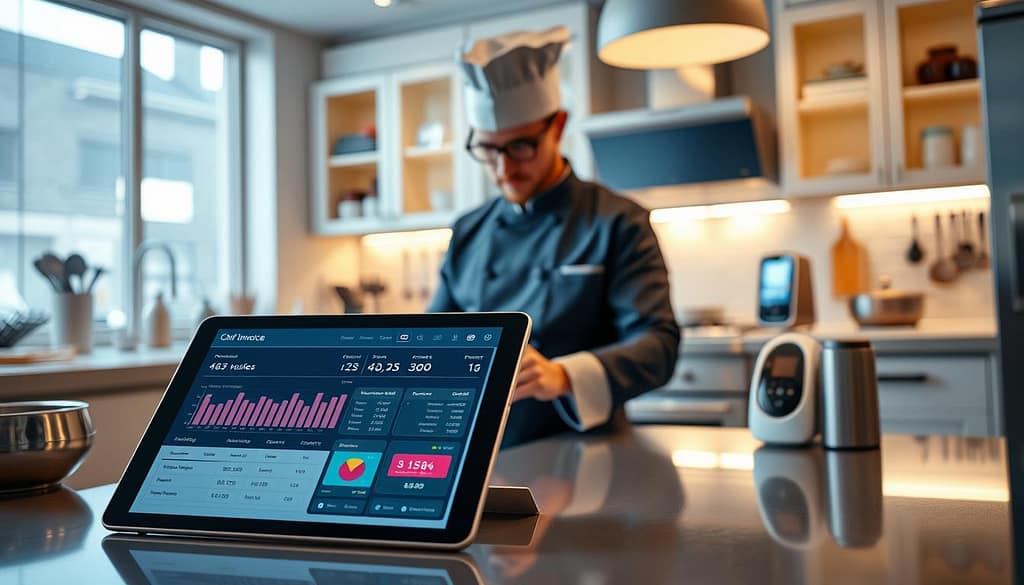
It’s time to upgrade your payment processing from a spreadsheet. Moving to automated chef invoicing is more than just a software change. It’s a big change, like remodeling your kitchen.
At first, you might feel like you’re giving up something good. “But my color-coded columns have served me so well!” True, but think about how much better a modern system could be. It’s about freeing up your time for more creative work.
- Choose Your Software (The Act of Self-Knowledge)
Pick a billing software that solves your biggest problems. It’s not about the latest tool. It’s about fixing your workflow. - Digitize Everything (Burning the Paper-Based Past)
Scan all your old documents. This step is important. It means you’re moving away from lost paperwork. - Integrate Your Tools (Creating the Ecosystem)
Make sure your calendar, client database, and bank account talk to each other. This integration makes your business run smoothly. - Train Yourself (The Investment in Future Sanity)
You need to learn your new tools. Spend an hour practicing. It’s worth it for your sanity later. - Monitor and Adjust (Tasting as You Go)
After a month, check how things are going. Use the data to improve your system. It’s like refining a recipe.
Let’s look at the numbers. Manual vs. automated invoicing.
| Business Task | Manual Approach (Hrs/Month) | Automated Approach (Hrs/Month) | Time Saved |
|---|---|---|---|
| Invoice Creation & Sending | 3 | 0.5 | 2.5 hours |
| Payment Tracking & Follow-up | 2 | 0.25 | 1.75 hours |
| Client Reminders | 1.5 | 0.1 (system-triggered) | 1.4 hours |
| Monthly Reconciliation | 2.5 | 0.5 | 2 hours |
| Total | 9 hours | 1.35 hours | ~7.65 hours |
Automating your invoicing can save you almost a full day every month. Most invoicing platforms are affordable. The effort upfront is worth it for a system that works for you. You’ll have more time to focus on being a chef.
Conclusion
Think of your financial system as a clean kitchen. It’s where your creativity can shine. Mastering invoices and payments is not just about paperwork. It’s about showing respect for yourself and your finances.
Your knife skills might get applause, but managing payments is key. It decides if you have a future. Is your financial management as sharp as your chef’s knife?
Tools like QuickBooks or FreshBooks make the hard work easy. They offer clear terms and many payment options. This isn’t just about admin. It’s the foundation for your creative work to grow.
Improving in this area doesn’t make you less of an artist. It ensures you can keep creating. Your kitchen is clean, and your business is strong. Now, go cook.