
When a client asks about your rate, your stomach drops. Doubt creeps in. Are you charging too much? Too little? This fear is a big hurdle for talented personal chefs.
What if you could feel certain instead of scared? The secret is not just picking a number. It’s creating a solid framework for your pricing strategy. This turns your pricing into a growth engine.
This guide is your roadmap. We’ll cover from your cost structure to presenting value. You’ll learn to create menus and quotes that protect your margin and impress clients.
By the end, you’ll price with confidence. You’ll present proposals that show your true worth. Start with the basics in our comprehensive pricing guide. Then, let’s build your financial health together.
Objectives
Setting your pricing starts with a clear vision of your financial and lifestyle goals. This step moves you from guessing to strategic planning. It makes sure every quote supports the business and life you want to build.
Think of your objectives as the destination on a map. Your pricing strategy is the route to get there. Without a destination, you’re just driving aimlessly.
Begin by defining two income targets: your take-home pay and your business reinvestment fund. Your take-home pay covers personal expenses. The reinvestment fund grows your business, covering new equipment, marketing, or skills training.
A realistic target accounts for all costs, not just ingredient prices. Many chefs price only for food and wonder why they’re not making a profit. Similar to navigating equitable healthcare access, understanding all factors and constraints ensures your decisions are fair, sustainable, and aligned with long-term goals.
To build a sustainable target, understand your capacity. This concept, called “capacity math,” is your financial reality check. It answers a critical question: How many billable hours, events, or clients can you handle without burning out?
Time Capacity: How many hours per week are you willing and able to work on client projects? Subtract time for shopping, admin, and cleanup.
Event Capacity: Based on your service style, how many dinners, meal prep sessions, or catering events can you manage per month?
Client Capacity: How many ongoing retainer or subscription clients can you serve with excellence?
Your capacity directly affects your labor and overhead costs. If you can only handle ten events a month, your fixed overhead costs must be spread across those ten events. Taking on an eleventh event might require hiring help, drastically changing your labor cost structure.
This math establishes the “why” behind your numbers. A high per-event price might be necessary if your capacity is low. If you have high capacity, you might leverage volume with slightly lower margins.
Aligning prices with objectives turns your business into a proactive career. You stop chasing every opportunity and start attracting the right clients. This clarity is the first, and most powerful, step to pricing with confidence.
Costing Framework
Forget guessing; a professional costing framework turns pricing into a confident, repeatable process. It’s the engine that powers your profitability. This system goes beyond simple “food plus time” math. It ensures you capture every dollar spent to deliver your exceptional service.
A robust framework accounts for two primary categories: direct and indirect costs. Direct costs are tied to a specific event or client. Indirect costs, often called overhead, keep your business running day-to-day. You must factor in both to see your true financial picture.
Your complete cost breakdown should include:
- Food & Beverage Cost: The invoice price of all ingredients, including spices, oils, and garnishes.
- Labor Cost: Your active prep, cooking, and service time, plus any paid assistant hours.
- Overhead Costs: Kitchen rentals, utilities, insurance, software subscriptions, and marketing.
- Travel & Logistics: Fuel, vehicle maintenance, and specialized transport containers.
- Smallwares & Rentals: Items like specialty serving platters, chafing dishes, or extra glassware.
The cornerstone of this entire framework is your true food cost percentage. This is not a rough estimate. It’s a precise calculation: (Total Cost of Ingredients / Total Sales Price) x 100. Knowing this number is non-negotiable. It is the baseline from which all other pricing decisions are made.
Your target food cost percentage directly determines your gross margin. For instance, if you aim for a 30% food cost, your target margin on the food portion is 70%. This margin must then cover all your other expenses—labor, overhead, travel—and leave a healthy profit. If your true food cost creeps too high, your profit margin evaporates.
Building and using this framework creates a replicable system. You stop undercharging out of fear and stop leaving money on the table. You establish a clear, factual baseline for profitability. This knowledge lets you price with unwavering confidence.
Food, labor, overhead, travel, rentals; margin floors
Your pricing power comes from knowing five key cost areas: food, labor, overhead, travel, and rentals. Many chefs start by just looking at ingredient costs. But to build a strong business, you must track every dollar spent.
Mastering these costs lets you price with confidence, not guesswork. It turns your quote into a solid business plan.
Let’s break down each category. Food Cost is the cost of all ingredients for a service or dish. It’s tracked as a food cost percentage—the ingredient cost divided by the menu price.
Labor includes your time and any hired help. Don’t underestimate this. Set an hourly rate that reflects your skill, not just minimum wage. Include time for shopping, prepping, cooking, serving, and cleaning.
Overhead covers ongoing business expenses. This includes kitchen rental fees, liability insurance, accounting software, website hosting, and marketing. These costs exist whether you have a booking this week or not.
Travel expenses include fuel, vehicle maintenance, and mileage. Forgetting to bill for a 50-mile round trip can erase your profit on a small job.
Rentals are costs for specific equipment needed for an event. Think chafing dishes, specialty plates, or a portable oven you don’t own.
Establishing Your Non-Negotiable Margin Floor
After adding up all these costs, you apply your profit margin. This is your reward for expertise and business risk. A margin floor is the minimum profit percentage you must earn on every job.
This floor is not arbitrary. It’s based on your financial goals. If you need a certain annual profit, your margin floor ensures each job contributes its fair share.
For example, if your total costs for a dinner are $700 and your margin floor is 30%, your minimum price is $1,000. This guarantees $300 in profit to support your business goals.
| Cost Category | Cost for Sample Dinner Service | Percentage of Total Cost | Allocation Method |
|---|---|---|---|
| Food Cost | $350 | 50% | Direct (ingredient invoices) |
| Labor (Chef + 1 Assistant) | $200 | 28.6% | Hourly rate x estimated hours |
| Overhead (Monthly Prorated) | $80 | 11.4% | Total monthly overhead / # of services |
| Travel (40 miles) | $25 | 3.6% | IRS mileage rate or fuel cost |
| Rentals (Chafing Dishes) | $45 | 6.4% | Direct rental fee |
| Total Cost | $700 | 100% | – |
| Margin Floor (30%) | $300 | – | Profit added to cost |
| Minimum Service Price | $1,000 | – | Total Cost + Profit Margin |
This table shows how a $1,000 dinner quote is built. The food cost percentage here is 35% ($350/$1000). Notice how labor and overhead are key, non-negotiable costs.
You can use this model for a full service or a single menu item. Allocating prorated overhead to each dish ensures your entire business is funded.
Knowing your exact costs and your firm margin floor stops you from undercharging. It gives you the data to justify your prices and confidently decline work that doesn’t meet your financial standards. This is the foundation of pricing with confidence.
Menu Engineering
Imagine a menu that not only pleases your clients but also boosts your profits. This is what menu engineering offers. It turns your menu into a strategic tool for making more money.
Menu engineering uses data to guide your pricing strategy. It looks at each dish’s popularity and profit. The aim is to increase your average sale without losing client satisfaction.
By sorting your dishes, you understand what works and what doesn’t. This lets you steer clients toward more profitable choices. You keep your menu true to your culinary vision while growing your business.
Every dish fits into one of four categories. Knowing these categories is key to using menu engineering effectively.
| Category | Popularity | Profitability | Recommended Action |
|---|---|---|---|
| Stars | High | High | Promote and protect. Feature these items prominently. Consider them for signature dishes. |
| Plow Horses | High | Low | Engineer for profit. Re-cost ingredients, adjust portion size, or modestly increase price. |
| Puzzles | Low | High | Increase visibility. Improve description, use strategic placement, or bundle with popular items. |
| Dogs | Low | Low | Remove or re-concept. These items drain resources and menu space. Test a major revision or replace them. |
Stars are your dream dishes. Clients love them, and they make you great money. Your job is to keep them shining. Give them prime real estate on your menu or proposal.
Plow Horses are popular but not very profitable. They might be crowd-pleasers with costly ingredients. The strategic move isn’t to remove them but to engineer them. Can you source a similar ingredient for less? Is the portion too generous?
Puzzles are high-margin dishes that few clients order. This is a missed opportunity. Often, the issue is marketing. A more enticing description or a beautiful photo can turn a puzzle into a star.
Dogs drain your time and money. They have low appeal and low margins. Be ruthless. Remove them to simplify your operations and focus on winners.
Applying this framework transforms your pricing strategy from guesswork to science. You stop pricing dishes in isolation. Instead, you price within a system designed for overall financial health.
How do you guide choices? Use placement, descriptive language, and menu layout. Highlight your Stars and engineered Plow Horses. Give Puzzles compelling stories. This gentle guidance feels like good service, not salesmanship.
The ultimate win is alignment. Your clients enjoy a curated, high-value experience. You run a more efficient and profitable business. Menu engineering is the smart bridge between culinary art and business success.
High-contribution dishes; dietary swaps; batch components
The secret to a profitable menu is in three key areas: high-margin dishes, dietary swaps, and batch cooking. This turns menu engineering into real actions. It’s about working smarter to make more money per dish.
First, find your high-contribution dishes. These are the items that make the most profit compared to their cost and effort. They are the backbone of a profitable menu.
- They have a low food cost percentage but a high perceived value.
- They use your skills well, making preparation efficient.
- They often use affordable, seasonal ingredients in a fancy way.
- They are client favorites, ensuring consistent demand.
Focus your menu promotion on these stars. Highlight them in proposals and descriptions. Their strong contribution helps meet your margin goals.
Next, use dietary swaps to boost profit. Many clients have specific dietary needs, like gluten-free or vegan. View these as chances to offer something special.
Create a fancy version of your high-contribution dishes to meet these needs. A gluten-free pasta dish or a vegan Wellington can be pricey. These special versions can be offered as add‑ons, increasing the total value without much extra work.
Lastly, use batch components for efficiency. This means making versatile bases for many dishes or events.
Think of a rich mushroom duxelles, a braised short rib, a signature sauce, or pickled vegetables. Making these in bulk saves time and reduces waste.
One batch component can be used in canapés, salads, and main courses. This smart kitchen management lets you offer variety while keeping prep efficient.
Offer these pre-made components as add‑ons for clients wanting partial service or meal prep. This adds another way to make money from your efficient system.
These three tactics are a powerful way to boost profitability. High-contribution dishes are the base. Dietary swaps and batch components increase value. You create a menu that’s appealing and profitable, with strategic add‑ons like premium options.
Packaging & Tiers
Packaging is key to showing your worth to clients. First, you figure out your costs and menu. Then, you present your offer in a way that grabs attention and is easy to get.
Tiered service packages are your best sales tool. Instead of one big price, you offer a few choices.
Imagine Bronze, Silver, and Gold levels. This makes it easy for clients to choose.
- Simplifies Decision-Making: Clients find it easier to compare options than to make everything from scratch. This makes booking faster and less stressful.
- Creates Perceived Value: Having a top-tier package makes the middle one look better by comparison.
- Anchors Your Pricing: Showing a high-end option first makes other packages seem like a better deal.
- Guides Clients Upward: Most clients will pick the middle tier, avoiding the basic one.
This approach is backed by retail and service psychology. People feel more confident choosing from pre-made options.
Your Silver package should be your main focus. It should have your most popular items and services.
The Bronze tier is for beginners. The Gold tier is your top offer.
This strategy also makes it easy to sell add‑ons. Clients can see the benefits of upgrading from Silver to Gold.
This method turns proposals into value talks. It makes clients think about adding extras like wine pairings or special rentals.
You shift from defending a price to choosing the best experience together. Good packaging makes your expertise easy and appealing for clients.
Begin by creating your three main tiers. Make sure each tier offers more value, making upgrades a smart choice.
Bronze, Silver, Gold: Crafting Tiers and Profitable Add-Ons
By creating different tiers for your services, you make a simple quote into a special culinary experience. This method, known as tiered pricing, helps clients choose what they want. It also helps you make more money and work more efficiently.
The Bronze, Silver, and Gold levels are easy to understand. Each tier should offer more value and complexity than the last.
- Bronze Tier: Perfect for small gatherings. It might include a family-style three-course meal with a simple menu and basic service.
- Silver Tier: A good middle choice. Think of a plated four-course dinner with better ingredients and an extra staff member.
- Gold Tier: The top experience. This includes five or more plated courses, a chance to meet the chef, and the best ingredients.
Knowing what each tier includes helps set clear expectations. It also makes your proposals and pricing easier to understand.
Family-Style vs. Plated Service: A Cost and Experience Comparison
Your choice between family-style and plated service affects cost, labor, and guest experience. Knowing this helps you price each tier correctly.
Family-style service means big dishes for everyone to share. It’s casual and communal. Plated service, on the other hand, is more formal and restaurant-like.
The table below shows the main differences to help you decide how to package your services.
| Factor | Family-Style Service | Plated Service |
|---|---|---|
| Food Cost & Prep | Often lower. Larger batches, simpler plating. | Can be higher. Precise portions, more complex plating. |
| Labor Intensity | Lower during service. Fewer staff needed. | Higher. Requires more skilled servers and timing. |
| Client Perception | Casual, welcoming, and interactive. | Upscale, luxurious, and meticulously executed. |
| Ideal For | Bronze/Silver tiers, large groups, rustic themes. | Silver/Gold tiers, formal events, wine dinners. |
Driving Profit with Strategic Add-Ons
The core of a great package is its ability to offer upgrades. These add-ons can turn a basic dinner into a unique event. They also increase your average booking value with little extra effort.
Introduce these upgrades smoothly in your proposals. Show them as enhancements that complete the experience.
Highly recommended add-ons include:
-
- Wine or Beverage Pairings: Work with a local sommelier or create your own pairing menu. This add-on has a high markup and elevates the meal.
- Specialty Decor or Theming: Offer custom table settings, floral arrangements, or signs. You can work with a vendor and add a management fee.
- Additional Servers or Bartenders: Essential for plated Gold-tier events. This ensures flawless service and justifies a higher package price.
- Interactive Cooking Class Component: Engage guests during a cocktail hour. This unique experience commands a significant premium.
When you present these options, clients see a way to make their event more personal. Your proposals become a menu of possibilities, not just a single price quote.
This tiered and additive approach does more than increase revenue. It builds perceived value and makes your service feel bespoke. Every client can find a fit, and you guide them toward your most profitable and enjoyable work.
Proposal Template
Think of your proposal template as more than just a list of prices. It’s a tool that builds trust and shows your value. It’s the first thing a client gets from you, moving the talk from casual to serious.
A well-made proposal is like a professional handshake. It turns a simple quote into a marketing piece that shows your brand’s quality. Here, you show your cooking skills and service details, making your price seem right.
The best proposals do two things. They show the great experience you offer and set clear expectations for what you’ll do and when. This helps avoid misunderstandings later on.
Every good personal chef proposal has three main goals:
- Communicate Unique Value: Don’t just list dishes. Show how your service solves the client’s problems, with your expertise and quality ingredients.
- Set Professional Expectations: Explain your service standards, timeline, and what you’ll deliver. This shows you’re professional and answers basic questions.
- Provide Legal & Financial Clarity: Include your payment schedule, cancellation policy, and other terms. This makes the agreement official and protects your business.
Spending time on a good proposal template is worth it. It makes your sales process smoother and shows you’re ready and established. Next, we’ll look at what your template should have to win more deals with confidence.
Scope, timeline, service standards, cancellation, gratuity policy; e‑sign
A proposal is more than a price quote. It’s the start of your client relationship and a clear plan for the event. It also protects your business. A good proposal sets clear expectations and shows your professionalism.
Let’s build this essential template piece by piece.
Defining the Scope of Work with Crystal Clarity
Ambiguity can ruin a service. Your scope of work section must be clear. List what’s included, like the number of courses for a dinner party.
It’s also key to say what’s not included. Will you handle rentals or is that the client’s job? This prevents unexpected requests that can hurt your profit.
- Preparation: Shopping, cooking, and packing days.
- Service Day: Your arrival time, service duration, and departure.
- Clean-up: What level of clean-up you provide (e.g., kitchen left spotless).
A visual timeline in your proposal is very effective. It helps manage client expectations and shows your organization.
Outlining Your Service Standards
This is where you sell the experience, not just the food. Explain what clients can expect from you and your team. Mention your commitment to food safety and presentation.
This section reassures the client that they’re hiring a true professional, not just a cook.
The Essential Business Protection Policies
Policies are about fairness and sustainability for your business. Two key policies must be in every proposal.
Cancellation Policy: A fair policy protects your income when dates are held. A common structure is:
- Full refund if canceled more than 30 days out.
- 50% refund if canceled 14-30 days prior.
- No refund for cancellations inside 14 days.
Gratuity Policy: Be clear about tips. State if gratuity is included, if it’s up to the client, or if a service charge will be added. This avoids awkward conversations at the end.
Streamlining Acceptance with E‑Signatures
End your proposal with “Please sign and return” for a modern touch. Use e‑signature tools like DocuSign or HelloSign to speed up the booking. Frame it as a convenience for the client, so they can approve from their phone in minutes.
This final step turns your detailed proposal into a binding agreement. It moves you from negotiation to execution confidently.
Deposits & Policies
Getting a client to commit financially is key. Your deposit policy is what makes this happen. It turns a maybe into a definite plan.
Deposits do three important things for your business. First, they lock in your calendar, keeping others away. Second, they help cover initial costs, like special ingredients. Third, they show the client is serious about the event’s success.
In the culinary world, clear policies are a must. They show you’re professional, not pushy. Here are some common deposit plans:
- The 50/50 Split: 50% deposit to book, with the rest due a week before.
- The Three-Part Plan: 33% deposit to secure, 33% at menu finalization, and 34% before service.
- The Non-Refundable Retainer: A small, non-refundable fee to book, with the full balance due later.
The right plan for you depends on your needs. If you buy expensive items early, pay in full before then. This keeps your finances in sync with your costs.
It’s important to talk about these policies clearly. Explain they’re to protect both you and the client. They ensure you can deliver without worry and the client knows their spot is secure.
Clear deposits and policies build trust. They lay a strong foundation for a great working relationship. This way, you can focus on making the event unforgettable.
Retainers, payment plans, rush fees, change orders
Smart personal chefs use retainers, payment plans, and fees for last-minute changes. These strategies help meet different client needs while keeping your business profitable. They turn you into a respected culinary expert.
Retainers are great for building a loyal client base. A retainer is a regular fee from a client for ongoing services. It gives you a steady income each month. It also strengthens your relationship with clients and reduces marketing stress.
Payment plans make big events like weddings or corporate parties more affordable. Instead of a big upfront payment, you split the cost into smaller installments. This helps your clients and keeps your cash flow steady.
Rush fees are essential for last-minute bookings. They cover the extra work and stress when clients book with little notice. A rush fee, 15-25% of the total cost, shows the value of your time.
Change orders apply when clients make big changes after you’ve agreed on a plan. This could be a menu change or a guest count increase. A change order fee covers the extra work needed. Clearly define what changes are significant in your contract to avoid disputes.
Having these policies shows you’re flexible and professional. Clients like knowing they have options that fit their needs. You also protect your business from unexpected changes and financial issues.
| Financial Policy | Primary Purpose | Typical Structure | Best For Client Type |
|---|---|---|---|
| Retainer | Secure predictable income & ongoing relationship | Monthly fixed fee for a set number of service days or hours | Regular clients, meal prep subscriptions, busy families |
| Payment Plan | Make large events affordable & manage cash flow | 50% deposit, 25% at 2-week mark, 25% day-of-event | Weddings, large parties, corporate clients |
| Rush Fee | Compensate for expedited planning & sourcing | 15-25% surcharge on total service cost | Last-minute bookings (less than 7-10 days notice) |
| Change Order Fee | Cover cost of post-contract alterations | Flat fee or % of additional costs, minimum $100 | Clients requesting major changes after signing |
Include each policy in your initial proposal and service agreement. Being open builds trust and ensures a smooth working relationship. Your time and expertise are valuable, and these tools help clients understand and respect that.
Negotiation Tactics
Effective negotiation is not about winning a battle. It’s about guiding a collaborative conversation towards mutual value. This mindset change turns a tense discussion into a productive partnership. Your goal is to align your worth with the client’s vision for a memorable event.
Remember, you are the culinary expert. Your quote is not a random number. It is the calculated result of your unique pricing strategy, skills, and curated experience. Entering a negotiation from this position of knowledge builds unshakable confidence.
| Aspect | Confrontational Stance | Collaborative Stance |
|---|---|---|
| Primary Focus | Defending the number, fearing loss. | Understanding needs, building value. |
| Communication Tone | Defensive, rigid. | Curious, explanatory, flexible on scope. |
| Outcome Goal | To “win” by getting the client to agree. | To “align” on a package that delivers exceptional value for a fair price. |
With the right mindset, specific tactics will help you navigate the conversation gracefully. These methods focus on value, not discounting.
- Listen First, React Second: When a client hesitates, ask open questions. Discover what they truly need versus what they initially asked for. Their budget concern might be solved by adjusting the menu scope, not your rate.
- Articulate Your Value, Not Just Your Cost: Be prepared to explain the “why” behind your pricing strategy. Briefly mention premium ingredients, specialized labor for a complex dish, or the peace of mind your detailed planning provides.
- Offer Alternatives, Not Justifications: If the initial package is out of reach, have thoughtful swaps ready. Suggest a stunning family-style option instead of plated service. Propose a different protein that maintains luxury at a lower food cost. This shows problem-solving, not desperation.
- Frame the Investment: Connect your fee to the client’s desired outcome. Use phrases like “This investment ensures…” or “The value you receive includes…”. This shifts the conversation from expense to experience.
A critical part of your pricing strategy is knowing your walk-away point. This is the minimum acceptable profit margin for a job. If a request falls below it, you must be prepared to decline gracefully.
Politely explain that you cannot meet their budget while upholding your standards of quality and service. You can then refer them to another chef or a simpler service model. This protects your business and reinforces your premium position.
Mastering these tactics does more than secure a single booking. It builds respect and lays the foundation for a trusting, long-term client relationship. You become a valued partner, not just a vendor.
Anchoring, value framing, alternatives
When you share a price, you start a psychological game with your client. To win, you need proven strategies. A smart pricing strategy uses psychology to shape how people see your prices and keep your profits safe.
Anchoring is a key bias. It sets the first price as the standard for all others. For a personal chef, show your top ‘Gold’ package first. Even if they pick a lower tier, the high anchor makes the others seem better. This boosts the value of your whole service.
Value framing is about setting the right context. You’re not just selling food; you’re selling an experience and stress relief. Price your service based on these benefits. For example, say “An unforgettable, stress-free dinner party for $95 per guest, where you are the host, not the cook.” This changes the focus from cost to value.
Always have alternatives ready. When a client can’t afford your price, don’t lower it. Instead, offer a different, pre-designed option. This could be a smaller menu or a weekday event. You keep your price while showing you’re flexible.
These three strategies—anchoring, value framing, and alternatives—work together. They help you stand firm on your worth. They turn price objections into talks about value. Mastering these tactics boosts your confidence and closes more deals on your terms.
For more on anchoring, check out our guide on price anchoring and its strong effects.
Post-Event Upsell
When the last guest leaves, it’s not the end. It’s just the start of new opportunities for your business. The client relationship is at its peak. A happy client is your best marketing tool and future customer.
Follow-up after the event can turn one-time customers into regulars. This approach makes upsells seem like a natural part of your service. You’re providing ongoing value that meets your client’s ongoing needs.
Timing and relevance are key. Contact your clients within a week of the event. Thank them and then offer options that naturally follow your previous service.
Good post-event offers are convenient and high-quality. They make occasional treats a regular part of your clients’ lives. This boosts your business’s revenue and loyalty.
| Upsell Type | Description | Client Value | Suggested Timing |
|---|---|---|---|
| Weekly Meal Prep | A curated package of prepared, chef-quality meals delivered for the week. | Saves time, maintains healthy eating, and brings your culinary expertise into their home regularly. | Offer 3-5 days after the event, highlighting “no more post-event cooking fatigue.” |
| Subscription Dinner Series | A monthly recurring event, such as a themed dinner for two or a family meal. | Provides a consistent, special dining experience without the planning hassle. Creates anticipation. | Introduce in a follow-up email, framing it as “locking in your next culinary date night.” |
| Pantry & Staples Refill | Delivery of signature spice blends, sauces, or gourmet staples used during their event. | Extends the flavor of the event. Allows clients to recreate a small taste of the experience. | Include as a subtle add-on in your thank-you note or a separate “recipe inspiration” email. |
| Holiday or Gift Booking | Priority booking and a special package for an upcoming holiday or as a gift certificate. | Guarantees their spot for a future celebration and solves gifting dilemmas for friends and family. | Mention during seasonal transitions (e.g., after a summer party, suggest Thanksgiving planning). |
Each upsell feels like a helpful suggestion, not a sales pitch. They are natural next steps from a successful partnership. Your goal is to make saying “yes” easy for a happy client.
Seeing every event as the start of a conversation builds recurring business. This approach turns you from a vendor to a trusted culinary partner. It keeps your skills in demand long after the event.
Meal prep packages, subscription dinners
Turning a one-time client into a regular customer is key for a personal chef business. The best upsells offer ongoing value and steady income. Meal prep packages and subscription dinners are great options.
These services keep clients coming back. They create a community around your brand. Let’s look at how to make these offers work well.
Weekly or Bi-Weekly Meal Prep Packages
After a successful dinner, your client knows your quality. They’re perfect for meal prep. Busy people and families need healthy meals during the week.
Your solution is to deliver chef-cooked meals to their door. Choose a schedule that works for them.
- Customized Menus: Use their favorite diets from the first event. Offer gluten-free, keto, or plant-based options.
- Flexible Scheduling: Offer weekly, bi-weekly, or monthly delivery. This makes it easier for clients to commit.
- Batch Component Efficiency: Cook proteins, grains, and sauces in bulk. This saves time and money.
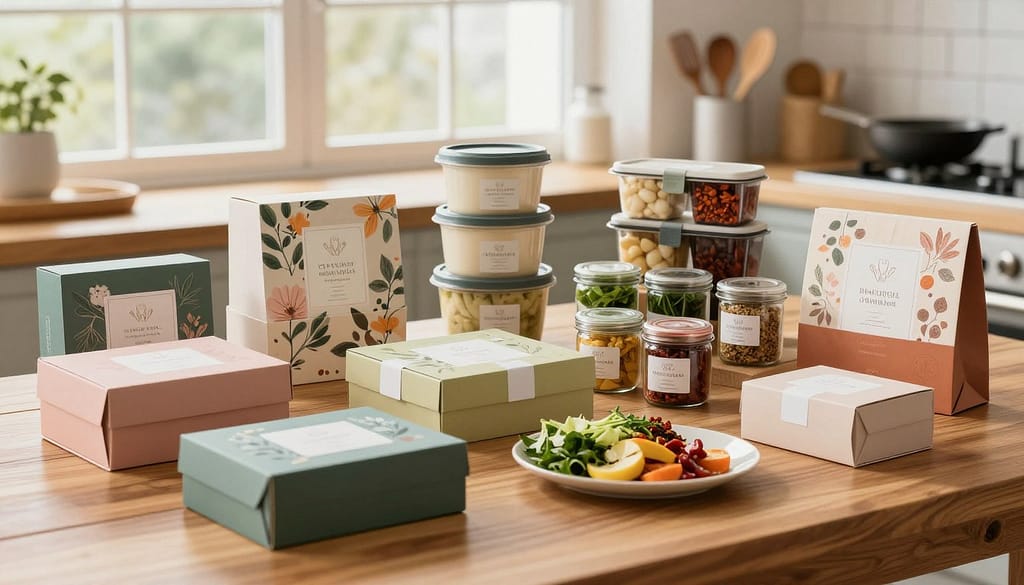
- Simple Packaging: Use eco-friendly, oven-safe containers. Include clear reheating instructions for client satisfaction.

These packages offer a steady income. They make your kitchen work more efficiently. You can plan your days better.
Subscription Dinners: Curated Dining Experiences
For those who love a full dining experience, a subscription dinner club is a top upsell. It’s a regular, intimate event for a small group.
Imagine a private supper club. Clients pay for a quarterly or monthly dinner at home or a venue.
- Exclusive Theme Nights: Each dinner has a unique theme. This creates excitement and anticipation.
- Community Building: The same group attends each time. This builds a loyal community of food lovers.
- Predictable Planning & Purchasing: Knowing the guest count and menu in advance helps with cost control and vendor deals.
- Higher Per-Person Value: These are premium events. You can charge a high fee for the exclusive experience.
Combining meal prep and subscription dinners makes a strong business. Meal prep provides steady income. Subscription dinners offer high-margin, prestige projects.
To offer these upsells, add a page to your proposal or send a personalized email after the event. Emphasize the convenience of meal prep or the exclusivity of the dinner club.
This approach makes you a key part of your clients’ lives. It builds a strong business with loyal customers. The recurring revenue helps you grow and feel financially secure.
KPIs
To guide your personal chef service with confidence, you need to know, not guess. This starts with setting and tracking your Key Performance Indicators. These KPIs are like your business’s health signs, showing you its financial state and margin at any time.
This data-driven method helps you move from guessing to knowing. You’ll know why some months are tough, thanks to your KPIs. They act as a dashboard, showing your speed, fuel use, and when to change course.
- Spot Trends Early: Find out about rising costs or hit menu items before they cause trouble or missed chances.
- Validate What Works: Focus more on marketing and services that bring in the most profit.
- Protect Your Profit: Adjust your pricing and buying to keep your margin safe.
By making KPI review a regular thing, you can make smart choices. You won’t be guessing anymore. Next, we’ll look at the specific metrics like average booking value and win rate that are key to your personal chef dashboard.
Avg booking value, GM%, win rate
Your journey to price with confidence ends with three key numbers. Tracking your Average Booking Value, Gross Margin Percentage, and Win Rate gives you a clear dashboard for your personal chef business.
Average Booking Value is your average revenue per client event. This number shows if your service tiers and add-ons are effectively increasing client spend. A rising value indicates successful upselling.
Gross Margin Percentage (GM%) measures your profit after direct costs like food and labor. It is the ultimate test of your pricing and menu engineering. A healthy margin proves your costs are controlled and your prices are sustainable.
Win Rate is the percentage of proposals you send that turn into booked events. This metric reflects the power of your proposal template and negotiation skills. A strong win rate means clients see clear value in your offer.
Review these KPIs monthly. They tell the full story of your business health. They show if your strategies for menu engineering, packaging, and client communication are working. Use this data to make informed adjustments. You can now price, propose, and grow with true confidence.