Local producer networking gives personal chefs a practical way to connect client menus with nearby farms, ranches, distributors, and seasonal food businesses. The idea sounds warm and community-minded, but it also has a business side: clearer sourcing, better menu planning, stronger client trust, and fewer surprises when a requested ingredient is not available.
The available data is broader than the personal-chef niche, so it should be read with care. Most public research tracks farms, restaurants, institutions, and foodservice buyers rather than chefs cooking in private homes. Still, the direction is useful. USDA Economic Research Service data from the 2022 Census of Agriculture reported that producers sold $17.5 billion in food through direct marketing channels nationwide, up 25.1% from 2017 after adjusting for inflation, according to the USDA direct sales data. That growth helps explain why personal chefs are paying closer attention to producer relationships, not just grocery lists.
Why Local Producer Networking Matters To Clients
Local Producer Networking Starts Before The Menu
For a personal chef, local producer networking should begin before the client asks for a specific dinner party menu. A chef who already knows which growers sell salad greens, which ranchers offer meats, or which distributor carries nearby products can speak with more confidence during the booking call. That does not mean promising every local ingredient every week. It means explaining what is realistic, what is seasonal, and what may need a backup plan.
Clients often hear phrases such as farm-to-table or seasonal cooking and picture a polished dinner with ingredients gathered that morning. In practice, a personal chef has to ask grounded questions: How flexible is the client about substitutions? Is the meal built around one special ingredient, or can the menu shift? Does the client want local sourcing as a value, a story, or a strict requirement? These answers shape the quote, prep timeline, and shopping plan.
This is also where chefs can avoid overpromising. If a client wants a tomato-forward menu in a month when local tomatoes are not dependable, the chef can offer a different seasonal dish instead of forcing an ingredient that may disappoint. Clear expectations protect both the client experience and the chef’s reputation.
Producer Relationships Help Chefs Explain Value
Food culture becomes stronger when diners understand more about where ingredients come from and why they taste different across the year. A personal chef is in a strong position to make that explanation feel natural. Unlike a restaurant server with a full section of tables, a private chef may have direct time with the client before the meal, during service, or after the event.
That conversation does not need to sound like a lecture. A chef can mention that the greens came through a nearby producer connection, that a cheese was chosen because it suited the dish, or that the dessert changed because the fruit available that week was better than the original idea. Small details help clients see food as part of a local system rather than a list of menu items.
For chefs building a stronger booking process, local sourcing should also appear in proposals and prep notes. Our related piece on local ingredient marketing explains how supplier stories can support client communication without turning every menu into a sales pitch.
What Producer Events Teach Personal Chefs
Networking Events Create Useful Shortcuts
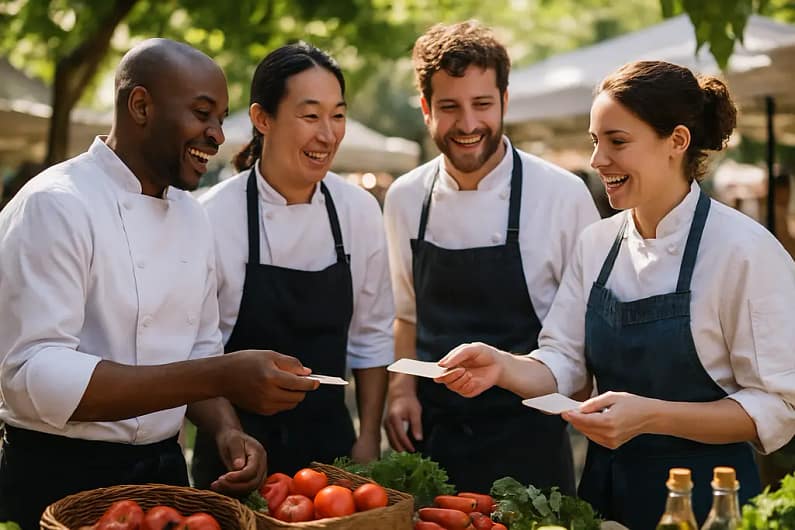
Producer events can save chefs time because they place farmers, ranchers, foodservice buyers, and distributors in the same room. On February 5, 2026, more than 100 local farmers, ranchers, chefs, restaurant managers, school representatives, and distributors gathered in Fort Collins for the Farm2LocalBiz networking event, which was organized to build connections between producers and foodservice operations, according to Larimer County. Personal chefs were not singled out in that public description, but the format points to a useful model for private-service cooks.
A personal chef does not always need the same purchasing volume as a restaurant or school cafeteria. That can be both a benefit and a challenge. Smaller orders may be easier for a producer to fill in some cases, especially for specialty items. Yet small, irregular orders can be hard for farms to plan around. A chef who attends local food events should be ready to describe order size, lead time, delivery needs, and payment habits clearly.
Questions Chefs Should Ask Producers
The best producer conversations are specific. Instead of asking whether a farm has “good vegetables,” a chef can ask about availability windows, minimum orders, pickup days, and how far ahead special requests need to be placed. For ranchers, questions may focus on cuts, processing schedules, freezer availability, and whether smaller mixed orders are practical.
- What products are most dependable for weekly or monthly ordering?
- How much notice is needed for private events or recurring meal prep?
- Are there products that move slowly but work well for chef menus?
- Is pickup, delivery, or distributor ordering the better fit?
- How should substitutions be handled if harvest or supply changes?
These questions help turn a friendly introduction into a working relationship. They also give chefs language for client proposals. Instead of saying, “I use local farms,” the chef can say which categories are realistic for the event and where substitutions may be needed.
How Local Food Networks Shape Private Dining
Direct Sales Data Points To Bigger Demand
The USDA figures are not a personal-chef headcount, but they show that direct and locally connected sales channels have grown. In the same USDA data set, food sold through retail outlets, institutions, and intermediate markets reached $14.2 billion in 2022, up 33.2% from 2017 after adjusting for inflation. The number of farm operations selling through those channels more than doubled to 60,332.
For personal chefs, that matters because clients are becoming used to seeing local food language in restaurants, schools, markets, and prepared-food settings. A private chef who can explain sourcing without exaggeration may look more prepared and more trustworthy. The promise is not that every ingredient will come from nearby. The promise is that sourcing choices are intentional, documented, and appropriate for the menu.
Local Culture Extends Beyond Private Kitchens
Personal chefs do not work in isolation. They are part of the same dining culture that includes restaurants, cafés, markets, caterers, and specialty food shops. A client who books a chef for an anniversary dinner may also be the kind of diner who follows neighborhood restaurant openings or seasonal menus. Related dining sites such as De Novo Montclair illustrate how place-based dining conversations can sit alongside private chef services.
This wider context helps chefs position their work. A personal chef can offer privacy, menu flexibility, and direct conversation in a client’s home, while still drawing from the same producer relationships that shape local dining. That connection can make a private dinner feel rooted in the community without copying a restaurant experience.
Practical Booking Steps For Chef-Producer Relationships
Build Sourcing Into The Intake Form
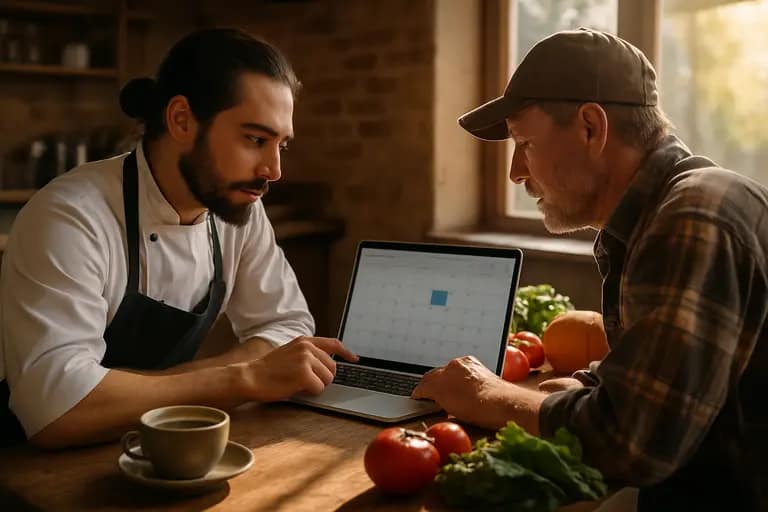
Local producer networking becomes easier when the booking process asks the right questions early. A chef’s intake form can include a short section on local sourcing preferences. Clients can choose whether local ingredients are a priority, a nice extra, or not a deciding factor. This prevents confusion when pricing, menu options, or substitutions come up later.
The intake form can also ask how much flexibility the client allows. Some clients want a fixed menu for a birthday dinner. Others are happy with a seasonal structure, such as a market salad, a poultry or fish entrée, and a fruit dessert based on what is strongest that week. The second type of client may be a better fit for producer-driven menus.
Keep Producer Notes Organized
A simple producer file can do more for a chef than a stack of business cards. Useful notes include contact names, order methods, payment terms, product categories, pickup windows, and past client menus that used those ingredients. The goal is not office work for its own sake. The goal is faster quoting and fewer mistakes.
Chefs should also track which relationships are steady and which are occasional. A farm that is excellent for a special-event garnish may not be the right source for weekly meal prep. A distributor carrying local products may be more reliable for recurring clients. Both kinds of contacts can matter, but they serve different booking needs.
Local Producer Networking And Stronger Food Culture
Local producer networking is not only a marketing phrase. Used well, it is a practical system that helps personal chefs plan menus, set client expectations, and support nearby food businesses in a realistic way. It gives clients a clearer story about the meal without asking them to become sourcing experts.
The strongest approach is honest and flexible. Chefs can celebrate local ingredients while admitting that weather, season, supply, delivery, and order size affect what appears on the table. That honesty does not weaken the experience. It often makes the chef sound more professional.
For personal chefs, the opportunity is to treat producers as partners rather than emergency suppliers. A few steady relationships, supported by clear communication and client-friendly explanations, can make private dining feel more connected to the food culture around it. That is where local producer networking becomes useful for both business growth and better meals.