
Hyper-Local Sourcing gives personal chefs a practical way to answer a question more clients are already asking: where does this food come from? In research published on November 14, 2025, the International Food Information Council reported that 59% of Americans said knowing where food comes from was important to them, up from 51% in 2017; 54% also prioritized food that is consistently available locally, according to IFIC food origin research. For a chef selling weekly meal prep, private dinners, or small-event service, that interest can shape more than the menu. It can shape how the service is described, priced, photographed, and discussed before a client books.
The opportunity is not only about using nearby farms or markets. It is about making ingredient choices easier for clients to understand. A personal chef who can explain why a dish uses a regional cheese, a nearby grower’s greens, or seasonal fruit from a local farm gives the client a clearer reason to choose that service over a standard catering order or restaurant takeout spread.
Why Hyper-Local Sourcing Fits Personal Chef Marketing
Personal chef work is built on trust. Clients invite a chef into the home, share preferences, discuss budgets, and expect a meal that feels personal without requiring them to manage every detail. That makes origin stories useful, as long as they stay specific and truthful.
Build A Hyper-Local Sourcing Story Clients Can Verify
For many clients, Hyper-Local Sourcing is most persuasive when it is simple enough to confirm. A chef does not need to make sweeping claims about sustainability, health, or quality. A stronger approach is to name the type of source, describe the reason for using it, and explain how the ingredient affects the meal. For example, a spring dinner menu might say that the salad changes based on what is available from a nearby grower, while a fall meal prep package might highlight local apples in a grain bowl or dessert component.
That kind of wording also protects the chef from overpromising. Local supply can shift because of weather, season, vendor schedules, or quantity limits. Instead of guaranteeing a specific item every week, chefs can use language such as “market-based vegetables,” “regional seafood when available,” or “seasonal fruit selected during the week of service.” This sets expectations before the invoice is signed.
Connect Local Buying To Clear Client Value
McKinsey’s 2025 consumer research found that 47% of consumers globally identified local companies as important in purchase decisions, based on survey work conducted in April and May 2025 across the United States, Canada, the United Kingdom, Germany, and China, according to its State of the Consumer 2025 report. For a personal chef, that does not mean every client will pay more for local ingredients. It does mean local identity can become part of the value discussion.
The most useful marketing message is not “local is better” without proof. It is more practical to say, “I build menus around regional ingredients when they fit your budget, timing, and preferences.” That gives clients room to choose the level of sourcing they want, while keeping the chef’s promise realistic.
Turn Local Ingredients Into Booking Signals
Clients often scan a chef’s website or social feed quickly. Ingredient sourcing needs to show up in places where it helps them make a decision, not only in long captions or after-the-fact posts.
Use Menu Labels Without Overloading The Page
A practical Hyper-Local Sourcing strategy starts with menu labels. Instead of writing a long paragraph for every dish, chefs can use short notes beside select items: “Hudson Valley mushrooms,” “local corn, late summer,” or “regional goat cheese.” If the chef does not have permission to name a supplier, or if the supplier changes often, the label can stay broader: “nearby farm greens” or “market vegetables.”
This style helps clients see that the chef has a sourcing point of view. It also supports better conversations during discovery calls. A client may ask which ingredients can be kept local, which are flexible, and which are better purchased through standard suppliers because of consistency, cost, or availability.
Show Regional Fit In Content And Photos
Photos should support the sourcing message without pretending to show more than they do. A prep table with seasonal vegetables, a finished family-style platter, or a market haul can all work if the caption is accurate. Avoid implying a supplier relationship unless one exists. If the post uses ingredients from several stores or farms, say so plainly.
For chefs building content around place, regional cuisine can be a natural bridge between sourcing and service style. A chef in the Mid-Atlantic, New England, the South, or the Pacific Northwest can use local ingredients to support familiar dishes, seasonal menus, or private dinners with a regional theme. For more menu-positioning ideas, this related article on regional cuisines for personal chefs connects local flavor with service growth.
Create Menus Clients Can Understand
A sourcing message works best when it reduces confusion. Personal chef clients usually want good food, clear pricing, and confidence that the chef can handle the details. The local angle should support those goals rather than create a maze of options.
Offer Three Sourcing Levels
One way to keep choices manageable is to build three menu levels. The first can be a standard chef’s menu with seasonal touches where possible. The second can prioritize regional produce, dairy, bread, grains, or seafood within a set budget. The third can be a special occasion menu centered on local farms, markets, or producers, with more planning time and a clear ingredient budget.
This structure gives clients control without asking them to become sourcing managers. It also helps the chef protect margins. Local ingredients can vary in cost and availability, so the proposal should separate chef labor, shopping time, ingredient estimates, and any premium sourcing requests.
Prepare Clients For Seasonal Changes
Seasonality is a benefit only if clients understand it. A chef can explain that summer menus may lean on tomatoes, berries, corn, or herbs, while colder months may favor storage crops, greens, grains, braised dishes, and preserved components. This is a practical way to set expectations around variety.
An excellent example of a restaurant that successfully integrates location into its brand is De Novo Montclair, which illustrates how a dining brand can highlight both hospitality and its regional setting in its public-facing persona. Personal chefs can apply the same principle on a smaller scale by connecting menus, neighborhoods, and client occasions.
Price And Promote The Service Clearly
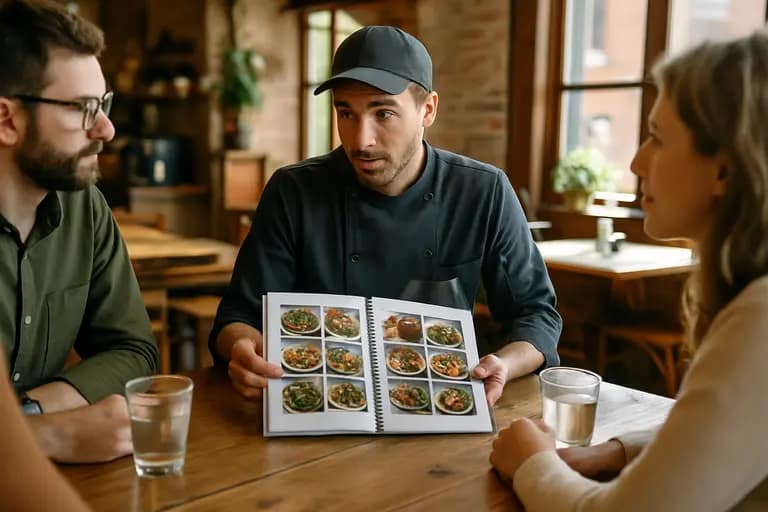
Local sourcing can increase planning time. It may involve contacting producers, visiting markets, adjusting menus, or making substitutions close to the service date. If that work is not priced clearly, it can become invisible labor.
Separate The Story From The Cost
Chefs should avoid making local ingredients sound like a free bonus if they require extra time. A proposal can state that standard grocery sourcing is included, while market-focused sourcing is available with a planning fee or higher service tier. This keeps the client from being surprised and helps the chef avoid absorbing costs that were not discussed.
Promotion should stay grounded. Strong service pages answer basic questions: how far in advance to book, whether the chef shops for ingredients, how substitutions are handled, whether clients may request specific producers, and whether receipts are shared. These details are more useful than broad claims.
Use Blogging To Answer Booking Questions
A blog can turn sourcing into a helpful sales tool. Useful post topics include what “local” means in your service area, how seasonal menus are planned, which ingredients are easiest to source nearby, and what clients should ask before requesting a farm-focused dinner. Each topic supports search visibility while preparing clients for a better first call.
Chefs can also use posts to explain limits. Not every ingredient can or should be local for every menu. Coffee, spices, citrus, chocolate, olive oil, and specialty pantry items may come from outside the region depending on where the chef works. Saying this clearly can strengthen trust because it shows the chef is not using local language as a vague sales phrase.
Make Hyper-Local Sourcing Easy To Trust
The most effective use of local sourcing is specific, modest, and repeatable. A personal chef can start with one weekly market note, one seasonal menu page, or one private-dinner package built around regional ingredients. From there, client questions and supplier availability can guide what expands.
That proof keeps Hyper-Local Sourcing practical. Name what can be named, explain what may change, and connect each sourcing choice to the client’s meal experience. Personal chef clients are not only buying dinner. They are buying planning, judgment, and relief from decision fatigue. Local ingredients can make that service feel more connected to place, but only when the promise is clear before the booking is made.