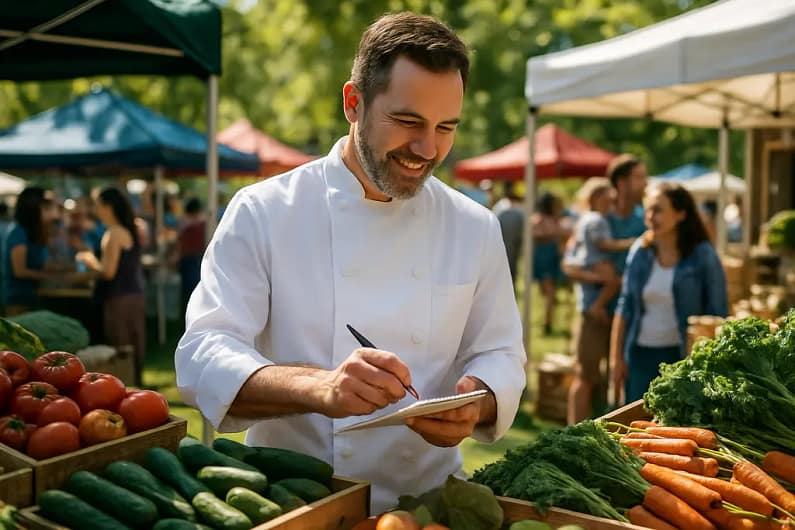
For personal chefs, local events are not just places to hand out business cards. They are practical settings where potential clients can see how a chef communicates, explains menus, answers questions, and handles hospitality in person. That matters because hiring a chef for a home, office, or private celebration is personal; clients often want confidence before they commit.
The scale of in-person gatherings supports that opportunity. The Events Industry Council reported in 2026 that business events in 2025 generated US $1.3 trillion in direct spending worldwide, supported US $1.8 trillion in global GDP, and drew 1.65 billion participants. The same report found that 70% of respondents viewed face-to-face networking as the hardest outcome to reproduce virtually, according to the Events Industry Council report. For personal chefs, that is a strong reminder that trust is often built faster when people can taste, ask, and talk in the same room.
Why Local Events Still Matter
Build Trust At Local Events
At local events, a chef can show the parts of service that a website cannot fully express. A guest can hear how the chef explains portion planning, see how samples are presented, and ask whether a service fits a birthday dinner, weekly meal preparation plan, or small office lunch. The interaction may last only a few minutes, but it can reveal professionalism, warmth, and clarity.
This does not mean every event should be treated as a direct sales opportunity. A better goal is to create useful contact. If a visitor says they host family dinners for eight people, the chef can ask what usually causes stress: menu planning, shopping, timing, cleanup, or dietary preferences. That answer helps the chef decide whether to offer a private dinner consultation, a batch-cooking conversation, or a referral to another local provider.
Use Events To Learn, Not Just Promote
Community appearances also give chefs market feedback. If several people ask about weekday meal support, that may signal demand for recurring services. If event guests respond strongly to seasonal ingredients, a chef may want to feature local sourcing more clearly in booking materials. If guests seem confused about what a personal chef does, the event setup may need clearer language.
Personal chefs who want a related planning framework can review this article on local event presence, which connects fairs, markets, and festivals with stronger booking conversations. The key is to treat each appearance as a learning session as well as a promotion channel.
Choose Events That Match The Service
Match Local Events To Client Intent
Not every crowd is the right crowd. A farmers market may fit a chef who emphasizes seasonal cooking and weekly prep. A neighborhood fundraiser may fit a chef who handles family celebrations. A business mixer may be better for corporate lunches, client dinners, or executive meal support. A cultural food event may suit a chef whose cooking has a clear heritage or regional point of view.
For industry-facing growth, trade shows can help chefs find suppliers and collaborators. The 70th Annual Summer Fancy Food Show took place from June 28 to June 30, 2026, in New York City and gathered more than 32,000 industry professionals, including more than 9,100 registered buyers, an 8% increase from 2025, according to BevNET coverage. A personal chef may not need a national show to grow, but the same principle applies locally: the right room can introduce better vendors, specialty products, venue partners, and referral contacts.
Check Fit Before Saying Yes
Before paying for a booth or donating time, chefs should ask practical questions. Who attends the event? Is food sampling allowed? Are vendors permitted to collect email addresses? Are there shared tables, cooking restrictions, insurance requirements, or power limitations? Will the organizer promote participating food businesses before the event?
These questions keep the chef from building an event plan around assumptions. A no-cooking venue may still work for a cold tasting, printed menu samples, or a short talk. A high-traffic event may require a simple display with fast conversation prompts. A smaller gathering may allow longer discussions and better qualification of potential clients.
Design A Small Event Offer
Keep The Menu Easy To Understand
A personal chef does not need to reproduce a full dinner service at a community table. In most cases, a focused sample works better. One bite can represent a service category: a seasonal crostini for cocktail parties, a composed grain salad for weekly prep, or a small dessert for private celebrations. The sample should connect directly to a service people can book.
The table should answer three questions quickly: what the chef offers, who the service is for, and what the next step is. A simple sign might name service types such as private dinners, weekly meal prep, cooking demonstrations, or small event catering. Printed cards can include sample occasions instead of long menus, since personal chef work often changes by client preference and schedule.
Create Conversation Prompts
The strongest event setup invites questions. Instead of asking, “Do you need a chef?” try prompts such as “What kind of dinner do you wish you could host at home?” or “Which part of entertaining takes the most time for you?” These questions shift the conversation toward needs rather than price alone.
Chefs can also bring a short booking checklist. It might cover guest count, kitchen access, preferred date, service style, cleanup needs, and any ingredients the client dislikes. This helps visitors understand that hiring a personal chef is a planned service, not a mystery. It also helps the chef avoid vague leads that are hard to follow later.
- Offer one focused tasting rather than several unrelated samples.
- Use a short service card with clear booking categories.
- Ask visitors about hosting needs before discussing pricing.
- Record consent before adding anyone to an email list.
- Follow up with one specific next step, such as a consultation time.
Follow Up Without Pressuring Guests
Sort Contacts By Real Need
After an event, chefs should separate contacts into practical groups. Some people are ready to plan a date. Others are curious but undecided. Some may be useful referral partners, such as venue managers, producers, florists, event planners, or wine shop owners. Each group needs a different follow-up message.
A ready-to-book prospect should receive a short note that references the event conversation and asks for basic planning details. A curious guest might receive a sample service overview. A referral partner may appreciate a coffee meeting or a short exchange about how both businesses serve similar clients. The goal is to continue the conversation with respect for the person’s level of interest.
Study Dining Signals Nearby
Personal chefs can also learn from restaurants, cafés, markets, and private dining rooms in their area. Studying how a dining business presents service, menu focus, reservations, and hospitality can sharpen a chef’s own event table. For example, reviewing a related dining site such as De Novo Montclair can provide insights on effectively communicating a clear dining concept before a guest’s visit.
This research should not lead chefs to copy another business. Instead, it should help them notice what clients may already expect: clear descriptions, easy contact steps, and a sense of occasion. Those expectations apply whether the chef is serving a plated dinner at a client’s home or speaking with neighbors at a market booth.
Local Events For Personal Chef Growth
Measure What Matters After Each Appearance
The value of an event is not only the number of people who pass the table. A smaller event can be more useful than a crowded one if it produces qualified conversations. Chefs should track how many people asked about actual services, how many consented to follow-up, how many scheduled calls, and which service categories drew the clearest interest.
These notes help decide whether to return, adjust the offer, or choose a different audience. If a chef receives many questions about meal prep but few about formal dinners, the next appearance might feature weekday menu planning. If attendees ask about parties but hesitate on planning details, a sample private dinner package may need clearer language.
Local events work best as part of a steady relationship-building plan. A chef who appears once may be remembered briefly. A chef who returns with seasonal ideas, clear service options, and thoughtful follow-up becomes easier to trust. For personal chefs, that trust is often the bridge between a pleasant conversation and a booked kitchen date.