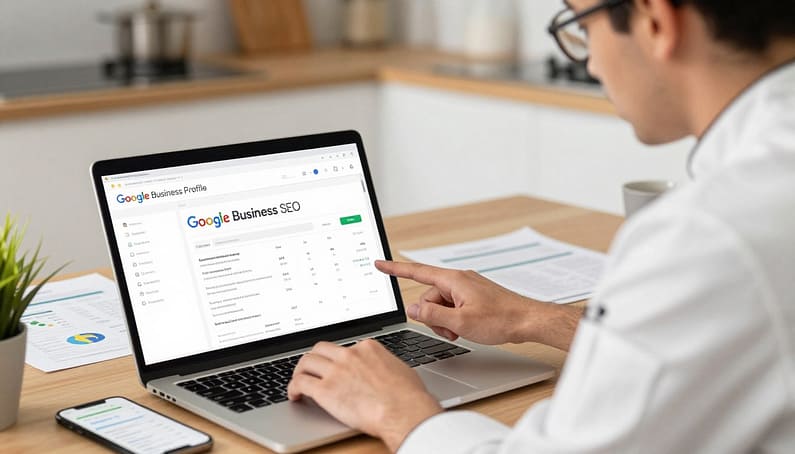
Imagine your ideal clients searching for a gourmet experience in their neighborhood. Where do they look first? They usually start with a quick online search. Being the first result they see is key to your success.
This isn’t just luck. It’s about having a solid strategy. As a service-area business, you focus on specific zip codes. To stand out, you need a strong online presence that’s hard to ignore.
This guide offers the actionable roadmap you need. We’ll show you how to boost your local search visibility. The key is a fully optimized Google Business Profile. It’s your digital storefront for the community.
A complete strategy also includes a well-built website, consistent local citations, and engaging content. These elements make you the go-to expert in your area. Let’s start building your local dominance.
Why Local SEO Matters
When someone searches for “private chef near me,” they’re ready to spend money. This is your chance to shine. Generic ads scatter your message, hoping someone sees it. Local SEO makes sure you’re found by the right person, in the right place, at the right time.
Imagine someone looking for a private chef for their anniversary dinner in Austin. They have a specific need and a budget. They’re not dreaming anymore; they’re planning. This is where local SEO shines.
For private chefs, it’s not about getting millions of clicks. It’s about getting a few dozen leads that fill your calendar. Local search puts your name and services right in front of these clients. Even platforms outside traditional food marketing—like a popular women’s lifestyle and humor blog—can drive valuable local discovery when your brand story and personality resonate with readers searching for unique experiences.
The goal is local search dominance. When people in your area search for what you offer, you should be at the top. This builds trust and authority. It lets you charge more for your services.
Local SEO is different from generic marketing. A billboard or a broad social media ad might reach thousands. But only a few are likely to be your clients. Local SEO cuts out the waste.
| Marketing Approach | Audience Reach | Client Intent | Cost Efficiency |
|---|---|---|---|
| Generic Marketing (Social Ads, Billboards) | Broad, unfiltered audience | Low; mostly awareness | Low; high spend for low conversion |
| Local SEO & Google Business Profile | Hyper-local, service-area focused | Very High; ready to hire | High; targets users actively searching |
The table shows how local SEO is precise. It turns your service area into a powerful marketing tool. Instead of shouting, you’re having a focused conversation with someone who’s already interested.
In short, local SEO for private chefs is about strategic visibility. It ensures your talent is found by those who value it most. This turns online searches into booked events and a thriving business.
Intent keywords and service-area dynamics
Local SEO for private chefs is all about targeting the right searches in the right places. Success comes from understanding user intent through keywords and defining your service area. When these align, your Google Business Profile attracts the perfect clients.
Not all searches are the same. We can categorize intent keywords into three main types, each with its purpose.
1. “Near Me” & Immediate Intent: These searches, like “private chef near me,” show a user is ready to book and is nearby. You need a strong, local local SEO to rank well here.
2. City or Neighborhood-Based Queries: Searches like “private chef Miami” show a user is planning an event in a specific area. They’re researching but not ready to buy yet.
3. High-Value Commercial Intent Phrases: This includes searches for a “wedding chef for 100 guests.” These users have a clear need, a big budget, and are close to making a decision.
Your keyword strategy must match your service area in Google Business Profile. A big mistake is choosing a huge, unrealistic radius. Google prefers precision.
Instead of covering a whole city, list specific zip codes or neighborhoods you serve. If you work in Austin but also in Round Rock and Georgetown, list those places. This tells Google where your business is relevant.
This alignment is key. When someone in Round Rock searches for “private chef,” Google checks if your profile matches. A perfect match boosts your ranking for that search. It shows Google you’re a good solution for that user.
The table below shows how to match keyword intent with your reality:
| Keyword Intent Type | Example Searches | User Mindset | Service-Area Strategy |
|---|---|---|---|
| Immediate / “Near Me” | “private chef near me”, “last minute chef” | Ready to book, often today or this week. | Focus on your immediate 5-10 mile radius or primary city. Ensure your GBP location pin is accurate. |
| Location-Specific Research | “private chef Denver”, “chef for dinner party Boston” | Planning an event, comparing options in a specific city. | List all major cities you serve. Create location-specific content on your website mentioning these areas. |
| Commercial & Event-Driven | “wedding chef California”, “corporate team building cooking class” | High-budget planning for a specific event type, willing to hire from a wider region. | Define a broader but logical service area (e.g., select counties). Use these keywords in your GBP “Services” descriptions and website pages. |
By pairing your keyword targets with a clear, defined service area, you do a critical local SEO task. You tell Google who you are, what you do, and where. This clarity reduces competition and connects you with clients who need what you offer, where you offer it.
GBP Setup & Optimization
Starting your journey to local search dominance is all about setting up your Google Business Profile right. Think of it as your digital storefront and business card. It’s often the first thing people see when they search for your services.
Getting started is a must. First, claim and verify your listing. Search for your business name on Google. If it exists, claim it. If not, create a new profile. Google will send a verification code, usually by postcard to your service address. Make sure to complete this step before moving on.
After verifying, every detail counts. Your business description is key. Mix your unique culinary style with local keywords. For example: “Offering personalized private chef services for intimate dinners and events in [Your City] and nearby areas.”
Choosing the right categories is important. Pick your primary category wisely. “Private Chef” is usually the best choice. Add secondary categories like “Caterer,” “Personal Chef,” or “Event Planner” if they apply. This helps Google match you with the right searches.
Keeping your NAP (Name, Address, Phone number) consistent is a must. This information should match everywhere online. Even small differences can confuse Google and harm your ranking.
A complete and accurate Google Business Profile is the foundation for all local SEO efforts. Take your time to set it up right. A well-optimized profile builds trust with clients and search algorithms from the start.
Categories, services/menus, booking links, Products, Photos, Q&A, messaging, service areas; menu keywords without spam
A fully optimized Google Business Profile uses menus, photos, and Q&A to influence hiring decisions. It turns your profile into a digital storefront that persuades.
Start with categories. Choose every relevant one, like “Private Chef,” “Caterer,” and “Personal Chef.” This tells Google what you do. Then, use the “Services” or “Menu” section. List your offerings with descriptive, keyword-rich titles.
The “Products” feature is great for fixed-price packages. You can also add direct booking links. Link to your Calendly, HoneyBook, or website booking page. This makes booking easy for clients.
Photos are your most powerful tool. High-quality, professionally styled images build desire and trust. Showcase plated dishes, your kitchen workspace, and beautifully set tables at events.
| Photo Type | Description | Impact on Client |
|---|---|---|
| Plated Dishes | Close-up, well-lit shots of your signature meals. | Demonstrates culinary skill and presentation style. |
| Behind-the-Scenes | You in action, prepping ingredients or cooking. | Builds personal connection and showcases professionalism. |
| Event Atmosphere | Wide shots of finished table settings and happy guests. | Helps visualize their own event and builds social proof. |
| Ingredient Focus | High-quality produce, meats, or other raw ingredients. | Communicates commitment to freshness and quality sourcing. |
Proactively manage the Q&A section. Post and answer common questions about pricing, dietary accommodations, and booking timelines. This provides instant information and prevents clients from leaving your profile. Also, enable messaging. Quick, polite responses via the profile can secure a consultation faster than email.
Clearly define your service area. In your GBP settings, list the cities and ZIP codes you serve. Mention your primary service area in your business description too. This manages expectations and improves local search relevance.
Every element—from menu keywords to photos—must work together. The goal is a seamless user experience. A complete Google Business Profile answers questions, builds trust, and makes booking obvious and easy.
Reviews Engine
Turning random client feedback into a steady flow of positive reviews is key. For private chefs, reviews are the single most powerful trust signal in local search. They affect Google’s rankings and are the first thing people look at.
Going from hoping for feedback to actively getting it is essential. This turns happy clients into your best marketing team.
The engine works on three main parts: perfect timing, a smooth ask, and gentle guidance. Get these right, and more people will participate.
Optimal timing is non-negotiable. The best time to ask for a review is right after a successful event. This is usually within 24-48 hours.
A professional and compliant request process is vital. Clients are busy, so you need to make it easy for them.
- Email: Send a personalized thank-you email with a direct link to your Google Business Profile review section.
- Text Message: A brief, friendly text with a mobile-friendly link can yield a very high response rate.
- QR Codes: Provide a printed card at the event or include one in a thank-you note. When scanned, it takes the client directly to the review page.
Many clients want to help but aren’t sure what to write. Giving them gentle guidance can help them write more detailed and helpful client reviews.
You can suggest they talk about specific parts of their experience. For example, the presentation of a dish, the chef’s professionalism, or how the menu met dietary needs. This helps them write authentic, keyword-rich feedback without being spammy.
The goal is to make the whole process easy. A one-click link, a simple prompt, and a clear reason why their review matters. When you systematize review generation, you build an asset that grows over time. It boosts your local visibility and credibility.
Ask flow, timing, QR cards, response scripts, dispute process
Getting consistent reviews is key. Your ‘ask flow’ is how you ask for feedback. Make it easy and quick for clients to leave reviews.
Start asking for feedback right after service ends. Send a thank-you email within 24 hours. Include a link to your Google Business Profile.
One week later, send a gentle reminder. This keeps the memory fresh but not too soon.
QR code cards are a great tool. Give them to clients at the end of service. They take clients straight to your review page.
Responding to reviews is important. Always be quick and professional. Thank clients for positive feedback.
Positive Review Response Script:
- “Thank you so much, [Client Name]! We’re thrilled you enjoyed the [specific dish or aspect]. It was a pleasure cooking for your [event type]. We hope to work with you again soon!”
For negative reviews, stay calm and offer solutions. Never argue online. Apologize and invite private discussion.
Constructive Review Response Script:
- “Thank you for your feedback, [Client Name]. We’re sorry to hear your experience didn’t meet expectations regarding [specific issue]. We take all feedback seriously to improve. Please contact us directly at [email/phone] so we can address this.”
This shows you care about quality.
Sometimes, you’ll face fake reviews. Google has a process to handle these. You need solid evidence to prove the review is fake.
Dispute Process Steps:
- Flag the Review: In your Google Business Profile, click the three dots next to the review and select “Flag as inappropriate.”
- Document Everything: Collect any evidence you have—contracts, communication logs, invoices—that shows no business relationship existed with the reviewer.
- Submit a Detailed Appeal: Use Google’s support form. Clearly state the review violates Google’s policies (e.g., conflict of interest, fake content). Attach your evidence.
- Follow Up: If the review isn’t removed in a few weeks, politely follow up on your case. Persistence with clear facts is key.
Protecting your online reputation is ongoing. Systemize your ask flow, use QR cards, and know how to handle fake reviews. This way, you control your social proof.
Website Must-Haves
A private chef’s website must do more than look beautiful; it must function as a high-converting engine for local search. It is your primary digital asset, the place where inquiries turn into booked events. To support your local SEO strategy, certain technical and content elements are absolutely essential.
Every page must guide a client toward contacting you. Your site’s structure should make your service area and expertise immediately clear. A confusing or slow website will send visitors back to Google, often to your competitors.
Non-Negotiable Technical & Content Elements
- Clear Service Area Pages: Create dedicated pages for each major region you serve. For example, “Private Chef in Napa Valley” or “Personal Chef Services in Sonoma.” These pages should include rich content about the area, your experience there, and localized keywords.
- Prominent Contact Page with Consistent NAP: Your Name, Address, and Phone number must be identical to your Google Business Profile. Place this information in the header, footer, and on a dedicated contact page. Include a simple contact form and a click-to-call button.
- Fast, Mobile-Friendly Design: Over half of all searches happen on mobile devices. If your site loads slowly or is difficult to navigate on a phone, you will lose clients. Use tools like Google PageSpeed Insights to monitor performance.
Google values Experience, Expertise, Authoritativeness, and Trustworthiness. Your website is the perfect place to prove it.
- Detailed Chef Bio: Go beyond a simple name and title. Share your culinary journey, training, philosophy, and what makes your service unique. This builds a personal connection.
- Client Testimonials & Portfolio: Showcase reviews and high-quality photos of your plated dishes, table settings, and happy clients. This provides social proof and visual evidence of your skill.
- FAQ Section: Anticipate common questions about pricing, dietary accommodations, and event planning. Thorough answers demonstrate expertise and improve your site’s content depth.
The Technical Power of Schema Markup
This is where schema becomes a game-changer. Schema is a code you add to your website that helps search engines understand your content. For a private chef, it can define your business as a “FoodService,” mark up your menus, and highlight customer reviews.
Implementing schema correctly makes your listings in search results richer. It can display your star rating, price range, and service area directly in the search snippet. This increases click-through rates significantly.
| Website Element | Primary Purpose | Direct Impact on Local SEO |
|---|---|---|
| Service Area Pages | Target geographic keywords and attract local clients. | Signals relevance to specific ZIP codes, improving local rankings. |
| Consistent NAP on Contact Page | Provide clear, accurate contact information. | Strengthens business identity for search engines, critical for local pack rankings. |
| Mobile-Friendly & Fast Design | Deliver a seamless user experience on all devices. | Direct Google ranking factor; reduces bounce rate, a key user signal. |
| Chef Bio & Testimonials | Build E-E-A-T and client trust. | Content that demonstrates expertise can earn featured snippets and improve authority. |
| Schema Markup | Explain your business data to search engines. | Enhances search result listings, leading to higher visibility and more clicks. |
Your website is not a static brochure. It is a dynamic tool for local SEO. By combining clear service information, proof of your expertise, and technical elements like schema, you create a powerful foundation. This foundation supports all your other marketing efforts, from your Google Business Profile to your content strategy.
Location pages, FAQ, chef bio E‑E‑A‑T, menu schema/JSON‑LD, event microdata, page speed
Advanced website elements like location pages and structured data make top chef websites stand out. They turn your site into a strong local SEO tool. This tells Google who you are, what you do, and where you serve.
Mastering these elements helps you show up in the right searches in your target cities.
Hyper-Targeted Location Pages
Create a webpage for each major city or zip code you serve. A “Private Chef in Austin” page is more powerful than a generic “Services” page.
Each location page should include:
- The city name in the title and header.
- Specific local landmarks or neighborhoods you serve.
- Testimonials from clients in that area.
- Menu examples tailored to local tastes or events.
- A clear call-to-action for bookings in that city.
This shows strong geographic relevance to search engines.
Your FAQ as a Keyword Powerhouse
A well-built FAQ page does more than answer questions. It captures long-tail phrases people type into Google.
Include questions like “How much does a private chef cost for a 20-person wedding in Miami?” or “What is your cancellation policy for a last-minute dinner party?”
This content addresses concerns and builds trust before the first contact.
The Chef Bio: The Heart of E-E-A-T
Google’s E-E-A-T (Experience, Expertise, Authoritativeness, Trustworthiness) guidelines are key. Your biography page is the perfect place to showcase all four.
Showcase your experience with stories from past events. Highlight your expertise through certifications, training, or unique culinary techniques. Build authoritativeness with media features or awards. Show trustworthiness with a genuine, professional photo and clear contact information.
This page convinces both Google and clients that you are the real deal.
Structured Data: Speaking Google’s Language
Schema markup is code you add to your website. It helps search engines understand your content and often triggers rich results in search. For private chefs, two types are very powerful.
Using this schema correctly can make your listings stand out with extra details right on the search results page.
| Schema Type | What It Does | Key Properties to Use |
|---|---|---|
| Menu Schema | Displays your menu items, descriptions, and prices directly in search results. | name, description, offers (price), suitableForDiet |
| Event Schema | Showcases sample or past events (e.g., “Summer Garden Party Menu”) as rich snippets. | name, startDate, location, offers, performer |
| Person Schema | Formally identifies you as the chef, linking to your bio and strengthening E-E-A-T. | name, jobTitle, description, image |
You can generate this JSON-LD code using free online tools and add it to the header of your relevant webpages. This local SEO tactic gives you a direct line of communication with search engines.
Don’t Forget Page Speed
All this advanced work means nothing if your site loads slowly. Page speed is a direct ranking factor and a critical user experience metric.
A slow site increases bounce rates and loses bookings. Use tools like Google PageSpeed Insights to check your score. Compress images, leverage browser caching, and minimize code.
A fast website keeps visitors engaged and supports all your other local SEO efforts.
By combining targeted location pages, a detailed FAQ, a strong chef bio, and the right schema markup, you build a website that attracts and converts your ideal clients. This technical foundation is essential for owning your zip codes.
Citations & Backlinks
Citations are like digital breadcrumbs that lead search engines to your business. They, along with backlinks, build your local SEO authority. For a private chef, they show your legitimacy and expertise to customers and Google.
Citations mention your business name, address, and phone number (NAP) online. They act as digital signposts. Each citation confirms your presence and legitimacy. The key is to keep your NAP details the same everywhere. A mismatch can confuse algorithms and hurt your ranking.
Backlinks are links from other websites to yours. They are like votes of confidence. A link from a respected local venue or food blogger is powerful. It shows your content is valuable and trustworthy.
Building a strong citation profile starts with major directories. But for a private chef, niche sites are also key. Think culinary associations and event planner directories. Consistent, accurate listings across these platforms solidify your local presence. For more on building this foundation, check out our guide on local citations that transform your restaurant’s. The principles apply to private chefs too.
To manage your efforts, prioritize citation sources based on their impact. The table below breaks down key platforms for private chefs.
| Citation Source | Type | Importance Level | Key Action |
|---|---|---|---|
| Google Business Profile | Primary Directory | Critical | Claim and fully optimize |
| Yelp for Professionals | Review & Directory | High | Complete profile with menu photos |
| Bark (formerly Thumbtack) | Service Marketplace | High | Create detailed service listings |
| Local Chamber of Commerce | Business Network | Medium | Join and ensure accurate listing |
| Specialty Food Associations | Industry Niche | Medium | List your business in member directories |
Earning backlinks requires a proactive approach. Partner with local venues like wineries or galleries. Offer to provide content for their blog or website. Collaborate with wedding planners who can refer clients to your site. Each genuine partnership can yield a valuable link. These links are far more powerful than any paid link scheme.
Remember, citations and backlinks work together. Citations tell search engines you are local. Backlinks tell them you are an authority. A strategy that builds both consistently will make your private chef business impossible for local clients to ignore.
Top directories; partnerships for backlinks (venues, planners, wineries)
Being seen starts with being listed where clients look. True authority comes from connections with respected local businesses. This phase shifts from setup to active promotion.
It combines solid citations with powerful local SEO link-building.
Essential Directories for Private Chefs
Consistent listings on key platforms establish your business’s basic facts online. Search engines use this data to verify your legitimacy and service area. Think of these as your digital foundation.
Focus your efforts on these top-tier directories:
- Google Business Profile: Your #1 priority. It’s not just a directory but your primary search result.
- Yelp: Used for researching local services, great for events and catering.
- Tripadvisor (for Restaurants): Ideal for chefs with experiences or tasting menus; tourists and locals use it.
- Bark/Thumbtack: Lead-generation sites that also function as citations. Be strategic with your budget here.
- Niche Culinary Sites: Platforms like HireAChef or local foodie blogs. These carry more thematic weight with search engines.
Accuracy across all these listings is non-negotiable. Your business name, phone, and address (or service-area cities) must match exactly. This consistency directly fuels your local SEO ranking for “private chef” searches in your zip codes.
While directories build your foundation, partnerships build your authority. A single link from a prestigious local venue’s website is often worth more than dozens of directory citations. It signals to Google that other reputable businesses vouch for you.
Your goal is to become a “preferred vendor” for businesses that serve your ideal client. This creates genuine, high-value backlinks.
Ideal Partnership Targets:
- Wedding & Event Venues: Offer to provide exclusive menu samples for their open houses. In exchange, ask for a listing on their “preferred vendors” page.
- Event Planners: Propose a collaborative blog post: “5 Trends for Luxury Wedding Menus in [Your City].” You provide the expertise; they host it and link to you.
- Wineries & Breweries: Suggest a paired dinner event. Their website will promote it, listing you as the featured chef with a link.
- Luxury Hotels & Concierge Services: Pitch yourself as an in-suite dining expert for their VIP guests. A simple vendor profile page on their site is a powerful link.
A Simple Outreach Framework
Cold emails that focus on collaboration, not just asking for a link, get replies.
1. Personalize: Mention a specific aspect of their business you admire.
2. Propose Value: Lead with what you can do for them (e.g., provide content, co-host an event).
3. Make It Easy: Offer to draft the web copy or provide high-resolution photos for their site.
4. Suggest the Link: Clearly state the mutual benefit: “This collaboration would be great content for your audience, and a link from your respected site would help my clients find me.”
Combining a flawless directory profile with strategic partnerships creates a formidable local SEO presence. The directories tell Google you exist. The partnership backlinks tell Google you are an authority. This one-two punch is how you own your zip codes.
Content Calendar
Without a plan, even the best private chefs can get lost online. Posting sporadically leaves gaps in your presence. This might make people forget about you.
A content calendar solves this issue. It turns random posts into a clear strategy. This builds momentum over time.
Think of your content plan as your digital marketing’s backbone. It schedules your posts and articles. This shows reliability to Google and clients.
Regular content shows your expertise. Each post is a chance to share your knowledge. You become the top chef in your area.
New content keeps Google interested. Websites that update often rank better. This can boost your search rankings.
Your calendar also lets clients see your style. Photos and stories show your creativity. This builds trust and interest.
See your calendar as a strategic tool. Plan content around seasons and holidays. Local events are great for posts.
Use summer, fall, and winter to inspire content. Share menu ideas, tips, and client stories. This makes your content feel timely and engaging.
Begin by brainstorming for the next quarter. Plan blog posts, social media, and emails. Schedule each on your calendar.
Consistency is key, not how often you post. Posting quality content weekly is better than rushing. Your audience will look forward to it.
For a detailed plan, check out this ultimate food blog calendar. It’s a year-long framework for your business.
Your calendar evolves with your audience. Update it monthly based on what works. See which topics get the most engagement and bookings.
Remember: Your calendar should reflect your unique voice. It’s not just about filling slots. Each piece should help your business and connect with clients.
Using a strategic content plan changes your marketing. You control the story about your services. This builds lasting relationships and steady bookings.
24 Post Ideas (Seasonal Menus, Behind-the-Scenes, Client Stories)
Make your marketing better with 24 content ideas for private chefs. A good content plan connects your cooking skills with local people.
It makes your expertise engaging and helps Google know what you offer. Use these ideas for your blog, social media, and GBP posts for months.
We’ve sorted the ideas into three categories. Each one helps with SEO and makes your brand more relatable and trustworthy.
Seasonal & Menu-Focused Content
This category matches your services with what people search for all year. It’s great for SEO and shows you’re up-to-date.
- Summer Grill Menu Ideas: Share a menu with grilled stone fruits, local vegetable skewers, and a signature cocktail. It targets “summer dinner party chef” searches.
- Holiday Party Planning Guide: Create a downloadable checklist for hosting, with festive menu options. This builds leads and shows your expertise.
- Spring “Clean Eating” Reset Menu: Offer a bright, healthy menu for New Year’s or spring resolutions. It doesn’t lose flavor.
- Cozy Fall Comfort Food Menu: Feature slow-cooked dishes, seasonal squash, and spiced desserts. It’s perfect for “private chef for anniversary” searches.
- Ultimate Super Bowl Spread: Show your casual side with elevated game-day bites and setup tips. It’s great for local social media.
- Valentine’s Day Dining at Home: Offer a unique home meal instead of a restaurant. Highlight romantic plating and wine pairings.
- Thanksgiving Timeline & Turkey Alternatives: Give a stress-free guide and showcase unique main courses, like crown roast of pork.
- Seasonal Ingredient Spotlight: Dive deep into a local item (e.g., heirloom tomatoes, morel mushrooms). Explain how you source and prepare it.
Behind-the-Scenes & Brand Building
This content makes your brand more relatable. It builds trust and convinces clients to hire you.
- A Day in the Life of a Private Chef: Document your work from market to service. It shows professionalism and work ethic.
- How I Source Local Ingredients: Visit a farm or farmer’s market on camera. It supports your E-E-A-T and appeals to locavore clients.
- My Essential Kitchen Tools (Beyond the Knife): Share your favorite tools. It’s engaging and shows your expertise.
- Prepping for a Big Event: A Time-Lapse: A quick video of you organizing and plating is mesmerizing. It demonstrates your scale.
- Answering Common Client Questions: Film a short Q&A on topics like pricing and dietary restrictions. It’s helpful and positions you as an expert.
- The Story Behind My Chef’s Coat or Tattoos: Share a personal story. Authentic stories create strong connections.
- How I Pack and Transport Food Safely: This post solves a real client worry and shows your attention to detail.
- My Go-To “Family Meal” After a Long Event: Show what you cook for yourself. It’s relatable and reveals your personal food philosophy.
Client Stories & Social Proof
Nothing sells your service like proof of success. These ideas turn happy clients into your best marketers.
- How We Catered a 50-Person Wedding in a Backyard: Detail the logistics and menu adaptations for a non-traditional venue.
- Client Spotlight: A Multi-Course Anniversary Dinner: Share the couple’s story, the customized menu, and a stunning photo of the table.
- Case Study: A Week of Healthy Meal Prep for a Busy Family: Show the before-and-after of their fridge, the weekly menu, and client feedback on saved time.
- “Themed Dinner Party” Recap: Showcase a complete evening, like a Moroccan feast or 1920s Gatsby party, from decor to dessert.
- Overcoming a Last-Minute Menu Change: Tell the story of a supplier issue or allergy discovery and how you creatively solved it. It highlights your problem-solving skills.
- Testimonial Video Compilation: Edit together short clips of happy clients talking about their experience. Use this on your website’s homepage.
- Before & After: Kitchen Transformation for Service: Show how you temporarily organize a client’s kitchen for efficient service. It’s practical and impressive.
- The “Impress Your In-Laws” Menu That Worked: Share a humorous or heartwarming story with the menu that saved the day. It’s highly shareable content.
Mix and match these ideas for a balanced content plan. Aim for one seasonal, one behind-the-scenes, and one client-focused post per month.
This approach keeps your content fresh and covers all aspects of your business. A strategic content plan turns your culinary passion into a consistent marketing engine that feeds both search engines and client relationships.
Tracking & Analytics
Without clear metrics, your local SEO campaign is like cooking without tasting—you won’t know what’s working. For a private chef, data is the secret ingredient that turns effort into results. This section focuses on the key performance indicators, or KPIs, that truly matter.
You must move beyond vanity metrics. These are numbers that look good but don’t lead to bookings. Instead, track metrics that show how clients find and choose you.
The goal is to attribute phone calls, website visits, and booked events back to your specific local SEO efforts. This process is called attribution. It allows you to make data-driven decisions about where to focus your time and budget.
Here is a comparison of common vanity metrics versus the actionable KPIs you should monitor:
| Metric Type | Example | Why It Matters |
|---|---|---|
| Vanity Metric | Total profile views | Shows general interest but doesn’t indicate intent to hire. It’s a broad number. |
| Actionable KPI | Calls from your Google Business Profile listing | Directly measures leads generated from your optimized listing. This is a high-intent action. |
| Vanity Metric | Website pageviews | Indicates traffic, but not where it came from or if visitors are qualified. |
| Actionable KPI | Contact form submissions from your “Private Dining” page | Tracks conversions from targeted location pages. This shows your content is working. |
| Actionable KPI | Search queries that find your Google Business Profile | Reveals the exact keywords (like “private chef for anniversary Boston”) clients use. This informs your content strategy. |
Focusing on actionable KPI’s helps you answer critical questions. Which zip code sends the most website traffic? What service page gets the most phone calls? Does a new blog post lead to more inquiries?
Tracking these details requires the right tools. In the next section, we will dive into specific methods like UTM tags and Google Business Profile Insights. These tools connect the dots between your online presence and real-world customer actions.
Remember, you can’t improve what you don’t measure. A disciplined approach to analytics ensures every part of your local SEO strategy contributes to a growing business.
UTM tags, GBP Insights, calls/messages, rank tracking by ZIP
Effective local SEO is about measuring and improving based on data. For a private chef, knowing what works helps you focus on it. This section shows how to track your online success.
You need to connect your marketing to real results. Track website visitors and understand how clients find you on Google. Also, know your ranking in the areas you serve.
UTM Parameters: Tracking Website Traffic Sources
UTM tags are code snippets added to URLs. They help Google Analytics track where your traffic comes from. Did a client find you on Instagram or a specific page?
UTM tags show which social media, email, or directory drives the most visits. This tells you where to focus your efforts.
For example, a Facebook link for a summer grill menu promo would look like: yourwebsite.com/summer-menu?utm_source=facebook&utm_medium=social&utm_campaign=summer_grill.
Your GBP dashboard is full of free data. The Insights tab shows how customers find and interact with your listing. Key metrics include:
| Metric | What It Tells You | Actionable Insight |
|---|---|---|
| Search Queries | The actual terms people used to find your business. | Reveals if you’re attracting searches for “private chef for dinner party” vs. “catering.” |
| Profile Views | How many times your GBP listing was seen. | Indicates overall visibility. A spike often follows a new photo post or review. |
| Action Clicks | Clicks to call, message, get directions, or visit your website. | Measures intent. High call clicks mean your phone number is prominent and compelling. |
Review this data monthly. Look for trends that match your marketing or seasonal menu launches.
Tracking Calls and Messages
Calls and messages are high-intent leads. Just counting them isn’t enough. You need to understand their quality.
Use a call tracking number on your GBP profile. Tools can record calls, track their duration, and source them. This answers important questions.
- Are most calls inquiries for date nights or large events?
- What percentage of calls convert to booked clients?
- Which zip codes are the calls coming from?
This information helps plan your service and marketing.
The Crucial Step: Rank Tracking by ZIP Code
For a service-area business, city-wide ranking is meaningless. You need to know your position in each target neighborhood. Specialized local SEO tools offer rank tracking by zip code.
You input your target keywords, like “private chef Boston,” and select specific zip codes. The tool then simulates searches from those locations and reports your Google Business Profile listing’s position.
This hyper-local view is powerful. It shows where your visibility is strong and where you need to improve. It proves the ROI of your local SEO efforts in key areas.
By combining data from UTM tags, GBP Insights, call tracking, and zip-based rank checks, you move from guessing to knowing. You can allocate your budget and time to the strategies that genuinely bring in clients from your desired service areas.
Troubleshooting
Running into problems with your Google Business Profile is normal. Every private chef using local SEO will hit a snag. This section helps you tackle these issues calmly and methodically.
Think of these problems as clues, not failures. First, figure out what’s wrong. Then, find a solution. Most issues fall into three main categories.
Knowing which category your problem is in is key. The table below helps you identify common problems.
| Problem Category | Common Symptoms | First-Step Checks |
|---|---|---|
| Profile & Listing Health | Sudden ranking drop, listing marked “unverified,” missing from search for your business name, suspension emails from Google. | Check GBP dashboard for alerts. Verify your primary category is correct. Make sure no recent edits broke rules. |
| Visibility & Ranking Volatility | Not appearing for keywords you once ranked for, fluctuating positions day-to-day, invisible in “near me” searches outside your kitchen. | Analyze GBP Insights for impression trends. Check for new competitor listings. Review your service area settings. |
| Data Consistency & Citations | Conflicting business info (name, address, phone) across the web, duplicate listings you didn’t create, low trust from customers. | Search your business name and “N/A” in quotes. Audit top citation sites (Yelp, Apple Maps) for mismatches. |
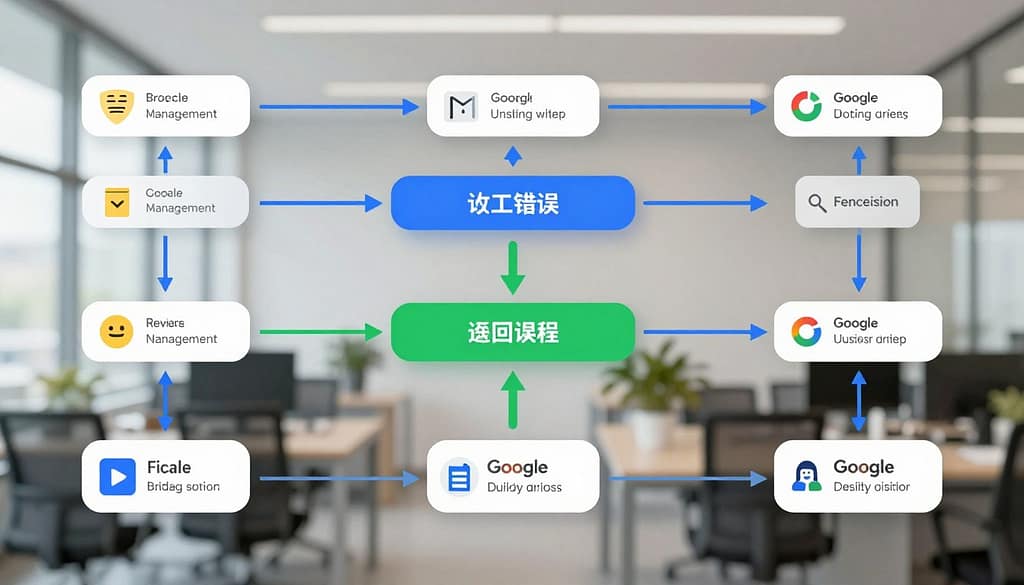
Seeing these categories should give you relief. You’re not facing a mysterious problem. You’re dealing with a known issue with a clear solution path.
The image above shows the diagnostic flow. Start with the most obvious category based on your symptoms, then follow the checks.
For example, a sudden disappearance from search usually means a Profile Health issue. A slow decline in calls often points to Visibility problems. Customer confusion about your location means a Data Consistency issue.
In the next section, we’ll cover fixes for common issues. This includes filter problems, competitor tactics, and duplicate listings. For now, identify your category. You’re already on the right path to solving your problem.
Filter issues, name spamming competitors, duplicate listings
Technical problems like filtered listings and duplicate profiles can hurt your local SEO. This guide offers simple steps to fix three common Google Business Profile issues.
Sometimes, your profile is live but doesn’t show up in local searches. This might happen if your address is similar to another business’s. For example, if you share a commercial kitchen.
Google filters to prevent showing two listings for the same place. To fix this, make sure your address is exact and unique. If you work from home, use the “service area” setting instead of your full address.
Combatting Name Spam
Name spamming is when competitors add keywords to their business name. This can make their ranking look better. For example, “Jane’s Catering | Wedding Chef NYC” instead of just “Jane’s Catering.”
You need to report this to Google. First, find the “Suggest an edit” option on the spammy listing. Then, suggest the correct business name. Use Google’s Business Redressal Complaint Form to file a formal report. Make sure to include evidence, like a screenshot.
Finding and Fixing Duplicate Listings
Duplicate listings can confuse customers and harm your local SEO. They split your reviews and signals. To find them, search for your business name and variations in Google Search and Maps.
If you find duplicates, you have two options. If you control both profiles, merge them through your Google Business Profile dashboard. If one is an old or incorrect listing you don’t control, mark it as a duplicate or request removal through “Suggest an edit.”
| Problem | Primary Cause | Recommended Action |
|---|---|---|
| Filtered Listing | Address similarity with another business; Google hides a profile to avoid duplicate place results. | Verify and refine address details. Use service-area settings if applicable. Ensure your profile data is distinct. |
| Name Spamming | Competitors adding location or service keywords to their business name to gain an unfair ranking advantage. | Use “Suggest an edit” on the listing. File a formal complaint via Google’s Business Redressal Complaint Form with evidence. |
| Duplicate Listings | Multiple Google Business Profile entries for the same business, often created accidentally or from old data. | Search for and identify all duplicates. Merge profiles you own through your dashboard. Request removal of incorrect listings you don’t control. |
Fixing these issues keeps your profile clean and accurate. A single, correct Google Business Profile is key for strong local SEO. Regular checks help keep your visibility and trust high.
90-Day Plan
This guide offers a detailed strategy. A 90-day plan turns that strategy into action steps. It creates a roadmap for your Google Business Profile and local SEO.
Weeks one to four are for launch. Complete your Google Business Profile with photos, services, and booking links. Also, check your website’s speed and location pages. Start building your citation footprint on local directories.
Weeks five to eight are for optimization. Add schema markup to your website. Start a review generation flow and reach out to event venues for backlinks. Begin your content plan.
The last month is for measuring and improving. Look at Google Business Profile Insights and track your ZIP code rank. See which content and keywords work best. Use this data to improve your local SEO and content plan.
This 90-day plan helps you stay focused. You start with basics, then move to advanced tasks, and end with data analysis. By consistently working on your Google Business Profile and local SEO, you can attract the right clients.