
For chefs, the best leads often come from trusted friends. Yet, many chefs don’t use this powerful source of business.
Building a network of chef referral partners is key. It turns random word-of-mouth into a steady flow of great clients.
Imagine your services promoted by event planners, real estate agents, gyms, and hotel concierges. These people meet your target market every day. They’re the perfect way to reach clients who value quality and are ready to spend.
Switching from occasional favors to a formal referral program changes everything. It turns a hopeful ask into a reliable way to grow. This guide will show you how to make that shift.
The main idea is simple: winning referrals means creating value for everyone. It’s a partnership where you, your partner, and the client all win. We’ll guide you through building these alliances step by step.
Get ready to find a steady stream of top-notch business. Let’s dive into the strategy.
Identify High-Value Partners
The most successful private chefs don’t just seek any partner. They carefully choose collaborators whose clients match their ideal customer.
This approach is key to a profitable referral program. It helps you move from vague networking to focused relationship building.
Alignment is key. A partner’s network should match your service’s price and style. A mismatch is a waste of time.
Look for professionals who serve clients who value premium food and can afford it. Think about who already has your dream client’s trust.
Here are four core high-value partner profiles to target:
- Event Planners & Corporate Admins: These contacts lead to steady demand. Event planners plan for big life events where food is key. Corporate admins organize events like employee appreciation and client dinners, seeking top culinary talent.
- Realtors & Luxury Concierges: They work in the high-end world and need standout closing gifts or perks. A realtor’s “welcome home” dinner is memorable. Luxury concierges in hotels or for private families find unique experiences for their clients.
- Property Managers for Luxury Buildings & HOAs: This is a goldmine for ongoing business. Managers of luxury buildings and HOAs want premium amenities to attract and keep residents. Exclusive chef services, cooking classes, or meal programs can make a building stand out.
- Wellness Professionals (Gyms, Yoga Studios): Their clients already invest in health and lifestyle. You can offer catering, wellness meal-prep, or nutrition workshops. The values align well.
Choosing the right partners is the first step in building a strong professional network. It’s about working smarter, not harder. Your goal is to think strategically about whose network you want to access and why it’s valuable for your business growth.
Event planners, corporate admins, realtors, luxury concierges, property managers, gyms/yoga/Pilates, wine shops
Each partner category has its own world with specific needs. Your success depends on knowing these worlds well and tailoring your offer to fit.
Event planners are always looking for unique experiences for their clients. They need top-notch vendors for weddings, galas, and corporate events. A partnership with you can make your service a go-to for special catering or chef-led events.
Corporate administrators focus on making employees and clients happy. They want vendors that make things easy and impress everyone. Providing lunch tastings or wellness meal packages for events meets their need for easy, healthy options.
Realtors aim to make memorable moments for their clients, like during a home purchase. A welcome-home dinner package can make their service stand out and build loyalty. This partnership turns a simple transaction into a memorable experience.
Luxury concierges serve clients who expect the best. They offer exclusive services and access. By partnering with them, you can become the go-to for private chef dinners, gourmet deliveries, or culinary tours, meeting their high standards.
Property managers of luxury buildings want to add value for their tenants. They look for amenities that make living better. Cooking classes, meal delivery programs, or discounts for residents can help keep tenants happy.
Gyms, yoga, and Pilates studios focus on overall wellness. Their members care about health and nutrition. A partnership for meal-prep packages or nutrition workshops fits perfectly with their brand, adding value for members. You can even collaborate on holistic wellness programming that includes nutrition guidance alongside mindfulness and meditation resources, helping clients connect healthy eating with mental well-being.
Wine shops attract customers who love wine and food pairings. They seek gourmet experiences to match their wine. Working together on wine-pairing dinners, charcuterie boards, or tasting events can delight both your and their customers.
By understanding each partner’s world, you can create offers that feel like a natural fit. This deep connection turns a simple list into a network of strong supporters.
Offer Design
An irresistible partner offer makes the referring professional look like a hero. Your goal is to create something they can’t wait to share with their clients. This turns the conversation into a strategic alliance.
A generic discount or a free dessert doesn’t inspire action. It doesn’t solve a problem for your partner. Your partner wants to elevate their service and provide great value.
Your offer must solve a specific pain point. For a realtor, it’s making the move-in experience memorable. For a corporate admin, it’s solving the “what’s for lunch” problem. For a wellness coach, it’s supporting nutritional goals.
Think of your offer as a branded extension of their service. It should feel like a gift, not a coupon. A beautifully presented welcome basket with your gourmet items for a new homeowner is a perfect example. It’s tangible, thoughtful, and reflects well on the realtor.
Strategic offers are complete solutions. They are packaged, easy to explain, and require minimal effort from your partner to execute. This turnkey nature builds loyalty and consistent referrals.
The table below highlights the fundamental shift from a generic pitch to a strategic partner offer.
| Element | Generic Offer | Strategic Partner Offer |
|---|---|---|
| Core Value | Price reduction | Service enhancement |
| Partner Benefit | Can say they got a “deal” | Elevates their brand; provides a wow factor |
| Client Perception | Sees a discount | Receives a curated experience or gift |
| Ease of Use | Partner must explain the deal | Pre-packaged and ready to gift (e.g., welcome baskets, tasting boxes) |
| Example | “10% off your first order” | “A complimentary celebratory chef table for your top-tier wedding clients” |
Frame your culinary services as experiences. Think about a “wellness meal-prep package” co-branded with a yoga studio. It’s not just food; it’s a commitment to health their studio facilitates.
For an event planner, a “celebratory chef table” transforms a meal into the centerpiece of a client’s milestone. These are memorable events the planner can promise as part of their premium package.
Ultimately, powerful offer design is about empathy. Understand what makes your partner successful. Then, craft a seamless, valuable solution that integrates your expertise into their workflow. When you make their job easier and their clients happier, you become an indispensable resource.
Welcome-home dinner, closing gifts, corporate lunch tastings, wellness meal-prep packages, celebratory chef tables
Concrete examples bridge the gap between strategy and action. These five detailed offer packages are engineered to win client business through partners.
A Welcome-Home Dinner package is perfect for realtors and property managers. It provides a seamless solution for clients moving into a new home. The package includes a chef-prepared meal delivered on move-in day. This eliminates the stress of cooking in an unpacked kitchen. It creates an immediate, positive memory associated with the new property.
Closing Gifts turn a standard realtor thank-you into an unforgettable experience. Instead of a bottle of wine, offer a curated gourmet basket or a gift certificate for a private meal. This elevates the realtor’s brand. It also introduces your culinary service directly to a new homeowner in a celebratory context.
Corporate Lunch Tastings directly address the needs of corporate admins and office managers. This offer reduces their risk in selecting a new caterer. You provide a small, complimentary tasting for the decision-making team. It showcases your menu’s quality and professionalism. This low-commitment step often leads to large, recurring corporate lunch orders.
Partner with gyms, yoga studios, and wellness centers through Wellness Meal-Prep Packages. These are tailored, nutritionally-balanced meals that support clients’ fitness goals. The partner can offer them as a premium add-on service. It provides tangible value to their members. It also positions your brand within the health-conscious community.
The Celebratory Chef Table is an exclusive offer for high-end event planners and luxury concierges. It involves you cooking an intimate, multi-course dinner for a small group in the client’s home. This package provides unparalleled exclusivity and personalization. It solves the planner’s need for a unique, “wow-factor” experience for their VIP clients.
Each package bundles your services into a marketable solution. The table below breaks down the key details for quick reference and planning.
| Offer Package | Ideal Partner | Core Components | Primary Client Appeal |
|---|---|---|---|
| Welcome-Home Dinner | Realtors, Property Managers | Fully-prepared meal, delivery on move-in day, easy re-heat instructions | Solves a immediate logistical pain point; creates a positive first impression |
| Closing Gifts | Real Estate Agents | Gourmet gift basket or certificate for a private dining experience | Elevates the partner’s gift into a memorable, experiential present |
| Corporate Lunch Tastings | Corporate Admins, Office Managers | Complimentary small-group tasting, sample menu presentation, catering quote | Removes the risk of trying a new vendor; demonstrates quality firsthand |
| Wellness Meal-Prep | Gyms, Yoga Studios, Wellness Coaches | Weekly menu of nutritionist-approved meals, subscription options, delivery | Supports specific health goals with convenient, chef-prepared food |
| Celebratory Chef Table | Event Planners, Luxury Concierges | Custom menu planning, in-home chef service, premium ingredients, full service | Delivers an exclusive, personalized, and high-status dining experience |
These turnkey offers make it easy for partners to say “yes.” They provide clear value to the end client. This transforms a simple referral into a guaranteed, high-satisfaction transaction.
Outreach Kit
An outreach kit is like a digital handshake, aiming to make a strong first impression. It’s designed to make it easy for busy people to say ‘yes’. It’s a collection of tools that solves the problem of starting a conversation.
It’s not about cold sales; it’s about showing value. A well-prepared kit shows you respect the partner’s time. It clearly explains the opportunity, making it simple for them to see the benefits.
Think of it as a way to easily build alliances. It answers questions before they’re asked and builds trust right away.
Your kit should have versatile assets for different communication channels. Each piece has a specific role in educating and engaging your partner.
- Email/DM/Call Scripts: Pre-drafted outreach scripts give you a confident start. They focus on mutual value, not just selling. Having templates for emails, social media, and calls saves time and ensures consistency.
- Partnership One-Sheet: This is a quick overview of your offer. It shows the partner’s benefits and your service highlights. It’s a simple document for decision-makers.
- Menu Sampler: A visual preview of your culinary offerings. This could be a PDF brochure or a link to a gallery. It lets the partner see what they’re recommending.
- Partner Landing Page: A dedicated web page for partners to learn more. It hosts all the kit materials, testimonials, and a contact form. It adds legitimacy and makes tracking referrals easier.
With a complete outreach kit, you turn a hopeful introduction into a solid business conversation. It shows you’re organized, reliable, and focused on mutual success. This approach boosts your chances of getting valuable partnerships.
Email/DM/call scripts; one-sheet; menu sampler; partner landing page
Getting a partnership is more than just a good pitch. You need a complete package that makes saying ‘yes’ easy for busy people. Your outreach kit is like a professional toolbox. It gives partners everything they need to understand and sell your service.
Think of these four elements as the key parts of your referral machine. Each part has its own role, but they work together well. A partner should be able to pick up your kit and see the value right away.
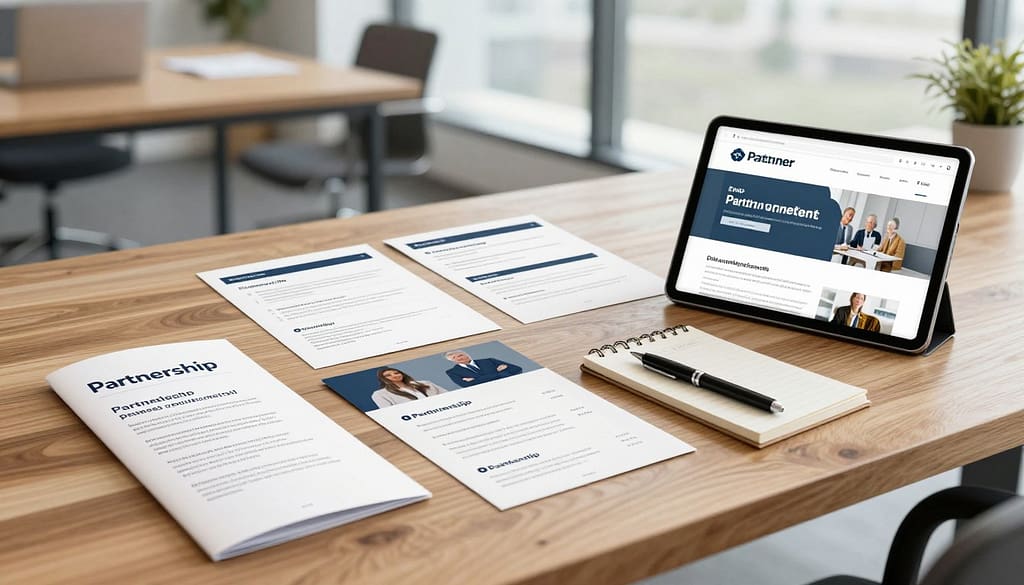
Let’s look at each part of your outreach kit. We’ll see why it’s important and how to make it effective.
Communication Scripts: The Opening Move
Email, direct message, and call scripts are the first words in your outreach. They’re not set speeches but flexible guides. They help busy partners start conversations with you and their clients.
A good script answers common questions before they’re asked. It clearly shows the benefits of working together. It should sound like a real person, not spam. Tools like Celtx help organize different scripts for different partners.
The best scripts are flexible templates. They have places for personal touches and different conversation paths. This prepares your partner for various client responses.
The One-Sheet: Your Partnership Resume
This single-page document quickly shows the benefits of partnering. It answers the “what’s in it for me?” question quickly. A good one-sheet uses simple design, bullet points, and bold visuals.
Focus on how your service helps the partner’s clients. Show how it solves their problems or improves their offerings. Include brief testimonials, your unique value, and the easy referral process. It should be scannable in under 30 seconds.
This document often goes to others for review. It must stand on its own without your explanation. Think of it as your partnership business card, but with real substance.
Menu Sampler: Show, Don’t Just Tell
Your culinary product needs to impress, and a menu sampler does just that. It’s not your full menu. It’s a selection of your best, partnership-friendly dishes.
Include high-quality photos of your signature dishes. Offer menus tailored to specific partners, like elegant dinner packages for realtors. Visual appeal increases perceived value.
Make sure dietary info and pricing are clear. Partners need to answer client questions confidently. A digital sampler might include short videos or happy client moments.
Partner Landing Page: The Dedicated Hub
A dedicated landing page is the central hub for interested partners. It hosts all your materials in one place. It provides more info than the one-sheet.
Here, partners can find high-resolution logos, branded marketing copy, and commission details. Include case studies, FAQs, and easy contact forms. This page shows you’re serious and professional.
Track visits to see which partners are most interested. The landing page is your 24/7 ambassador. It handles initial education so you can focus on building relationships.
| Component | Primary Purpose | Key Features | Best Practices |
|---|---|---|---|
| Communication Scripts | Provide opening language & conversation frameworks | Multiple versions (email/DM/call), personalization placeholders, benefit-focused talking points | Keep conversational, include 2-3 response pathways, test with different audiences |
| One-Sheet | Succinctly sell partnership benefits at a glance | Clean design, bullet points, partner/client benefits, visual branding, clear CTA | Single page maximum, scannable in 30 seconds, focus on “what’s in it for them” |
| Menu Sampler | Showcase culinary product quality & range | Curated offerings, high-quality images, context-specific menus, dietary/pricing info | Tailor to partner vertical, highlight most impressive dishes, include portion visuals |
| Partner Landing Page | Serve as dedicated information hub & resource center | All materials in one place, downloadable assets, case studies, contact forms, tracking | Password protection for exclusivity, clear navigation, mobile-responsive design |
When these four parts work together, they make a strong first impression. Your outreach kit shows you’re professional, organized, and ready for success. It turns explaining your service into a simple, shareable process.
Remember, clarity is more important than creativity in partner materials. Busy people appreciate materials they can use right away. Test your kit with a trusted colleague before sharing it. Ask if anything is unclear or missing.
The ultimate goal is to make referral generation easy for your partners. With a complete kit, you’re not just asking for business—you’re providing a solution. This approach builds trust before you even talk.
Incentive Structure
A formal incentive structure turns casual referrals into a steady income. It outlines how partners get rewarded for sending clients your way. Getting it right is key to motivating partners and building strong alliances.
Your incentive plan is like the engine of your referral program. A weak engine fails. A strong one drives growth. Aim to create a system that’s fair, exciting, and sustainable for all.
First, decide what to reward partners with. Will it be cash commissions, service credits, or a mix? Each option has its own benefits and appeals to different motivations.
- Cash Commissions: This is a clear percentage of the sale price or a fixed fee for each referral. It offers immediate value and is a strong motivator. It’s best when partners see the relationship as a way to make money.
- Service Credits: Partners earn credits to use your services themselves or as gifts. This model strengthens the relationship. It lets partners experience your quality and become brand advocates. It can also help your cash flow.
- Hybrid Model: A mix of both, like a small cash commission plus credits. This satisfies partners who want quick money and to engage with your brand. It’s very flexible.
The choice isn’t just about cost. It’s about alignment. A cash-heavy commission structure works for partners looking for side income. A credit-based system is better for those who value perks and experiences. Your incentive should match what your partner values most.
A good referral program avoids incentives that are too expensive or too small. The structure must be profitable for your business in the long run. Test different models with a few partners before launching widely.
Your incentive structure shows how much you value partners’ networks and collaboration. Design it with clarity, fairness, and mutual growth in mind. This way, you’ll build partnerships that last, not just for a few transactions.
Commission vs credit; compliance/COIs; tracking referrals
Before starting, partners agree on how they’ll be paid and how to track referrals. This makes the partnership professional and trustworthy.
Choosing Your Incentive Model: Commission or Credit?
You can reward partners with a commission or a service credit. Each has its own benefits.
A commission is a cash payment, usually a percentage of the sale. It’s direct and often preferred by sales-focused partners.
A service credit is a dollar-value credit toward your services. It’s great for building loyalty with partners who might become clients themselves.
- Commission Pros: Immediate cash value, easy to understand, highly motivating for sales.
- Commission Cons: Costs your business cash, doesn’t deepen the partner’s experience with your service.
- Service Credit Pros: Lower upfront cost, encourages partners to use and understand your service, can turn them into advocates.
- Service Credit Cons: Seen as less valuable than cash by some, requires managing the credit ledger.
Many successful programs offer a hybrid model. This gives partners a choice or a small commission plus a credit.
Navigating Compliance and Conflict of Interest (COI)
Compliance is key to a professional partnership. Many corporate partners have strict policies.
They might ask for a Conflict of Interest (COI) form and proof of insurance before referring clients. Handling this upfront shows you’re serious and legitimate.
Always ask new partners about their compliance process or COI form. This question builds trust and prevents issues.
Tracking referrals accurately is essential. It ensures correct payments, measures partnership success, and avoids disputes.
Your tracking system doesn’t need to be complex. It just needs to be clear and consistent. Use a shared method for partners to submit referrals, like an email address or online form.
Internally, use a shared spreadsheet or CRM tag to log referrals. Record the partner’s name, client contact, date, and service referred. When the deal closes, note the revenue and calculate the owed commission or credit.
Communicate this process clearly to your partners. Let them know how to send leads and how you’ll confirm receipt. This makes the partnership feel seamless and reliable.
By defining the financial model, respecting compliance, and tracking referrals well, you become the trustworthy choice for high-value partners.
Co-Marketing Ideas
Take your partner relationships to the next level by working together on marketing campaigns. This approach goes beyond just getting a referral fee. It creates a strong partnership where both brands benefit equally.
Co-marketing does more than just deals. It brings your brands closer by sharing audiences and creating unique value. The goal is to make a buzz and attract quality leads together.
Creative, Low-Lift Co-Marketing Ideas
You don’t need a big budget for effective co-marketing. It’s all about being creative and working together. Here are some ideas to get you started with a partner.
- Joint Social Media Live Events: Host a live event on Instagram or Facebook together. Imagine a chef and a realtor making easy appetizers for a housewarming party. This live event reaches both of your followers.
- Newsletter Content Swaps: Share your partner’s service in your newsletter, and they do the same for you. Create a “Partner Spotlight” section with exclusive tips or offers for each other’s subscribers.
- Co-Branded Digital Content: Make a downloadable guide or recipe card together. For example, create a “Healthy Weeknight Dinner” PDF with a local gym’s logo. Add a QR code for a special offer from both businesses.
- Signature Welcome Baskets: Work with a realtor or concierge on welcome baskets for new clients or residents. Your food becomes the highlight of their client gift, showing off your quality.
- Exclusive Tasting Events: Partner with a wine shop or event planner for a small, ticketed dinner. You provide the food; they handle the venue or drinks. It’s a great way to generate leads in a fun setting.
These activities make your partner a true promotional ally. Each campaign strengthens your brand connection in the client’s mind. It turns a one-time referral into ongoing growth for both businesses.
Look for ideas that are easy to do but offer high value. The best partnerships are built on consistent, collaborative effort. This makes both businesses look good.
Joint tastings, IG Lives, newsletter swaps, recipe cards with QR, realty closing baskets
To really connect with your partner, you need marketing that benefits both of you. Co-marketing turns a simple referral into a shared brand effort. It boosts your visibility and gives real value to your partner’s audience.
Each idea should be real and offer clear benefits to both sides. Here are five strong co-marketing strategies for planners, realtors, and other key partners.
Work with a local wine shop, cheese monger, or bakery for a tasting event. You bring the savory dishes, and they offer the drinks or desserts. You can host it at your kitchen, their store, or a client’s home for a corporate event.
This idea is great because it combines your expertise. You both get to show off your products to each other’s fans. It creates a memorable experience that boosts direct sales and bookings for both.
Collaborative IG Lives and Reels
Do an Instagram Live with a partner, like a fitness instructor or event planner. Show off a quick, healthy recipe or talk about the best menu for a summer wedding. Promote the live session to your followers before it starts.
The live Q&A builds community and trust. You can offer a special promo code for viewers, making it easy to track leads. Save the replay on both profiles for ongoing value.
Strategic Newsletter Swaps
Offer exclusive content for your partner’s newsletter. This could be a seasonal recipe tip, a kitchen story, or a special offer. In return, feature your partner in your newsletter, highlighting them as a “preferred vendor.”
This tactic gives valuable content to their list while giving you access to a warm audience. It’s a simple way to get qualified leads who trust your partner’s recommendation.
Branded Recipe Cards with QR Codes
Create beautiful, branded recipe cards for a signature dish. Include a QR code that links to a special landing page for your partner’s referrals. Offer a “Welcome Home” dinner discount. Give these cards to your realtor partners.
Realtors can put them in closing gift baskets or welcome packets. This turns a gift into a digital lead generator. The client gets a tasty recipe idea, and you get a tracked sign-up from a motivated new customer.
Signature Realty Closing Baskets
Make a premium “Closing Day” gift basket with a realtor. You contribute a gift card for a “Stress-Free First Night” dinner. The realtor adds champagne, local treats, and keys. This basket becomes their signature client gift.
It offers immense value to the homebuyer at a key moment. For the realtor, it enhances their client experience. For you, it places your service in a celebratory context, leading to immediate and likely long-term clients.
These co-marketing ideas strengthen partnerships. They generate leads and build brand equity for everyone involved.
Delivering White-Glove Service
Flawless execution is key to a successful referral partnership. When a realtor, event planner, or corporate admin sends a client to you, they’re endorsing you. Their reputation is on the line with the service you provide. So, white-glove service is a must for every referral.
It’s like an unwritten agreement. Your partner promises top-notch service to their client. You must deliver it every time. This turns a simple deal into a trusted partnership.
So, what does white-glove service mean in action? It’s about three main things.
- Clear, Proactive Communication: Keep everyone updated from start to finish. A simple text to a corporate admin when lunch arrives shows you care.
- Exceptional Culinary Delivery: The food must be perfect in taste, temperature, and look. Every detail counts, from how it’s packed to how it’s served.
- VIP Treatment for Every Client: Treat each referral like your most important customer. Personal touches, special dietary needs, and a smooth experience show you value them.
This level of service does more than just please a customer. It builds trust with your partner. A corporate admin who gets great feedback for a catered event will happily refer you again.
For property managers and luxury concierges, your excellence reflects on them. It makes them a strong advocate for your services.
White-glove service is your best way to keep partners coming back. They won’t risk their reputation with unreliable vendors. By making every client feel special, you ensure they’ll keep sending you referrals. This is the start of a profitable and lasting partnership.
SLA, partner-branded menus, feedback loops
Operational excellence in partner management relies on three key areas: agreements, personalization, and feedback. Moving past simple referrals, this approach turns them into a reliable source of income. It builds trust and ensures every client gets your white-glove service standard.
The first area is a clear Service Level Agreement (SLA). It’s not a complex legal document. It’s a one-page promise that sets clear expectations. An SLA prevents misunderstandings and shows you’re a serious business.
Your partner SLA should outline:
- Response Time: How quickly you’ll answer a referral inquiry (e.g., within 2 business hours).
- Booking Process: A simple path for the partner’s client to book your services.
- Issue Resolution: A dedicated channel and timeline for solving any service issues.
This clarity makes partners confident in recommending you. They know exactly what their client will get.
The second area is partner-branded menus. Personalization makes a big difference here. Instead of sending your standard menu, you create customized materials with the partner’s logo and colors.
Imagine a realtor giving a client a “Welcome Home Dining Guide” co-branded with your private chef business. The client sees the realtor’s exceptional service extended through you. This makes the partner look good and increases the perceived value of your service.
These personalized menus can be digital PDFs or elegant printed booklets. They are a tangible symbol of your collaborative operational framework.
The third area is establishing structured feedback loops. This is your system for continuous improvement. It involves gathering insights from two key sources: the end-client and the referring partner.
Client feedback ensures your service quality remains high. A simple follow-up email after the event asks about their experience. This data helps you refine your offerings.
Partner check-ins are even more important. Schedule a brief call or send a quarterly survey. Ask what’s working and what could be better. This shows you value the relationship beyond the transaction.
The table below outlines a simple, effective feedback loop structure:
| Feedback Channel | Primary Purpose | Recommended Method | Ideal Frequency |
|---|---|---|---|
| Client Feedback | Measure service quality & guest satisfaction. | Short email survey with a rating scale and open comment field. | Within 48 hours of service delivery. |
| Partner Feedback | Strengthen the partnership & uncover new opportunities. | 15-minute video call or structured email questionnaire. | Quarterly, or after every 3-5 referrals. |
Together, these three pillars—SLA, branded menus, and feedback loops—create a self-improving system. They formalize your white-glove service delivery. Partners feel secure and valued. This professional approach turns a single referral into a long-term, profitable referral partnership.
Case Examples
Real-world examples show the power of referral strategies. We’ll look at two scenarios. These stories highlight how targeting, offer design, and incentives work together.
A chef and a realtor, and a meal prep service and a corporate wellness program, are our examples. Each shows a different path to success.
Chef Michael targeted top realtors in his city. They needed impressive gifts for their clients. He offered a personalized welcome-home dinner for two.
He made a simple one-sheet for his outreach kit. It had stunning photos of his dishes. The incentive was a 15% commission on every dinner.
Michael used a dedicated landing page to track referrals. The first realtor partner sent him eight clients in one quarter. Each dinner led to more catering inquiries from the guests. This partnership now provides a steady stream of premium business.
Case Example 2: The Wellness Kitchen & Corporate HR Manager
FreshFuel Meal Prep wanted consistent weekly orders. They found HR managers at local tech companies. These managers struggled with employee wellness benefits.
The offer was a corporate lunch tasting and meal-prep package. It included discounted group rates for employees. The outreach involved a tailored email with a menu sampler.
The incentive was a hybrid model. Partners received a credit for every five sign-ups. They also got a free weekly lunch for their office. This created a powerful feedback loop.
One partnership with a mid-sized firm led to 40 steady weekly subscriptions. The HR manager became a vocal advocate. She featured FreshFuel in the company newsletter.
| Element | Gourmet Chef & Realtor | Wellness Kitchen & Corporate HR |
|---|---|---|
| Partner Type | Luxury Real Estate Agent | Corporate HR / Wellness Manager |
| Core Offer | Personalized Welcome-Home Dinner | Corporate Lunch Tasting & Meal-Prep Packages |
| Incentive Model | 15% Commission per Booking | Account Credit + Free Weekly Lunch |
| Key Result | 8 High-Value Dinners per Quarter | 40+ Recurring Weekly Subscriptions |
| Success Driver | Ultra-Personalized, Celebratory Experience | Solving a Bulk Wellness Need with Value |
These examples show a simple truth. A great partnership meets a specific need with a tailored solution. The chef solved the realtor’s gift problem. The meal prep service solved the HR manager’s wellness challenge.
Your task is to find a similar need in your partner’s world. Then, design an offer that feels like a gift, not a transaction. Use these stories as a blueprint for your own profitable collaborations.
Realtor partnership → 8 dinners/quarter; concierge retainer model
Let’s dive into two real partnership plans you can start today. A good referral program needs a solid financial base. These models offer clarity for you and your partners.
The first plan works with real estate pros. You agree to host eight “welcome home” dinners each quarter for their top clients.
These dinners are priced attractively. The realtor promises this volume in return.
This setup turns random referrals into a steady income. It’s a win for the realtor. They get a reliable, impressive gift for their clients.
Your job is to keep the quality high. Always deliver the same quality. This builds trust with the realtor.
The second plan is for luxury spots like high-end hotels or fancy residential buildings. It’s a top-tier partnership.
You get a monthly fee for being the go-to catering service. This fee gives you priority and exclusive menus for guests.
This model brings in steady income. It’s more than just one-off deals. For the concierge, it means a truly exclusive dining experience for VIPs.
Key parts of a retainer deal include:
- A clear list of services (like two private chef events a month).
- Lower rates for services not covered by the retainer.
- A single contact for the concierge team.
Both plans make your partnership clear and valuable. The volume model grows your business. The retainer model adds prestige and stability.
Offering these clear options makes your partnership pitch strong. It shows you’ve thought through the business side. A well-structured referral program is a partnership, not just a hope for leads.
Measurement
The true power of a partnership program comes from clear data, not just handshakes. Without a focus on measurement, you’re lost, guessing which alliances to invest in. This section helps you see the health and profit of each partnership.

You can’t manage or grow what you don’t measure. To move past guesses, set clear Key Performance Indicators (KPIs). These metrics show which partnerships are profitable and which aren’t. A data-driven approach brings certainty, not just hope.
Begin by setting the main KPIs for your referral partnership program. Look beyond just referral numbers to value, efficiency, and health.
- Referral-to-Client Conversion Rate: This shows how many referred leads become customers. It’s key to knowing if partners are a good fit.
- Average Order Value (AOV) by Partner Source: This metric shows if certain partners bring in more money. It helps find valuable alliances.
- Partner-Generated Revenue: This is the total revenue from each partner over time. It’s a key metric for success.
- Cost of Partner Acquisition (CPA): This compares all costs to revenue. It shows if a partnership is profitable.
- Partner Lifetime Value (LTV): This looks at a partner’s future revenue. It helps decide long-term investments.
Tracking this data is essential. Use a CRM, unique codes, or partner tracking software. Tag every referral with its source from the start. Accurate data entry is key.
Regular reviews are vital. Hold monthly or quarterly meetings to check KPIs with your team. Look for trends in conversion rates and AOV. This helps focus on making partnerships more valuable for both sides.
This detailed measurement guides your scaling plans. It helps decide which partners to prioritize, adjust incentives for, or phase out. By making decisions based on data, your referral partnership program becomes a reliable, scalable source of revenue.
Source attribution, partner LTV, churn flags
To manage your partner portfolio like a financial asset, track source attribution, lifetime value, and churn signals. These metrics help you make strategic, profit-focused decisions. They move your program beyond simple handshake deals.
Source Attribution is key. It answers the question: which partner sent this client? Without clear attribution, you can’t reward partners right or see which relationships drive business.
Use unique discount codes, dedicated partner landing pages, or a “How did you hear about us?” field on your order form for attribution. This data is essential for all your analyses.
Partner Lifetime Value (LTV) is critical. It’s the total revenue from all clients referred by a partner over time. A partner who sends one big order is good. But a partner who sends many high-value clients for years is priceless.
Calculate Partner LTV by adding up all revenue from their referrals. This shows which alliances are most profitable. For example, a property manager for luxury buildings who refers many clients has a huge LTV. This justifies more resources for that relationship.
Churn Flags are early signs a partnership is weakening. Spotting them early lets you act before it’s too late. Common flags include:
- A sudden drop in referral frequency or quality.
- Delayed responses to your communication.
- The partner stops promoting your service in their marketing materials.
- Negative feedback from clients they referred.
Monitoring these signals lets you manage partnerships proactively. You can schedule a call or offer a new co-marketing idea to re-engage them.
These metrics help you manage your partner portfolio strategically. You can focus on high-LTV partners, like those connected to affluent HOAs or luxury buildings. You can also work on at-risk relationships before they fade away. This data-driven approach ensures your efforts and incentives boost partnerships for long-term growth.
Scale Plan
A proven partnership model is just the start. True growth comes from a detailed scale plan. This plan is your guide to move from one-off referrals to a growing partner program.
Your aim is to grow steadily while keeping the high service level that made your partnerships successful. A scale plan turns random efforts into a steady flow of new business.
Begin by making your processes repeatable. Write down every step, from onboarding to fulfilling referrals. Make clear guides for outreach, incentives, and co-marketing. This turns individual wins into a company-wide system.
Having solid documentation is key. Create a partner resource center with branded materials, checklists, and agreements. This ensures new partners get the same quality experience from the start.
Your growth plan should focus on logical growth. First, strengthen ties with your best partners. Then, look for similar networks to expand into. For example, a strong realtor partnership can lead to connections with mortgage brokers or home inspectors.
Scaling needs careful tracking. Use your tracking systems to see which partner channels are most profitable. Focus on what works and improve or drop what doesn’t.
Here are phases for a controlled, effective scale plan:
| Scaling Phase | Primary Focus | Key Deliverables |
|---|---|---|
| Foundation | Systemizing proven workflows | Partner onboarding playbook, referral tracking dashboard |
| Expansion | Adding new partner verticals | Target partner list, customized outreach kits for new industries |
| Optimization | Improving partner lifetime value | Enhanced co-marketing campaigns, tiered incentive structures |
| Maturity | Automating and delegating | Dedicated partner manager role, automated reporting systems |
As you follow this plan, keep your service standards high. Growth should never lower the client experience. Set clear limits and share them with partners. It’s better to grow slowly with quality than to expand too fast and fail.
A well-designed scale plan turns your partnership efforts into a main, reliable income source. It builds a network that grows itself, bringing in consistent, high-quality referrals for years.
Territory exclusives; quarterly review meetings
Starting a successful referral network is just the beginning. To grow your private chef business, use two key strategies for managing partnerships.
Territory exclusives are a great way to reward your top partners. Give a realtor the right to refer clients in a certain area. Offer a luxury building concierge a special partnership for their building. This helps them earn more and keeps your business steady.
Make the partnership official with regular quarterly meetings. These aren’t just casual chats. They’re important business talks. You’ll discuss how many referrals you’ve had, how happy clients are, and how much money you’ve made.
Plan for future events like tastings or newsletter features. Use tools like Calendly to make scheduling easy.
These steps turn partnerships into strong, lasting relationships. They create a steady flow of referrals that help your business grow and attract new clients.