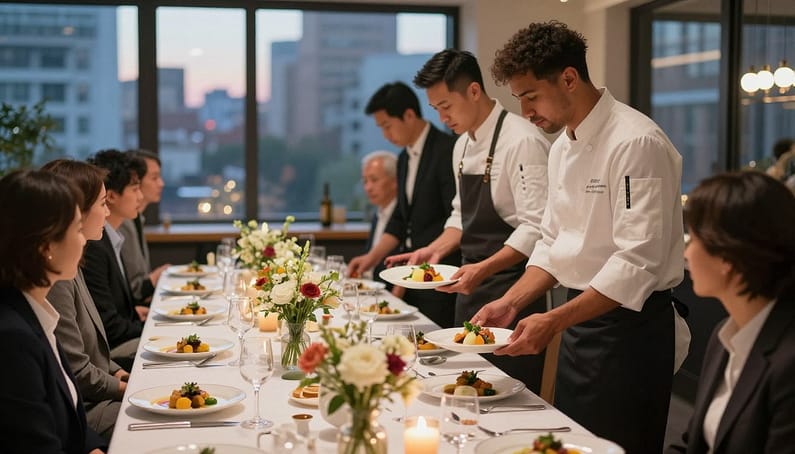
Imagine an evening that does more than just feed you. It boosts your brand and fills your calendar for months. For chefs starting out, a well-planned pop-up dinner is key.
These special events are a direct way to market and sell. They turn curious diners into loyal customers. With smart PR and a memorable night, a pop-up can become a lasting business.
This article is your guide. We’ll show you how to turn special moments into a booked-out schedule. Let’s go from creating a tasting menu to getting retainers.
Strategy
Strategic pop-up dinners turn tasting events into powerful tools for filling a private chef calendar. They go beyond just cooking for people. They are a way to grow your brand and client list.
How is this different from traditional catering or running a restaurant? Catering follows a client’s vision, and restaurants have fixed locations and regular customers. Pop-up dinners let you be the visionary host. You control everything from the menu to the guest experience.
The main pillars of this strategy are clear. First, you build a direct client relationship without a middleman. Guests connect with you personally. Second, you show off your unique culinary view in an immersive setting. Third, you create a sense of scarcity and exclusivity. Limited seats and one-night-only events make guests eager.
This format lets you align events with specific business goals. Want to test a new menu? A pop-up is a great way to get feedback. Want to enter a new neighborhood or city? A series of dinners can build buzz and credibility.
Your pricing is key in this strategy. It should reflect the exclusive experience and direct access to you. Thoughtful pricing positions your brand and attracts your ideal client. Also, forming community partnerships with local businesses is strategic. These alliances expand your reach and add value to the event. Collaborating with wellness brands or platforms that share mindfulness and meditation resources can further elevate the dining experience, positioning your pop-up as a holistic lifestyle event rather than just a meal.
At its core, a pop-up dinner strategy is about intentional growth. Every detail, from the theme to the ticket price, aims to convert diners into private clients. It turns a single night of great food into a lasting business pipeline.
Objectives: leads vs profit vs content
Before you book a venue or design a menu, you must answer one key question. What is the most important outcome for your pop-up dinner? Your answer will guide every decision you make.
Private chefs usually start these events with one of three main goals:
- Lead Generation: Getting contact info for future bookings.
- Direct Profitability: Making a profit from the event itself.
- Content Creation: Getting professional photos and testimonials for marketing.
While you can get parts of all three, trying to do all at once can be confusing. Picking one main goal helps you stay focused and strategic.
For example, an event focused on lead generation might be priced low to fill seats fast. It would focus on getting emails and scheduling meetings. A profit-driven dinner, on the other hand, aims for high prices and luxury. Every detail, from the micro‑venues to the VIP extras, is to make more money.
The content creation goal changes everything. You might have a small, beautiful event with a photographer. The goal isn’t to make money right away or to have a huge crowd. It’s to get photos and videos that sell your brand for months.
This choice affects four key parts of your plan:
| Primary Objective | Venue Strategy | Pricing & Ticketing | Night-of Focus | Follow-up Priority |
|---|---|---|---|---|
| Lead Generation | Accessible, high-capacity spaces. Partner with local businesses to share their audience. | Lower price point to minimize barrier. Use ticketing platforms with built-in email capture. | QR codes for consultations, sign-up sheets, engaging “how did you hear about us?” prompts. | Immediate nurture sequence with a free tasting credit. |
| Direct Profit | Exclusive micro‑venues that justify a premium (e.g., private lofts, art galleries). | Higher ticket price with clear profit margin. Structured VIP upsells during the ticketing process. | Seamless, luxurious experience. Effortless payment for wine pairings or take-home goods. | Thank you note with a receipt. Invitation to future paid events. |
| Content Creation | Highly photogenic settings with great light and unique backdrops. | Break-even pricing to cover costs. Limited seats for intimacy and control. | Staged photo ops, testimonial video booth, chef interactions captured on camera. | Share the professional content created. Tag guests and request reviews. |
As the table shows, your goal is not just a wish. It’s a clear guide. If you want leads, a fancy gallery might not be right. If you’re aiming for profit, giving away seats to influencers won’t work.
Set your goal first. This step turns your pop-up into a strategic business tool. It aligns your team, budget, and marketing plan for one clear win.
Concept & Venue
Your pop-up’s success depends on a great story and the right place to share it. This turns a meal into an unforgettable experience. The concept is your plan, and the venue is your stage. When they match, you create an event people will remember and want to return to.
First, decide on your story. What tale do you want your dinner to tell? Maybe it’s about Oregon’s coastal flavors, your grandma’s recipes, or a zero-waste feast. A strong concept gives your event a unique identity. It makes marketing easier and attracts guests.
After you know your story, find the right venue. The right space enhances your story. It’s like a partner in your event. A rustic barn is perfect for farm-to-table dinners, while an art gallery suits modern menus.
Different venues offer different perks. Micro‑venues like lofts or small studios are great for new chefs. They’re affordable and offer an intimate feel. Larger spaces, like wineries or galleries, attract more people and can charge more.
Here’s a table to help you choose:
| Venue Type | Key Advantages | Potential Challenges | Ideal For Concepts |
|---|---|---|---|
| Loft / Apartment | Low cost, full control, intimate setting, flexible dates. | Limited capacity, may lack professional kitchen, parking issues. | Supper clubs, friends & family soft launches, hyper-local themes. |
| Art Gallery | Stylish ambiance, built-in aesthetic, cultural cachet. | Rental fees, strict rules on decor/food, limited availability. | Plated tasting menus, artistic presentations, collaborative events with artists. |
| Boutique Shop | Unique retail crossover, access to shop’s clientele, daytime visibility. | Space constraints after hours, need for after-hours agreements. | Seasonal launches, product-pairing dinners (e.g., chef + local maker). |
| Wineries | Established brand, built-in wine program, beautiful scenery. | May require partnership revenue split, often booked far in advance. | Wine-pairing dinners, vineyard-to-table experiences, luxury gatherings. |
| Micro‑venues (Pop-up Spaces) | Designed for events, often have licenses, trendy and novel. | Can be competitive to book, may have specific vendor requirements. | Chef’s tasting menus, experimental cuisine, launching a new brand. |
Work closely with your venue. A gallery owner can promote your event. A winery can offer sommelier service. This partnership can expand your reach and enrich the guest experience. Always discuss permits, insurance, and kitchen capabilities early on.
The venue is a key part of your pop-up. A loft’s brick adds to a hearty meal. A gallery’s sleek look suits modern dishes. This mix makes your dinner a special event. After finding your venue, use booking platforms to fill your seats.
Your concept and venue choice are the foundation. They influence everything, from ticket prices to marketing. Choose a story you love and a space that showcases it well.
Story-driven themes; kitchens, wineries, rooftops, galleries; permits & insurance notes
The magic of a pop-up dinner is in the story it tells. Choosing a theme is a key creative step. A strong theme makes the experience unforgettable and shareable.
Themes like “A Night in Provence” or “Urban Farm-to-Table” create a complete world. They go beyond food, engaging all senses. These themes make your event stand out.
Your venue is a key part of the story. The right space enhances your narrative. Each location has its own advantages and needs.
| Venue Type | Narrative Appeal | Key Practical Considerations | Ideal For Themes Like… |
|---|---|---|---|
| Commercial Kitchens | Offers an intimate, behind-the-scenes feel. Guests connect with the chef’s craft. | Often have existing permits and equipment. May have limited ambiance. | “Chef’s Counter Experience,” “Test Kitchen Debut.” |
| Wineries & Vineyards | Built-in elegance and a sense of terroir. Pairs naturally with beverage storytelling. | Corkage or partnership agreements are key. Often have strict noise/end times. | “Harvest Supper,” “Old World vs. New World.” |
| Rooftops & Terraces | High visual impact, urban chic, or panoramic views. Creates a “wow” factor. | Weather contingency is mandatory. Access and load-in can be complex. | “Skyline Soirée,” “Sunset Al Fresco.” |
| Art Galleries & Lofts | Sophisticated, minimalist, or avant-garde backdrop. Frames food as art. | Require extreme care to protect artwork. Lighting is often fixed. | “Culinary Canvas,” “Modernist Menu.” |
Choosing a venue is a chance for community partnerships. Working with a local winery or gallery can help. It brings in new customers and makes your event more visible.
Once your story and venue are set, focus on the practical side. Good planning is what turns dreams into reality.
Permits and Licenses: These are essential. If you serve alcohol, you need a special license. Food service might require a health notice. Always check local rules early.
Event Insurance: This protects you and your guests. A general liability policy is affordable and necessary. Many venues require proof of insurance before booking.
Managing creativity and risk is key. A great theme and venue mean nothing without the right safety measures. This lets you focus on creating an amazing experience.
A strong story and a secure venue make your pop-ups unforgettable. They build your reputation and create memorable events.
Budget & Pricing
Mastering the numbers behind your pop-up dinner lets you price with confidence. A solid budget turns your creative idea into a financially sound event. It makes sure your ticket price covers costs and meets your profit or lead goals.
Every pop-up dinner budget has four main cost categories. Knowing each one helps avoid surprises.
- Food & Beverage Cost: This is your biggest expense. It includes all ingredients, drinks, and tasting samples. Aim for a food cost of 25-35% of the ticket price.
- Labor: Include all paid help. This includes you, sous chefs, servers, bartenders, and a cleaner. Don’t forget setup and breakdown time.
- Venue Rental: This can be a fixed fee or a percentage of sales. Always know what’s included, like tables, chairs, or kitchen access.
- Rentals & Supplies: Items not provided by the venue. Think linens, glassware, specialty serving platters, decor, and signage.
With categories in mind, create a simple framework. List every possible expense with a realistic cost. Then, add them up to find your total cost. This total is your breakeven point—the amount you must earn before making a profit.
The table below is a sample for a 20-guest dinner. Use it as a starting point for your own calculations.
| Cost Category | Estimated Cost | Notes & Calculation Basis |
|---|---|---|
| Food & Beverage | $700 | $35 per guest x 20 guests. Includes non-alcoholic pairings. |
| Labor (3 staff) | $450 | $150 per person for 6 hours of work. |
| Venue Rental | $300 | Flat fee for a 4-hour evening block. |
| Rentals & Supplies | $200 | Specialty plates, napkins, and decor. |
| Total Cost (Breakeven) | $1,650 | This is the amount you need to cover. |
Now, set your ticket pricing. Divide your total cost by your expected number of guests. For the example above, $1,650 / 20 guests = $82.50 per ticket. This is your baseline. To achieve profit, add your desired margin on top. For instance, targeting a 20% profit means charging about $99 per ticket.
Strategic PR and marketing can justify a higher price point. A well-publicized event at a unique venue creates an exclusive feel. This allows your pricing to reflect the full experience, not just the meal. For more insight on structuring a profitable menu, explore our guide on how much a food tasting costs.
Your final price must directly serve the objective you chose in Section 3. Is it maximum profit per seat? Or is it generating leads, where a slightly lower price fills the room with clients? Let your budget guide this critical pricing decision.
Food/labor/rentals; breakeven math; VIP upsells; list-building goals
Profitability in pop-up dining is more than just selling tickets. It’s about balancing fixed costs, variable expenses, and upsells. To make your event financially viable, you need to understand your budget well.
This guide will help you with cost breakdowns, breakeven math, and ways to increase revenue from each guest.
Deconstructing Your Core Costs
Every pop-up dinner budget has three main parts: food, labor, and rentals. Managing these costs is essential to keep your profit margins high.
Food cost is usually your biggest expense. Aim for 30-35% of your ticket price. This includes ingredients, staff meals, and tastings.
Labor cost includes wages for chefs, servers, and the event manager. It’s a semi-fixed cost, taking up 20-25% of your budget.
Rental costs are fixed. They cover venue fees, tables, chairs, glassware, and kitchen equipment. This usually takes 15-20% of your total cost.
| Cost Category | Percentage of Total Cost | Description | Management Tip |
|---|---|---|---|
| Food & Beverage | 30-35% | Ingredients, alcohol, non-alcoholic drinks. | Source locally in season; negotiate with purveyors for event pricing. |
| Labor | 20-25% | Chefs, servers, dishwashers, event manager. | Hire experienced staff for efficiency; consider a flat fee for key roles. |
| Rentals & Venue | 15-20% | Space, tables, chairs, linens, kitchen gear. | Bundle rentals from one company; seek venues that include basics. |
| Admin & Marketing | 10-15% | Ticketing fees, insurance, permits, promotions. | Use ticketing platforms’ built-in marketing tools to save. |
The Simple Breakeven Formula
Knowing your costs helps you figure out your breakeven point—the number of guests needed to cover all expenses. Here’s the formula:
Breakeven Attendees = Total Fixed Costs / (Ticket Price – Variable Cost Per Guest)
Fixed costs include rentals, permits, and part of labor. Variable costs are mainly food and drink, which change with each guest.
Example: If your fixed costs are $2,000, your ticket price is $150, and your variable cost per guest is $50, then your breakeven is $2,000 / ($150 – $50) = 20 guests. Every ticket sold beyond 20 is pure profit.
Increasing your average revenue per guest is a powerful strategy. A VIP drink pairing upsell is a great example. Offer a curated selection of 3-4 wines or craft cocktails for an extra $40-$60.
This tactic works because:
- It enhances the guest experience, making the event feel premium.
- It has a high profit margin, as the beverage cost is relatively low.
- It can be promoted during ticket checkout on your Eventbrite or Tock page.
Pricing with Your Mailing List in Mind
Your attendee’s email address is a valuable asset, not just a byproduct. Your pricing and ticketing strategy should support list-building goals.
Treat the cost of acquiring that email as part of your marketing budget. When you use platforms like Eventbrite or Tock, you automatically capture clean, permission-based contact information.
This list becomes the foundation for future private chef bookings and event announcements. Success isn’t just about profit but also building a quality community.
Ticketing & CRM
Choosing the right ticketing platform is more than just selling tickets. It’s about gathering valuable data. This is your chance to start a professional relationship with your guests. Your ticketing system should be the first step in your Customer Relationship Management strategy.
Think of it as a gateway. When a guest buys a ticket to your pop-up dinner, you start collecting data. This data helps with your future marketing and sales. This section explains how to pick a platform and grow your client list.
Two big names in the event world for chefs are Eventbrite and Tock. Your choice affects your budget, guest experience, and data quality. Below is a detailed comparison of the two.
| Platform | Fee Structure | Key Features | Best For |
|---|---|---|---|
| Eventbrite | Payment processing fee (2.9% + $0.99 per ticket) + platform fee (free for free tickets). | Massive built-in audience, simple interface, robust basic reporting, easy social sharing. | Chefs seeking maximum exposure and a straightforward setup for their first events. |
| Tock | Flat monthly subscription fee or a per-guest fee model. Often no percentage of ticket sales. | Designed for food & beverage, sleek brand integration, advanced CRM tools, detailed guest profiles. | Chefs prioritizing brand control, premium positioning, and deep customer data from day one. |
Your choice depends on your brand. Eventbrite is great for getting your event seen by many. Tock offers a more exclusive feel, showing your dining experience is top-notch.
Look beyond fees and looks. Focus on capturing data. A good platform lets you ask custom questions at checkout. This is your chance to get dietary info, special occasion notes, and marketing preferences.
Most importantly, integrate this data with your CRM. Use tags in platforms like Eventbrite or Tock. Tag guests based on the event, menu, or purchase value. This turns a simple sale into a valuable lead.
This approach helps build community partnerships. When you host an event with a local winery or gallery, tag guests as part of that partner’s audience. Later, you can send targeted offers to these groups.
Your ticketing platform is not just a tool. It’s a data hub. Set it up to ask for the info you need. This way, you can offer better service and make smarter offers. This turns one-time guests into loyal clients.
Eventbrite/Tock + CRM tagging; waiver/allergen capture
To turn ticket buyers into loyal customers, your Eventbrite or Tock setup must collect data and ensure compliance. This step goes beyond just selling tickets. It builds a smart system that prevents problems on event days. It also makes your registration page a powerful tool for future marketing and smooth operations.
Automated CRM tagging is key. When someone buys a ticket, it should update your customer database right away. Platforms like HubSpot or Mailchimp let you set up workflows. These workflows tag buyers based on the event they attend, like a dinner at local wineries. This helps you send personalized messages from the start.
- Connect your ticketing platform to your CRM using native integrations or Zapier.
- Map the ticket purchase as a trigger to add a contact to a specific list or apply a tag like “Pop-Up Attendee.”
- Include key data points in the transfer, such as the event date, ticket type, and any custom answers.
The next important thing is to get important guest info early. Custom registration questions are your ally here. You must require a digital liability waiver to protect your business. Also, ask for dietary restrictions and allergens.
Getting this info early stops last-minute questions and prepares your kitchen. It shows you care about your guests. With smart CRM tagging, you start each event with a list of informed, compliant guests ready for your next steps.
Marketing Timeline
Think of your marketing timeline like a conductor’s score. It guides each promotional activity to build towards a sold-out event. A haphazard, last-minute blast simply doesn’t work. You need a structured, phased plan that methodically builds anticipation, secures early commitments, and culminates in a final surge of urgency.
This disciplined approach ensures you’re not desperately pushing tickets a week before the dinner. Instead, you create a steady drumbeat of excitement that turns curious followers into paying guests.

A proven framework spans roughly six to eight weeks. This gives you ample time to seed the idea, nurture interest, and drive action. Each phase has a distinct goal and set of tasks.
Here is a sample timeline to visualize the strategic flow:
| Timeline (Weeks Out) | Phase Name | Primary Goal | Key Activities |
|---|---|---|---|
| 6-8 | Teaser & Foundation | Build intrigue and secure collaborators. | Finalize venue/chef partnership; craft story angle for media; design initial graphics. |
| 4-5 | Launch & Early Bird | Drive first wave of ticket sales. | Announce event; open Early Bird pricing; pitch to local PR and food media; activate collaborator networks. |
| 2-3 | Momentum Push | Amplify reach and social proof. | Share behind-the-scenes content; run targeted social ads; seek user-generated content (UGC); feature guest chef interviews. |
| 1 | Urgency & Final Push | Sell remaining seats and create FOMO. | Highlight “low ticket” alerts; share preview menus; send last-chance email blasts; secure last-minute press mentions. |
The initial Teaser phase is all about mystery. Drop hints on social media about an exciting collaboration. This is the perfect time to begin your PR outreach, giving journalists a compelling story lead time.
When you launch, your Early Bird offer creates immediate value and rewards your most loyal followers. This initial sales burst funds your initial costs and provides critical social proof.
The middle weeks are for deepening engagement. Share photos of menu testing or a video tour of the unique venue. Encourage guests who’ve already booked to post their excitement. This authentic content is gold for convincing on-the-fence prospects.
Consistency here is more powerful than a single, large burst.
As the event date nears, shift your messaging to scarcity. Clearly state how few tickets remain. This final push leverages fear of missing out (FOMO) to convert those who have been considering but haven’t acted.
By following this syllabus, you transform promotional chaos into a predictable engine. Your well-planned pop-ups gain momentum naturally, leading to a full house and a robust list of leads for your private chef services.
6‑week plan: teaser, media pitch, collaborator posts, UGC requests
To make a one-night event into a steady stream of private chef bookings, you need a plan. Start promoting early with a six-week timeline. This lets you build excitement, share your story, and get exposure through PR and community partnerships.
This plan turns random posts into a strong flow. Each week focuses on a different goal, from mystery to proof.
Week 1-2: The Teaser Phase
Start with a countdown without giving away too much. Share a stunning photo of an ingredient or a prep shot. Use a caption like, “Something extraordinary is coming to [Neighborhood] this [Month]. Save the date.”
This gets people excited and curious. It also shows you’re organized and creating buzz.
Week 3-4: Activate Media & Collaborators
Now, focus on selling tickets and building credibility. These two weeks are for reaching out.
First, write a clear media pitch. Target local food editors, bloggers, and culture reporters. Highlight the event’s unique story and offer a free ticket for review. This PR can get you coverage that boosts your credibility.
At the same time, work with your venue and other partners. Plan a week of cross-promotion. This way, you both reach new audiences through community partnerships.
Week 5: The Content Push & UGC Strategy
With tickets selling, share more details. Post the menu, bios, and venue photos.
Also, start getting ready for User-Generated Content (UGC). Announce a “best dinner photo” contest with a prize. Encourage guests to tag and use your hashtag. This way, they help promote the event for you.
Week 6 (Event Week): Final Urgency & Logistics
Send a “Last Chance” ticket reminder. Share practical details like parking and arrival time.
Most importantly, prepare for UGC. Have signs with your hashtag ready. Briefly remind guests about the contest at welcome. Make it easy and rewarding for them to share.
This structured plan makes your pop-up a must-see event. It builds excitement, validates your offer, and turns guests into promoters.
Night-of Flow
Planning the guest experience from start to finish is key. It reduces host stress and boosts the impression. This makes your pop-up dinner perfect from start to finish.
A detailed plan is your guide. Share it with vendors and staff 48 hours before. It shows when to arrive, where to set up, and who to contact.
For micro‑venues, space is everything. Do a final check with your team on the day. Make sure tables are right, paths are clear, and exits are easy to find.
First impressions matter. Create a welcoming check-in area. Staff should greet guests, offer a drink, and point to a photo spot. This gets everyone excited and ready for fun.
Timing is everything. Plan for smooth transitions between eating and mingling. Tell staff when to move things along without rushing.
Always have a 10-15 minute buffer. This helps deal with small delays without guests noticing. A relaxed atmosphere shows your pricing is worth it.
Make sure guests can easily book consultations. Use QR codes on menus or decor. Have a special moment for guests to share their experience.
How guests leave is just as important as how they arrive. Have coats ready and give out parting gifts. A thank-you from the chef leaves a lasting impression.
Getting the night-of flow right makes your event a success. It shows you’re skilled and adds value. Guests will remember and talk about it.
Check-in, photo ops, QR for consultations, testimonial booth
Running an event well means more than just serving food. It’s about making every moment count. From the moment guests arrive to when they leave, you can gather data, create marketing content, and book future events.
By setting up special stations, you can turn one night into a chance to fill your calendar with private chef bookings.
The Strategic Check-In: More Than Just Ticketing
The check-in table is your first chance to gather data. It’s more than just scanning tickets. Use your ticketing platform fully.
Platforms like Tock let you check guests in and see their notes. This means you can greet them personally. Have a tablet ready to sign up guests for your newsletter.
This makes your guest list ready for targeted follow-ups in your CRM.
Curated Photo Ops That Market for You
Create Instagram-worthy backdrops that show off your brand. Think beyond a simple logo wall.
Make a scene with beautiful food, elegant utensils, or a signature cocktail station. Encourage staff to take photos for groups.
When guests post these photos, they become your brand advocates. This content is more powerful than ads.
Use the happy vibe of the event. Place QR codes on tables, near exits, or at photo stations.
The code links to a page for a free tasting consultation. It’s only for event attendees.
This makes it easy for guests to show interest. It turns a moment of inspiration into a real lead.
The Testimonial Booth: Capturing Social Proof
Set up a simple area with good lighting and a smartphone on a tripod. Use an app or a sign with questions.
Ask things like “What was your favorite dish tonight?” or “How would you describe this experience to a friend?”
Offer a small reward, like a digital recipe card, for sharing. These real video clips are priceless for your website and social media. They build trust with future clients.
| Station | Primary Action | Tech / Tool | Data & Output |
|---|---|---|---|
| Strategic Check-In | Guest verification & data enrichment | Tock / Eventbrite, tablet | Confirmed attendance, updated contact info, CRM tags |
| Curated Photo Op | Encourage social sharing | Branded backdrop, prop styling | User-generated content, brand visibility, social proof |
| QR Code Point | Instant consultation booking | QR code generator, booking page | Direct leads, scheduled future conversations |
| Testimonial Booth | Capture video reviews | Smartphone, tripod, prompt app | Authentic marketing assets, enhanced credibility |
These stations work together to create a smooth path to conversion. The event becomes a tasting menu for your services. It makes booking you the next logical step for your guests.
Follow-Up Engine
A successful pop-up dinner creates a powerful moment of connection. The follow-up engine turns that moment into a booked calendar. For a savvy private chef, the work doesn’t stop when the last guest leaves. In fact, the most critical phase for business growth begins immediately.
This engine combines automation for efficiency with strategic personal touches for impact. Its primary goal is to strike while the culinary experience is fresh in their minds. This dramatically increases conversion rates from attendee to private client.
The first automated email should land within 24 hours. This message thanks guests, reignites the positive emotions of the evening, and presents a clear, time-sensitive next step. Often, this is a special offer for a private consultation or a credit toward a future booking. The pricing and terms of this offer should feel exclusive and directly related to the event they just enjoyed.
Your ticketing platform, like Eventbrite, is the launchpad for this system. The guest data captured during sign-up—such as email addresses and noted preferences—feeds directly into your Customer Relationship Management (CRM) software or email marketing tool.
A robust follow-up sequence typically includes:
- A “Thank You” & Offer (Day 1): As described, this includes a curated photo gallery from the event and your exclusive pricing incentive.
- Nurture Content (Days 3-7): Share the story behind a dish served, introduce your team, or provide a simple recipe tip. This builds your teacher archetype and keeps you top-of-mind.
- Personal Outreach (Within 7 Days): For high-value leads or those who engaged heavily at the event, a personal email or call referencing your conversation can seal the deal.
- Review & Testimonial Request (Day 10-14): Social proof is currency. Ask happy attendees to leave a review on your Eventbrite page or website.
By automating the initial steps, you free up time to focus on personalized touches for the hottest leads. This structured approach ensures no one falls through the cracks. It communicates your professionalism and turns a one-night event into a sustainable pipeline, justifying the initial investment and pricing strategy of your pop-up.
Next-day offer (tasting credit), 7‑day nurture, review request
A chef’s calendar isn’t just about events. It’s about the nurturing that starts the next day. This process turns a memorable night into real bookings and reviews.
Send a “thank you” email within 24 hours. Include a limited-time offer for a private tasting credit or consultation discount.
This offer rewards attendees right away. For example, “Book a private chef experience within the next 7 days and receive a $100 credit toward your menu.” It turns guests into clients.
Use your CRM to tag guests who open or click on the offer. They are your hottest leads. Platforms like Tock can manage these offers smoothly.
The 7-Day Nurture Sequence: Building Know, Like, and Trust
The next week is for education and building relationships. An automated email sequence shares behind-the-scenes content. It shows your expertise and personality.
This isn’t about selling. It’s about sharing value. For a pop-up at local wineries, share a guide on pairing wines with home-cooked meals.
| Day | Email Focus | Primary Goal | Content Type |
|---|---|---|---|
| 1 | Event Recap & Gratitude | Re-live the experience | Beautiful photo gallery from the night |
| 3 | Deep Dive: One Signature Dish | Showcase skill & story | Recipe story, sourcing details, technique notes |
| 5 | Expertise & Education | Establish authority | Blog link (e.g., “Seasonal Menu Planning”) or pairing tips |
| 7 | Soft Invitation & Social Proof | Gentle re-engagement | Invite to follow on Instagram, highlight a client testimonial |
This sequence keeps you in mind. It turns you from a “great chef we saw once” to “our go-to culinary expert.”
The Strategic Review Request
Social proof is powerful. Ask for a review near the end of your nurture sequence, around day 5 or 6. You’ve provided consistent value by then.
Make it easy. Include direct links to your Google Business Profile, Yelp, or Facebook page. Say it’s a favor to share your unique dining experiences.
These reviews are key for marketing future pop-ups, at places like galleries or wineries.
This three-part engine—immediate offer, value-driven nurture, and social proof gathering—fills your consultation pipeline. It uses timeless marketing principles for building a private chef business.
Case Metrics
Measuring the success of a pop-up dinner is more than just looking at profits. It’s about understanding the marketing engine you’ve built. The right data can turn a one-night event into a repeatable system for filling your private chef calendar. Without tracking key performance indicators, you’re just guessing instead of growing.
These metrics give you a clear picture of what’s working. They show you where to invest more and what to change for your next series.
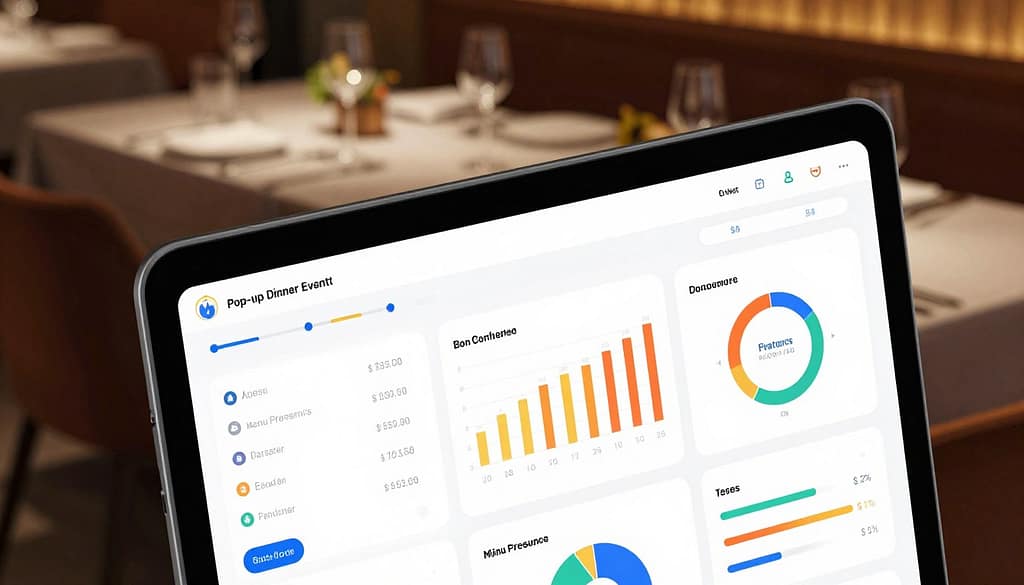
Cost Per Lead (CPL) shows how much you spend to get a contact. A lead is anyone who buys a ticket, signs up for your newsletter at the event, or books a consultation.
To calculate it, divide your total marketing spend by the number of new leads. For example, if you spent $500 on ads and social promotion and gained 50 new email subscribers, your CPL is $10.
A lower CPL means your marketing is efficient. This metric helps you evaluate different channels, like paid social media versus collaborative PR efforts.
Customer Acquisition Cost (CAC) goes further. It tells you the full cost to acquire a paying private client, not just a lead. This includes the portion of your pop-up expenses attributed to conversion.
Calculate CAC by adding your total marketing and event costs, then dividing by the number of new retained clients secured from the event. If your total pop-up investment was $2,000 and you signed three new retainer clients, your CAC is roughly $667.
Comparing CAC to the lifetime value of a client shows your true return. A high CAC signals a need to improve your sales process or follow-up system.
The Number of Consultations Booked is your most direct success indicator. It measures immediate customer intent. This is the count of post-event meetings scheduled to discuss private chef services.
Track this from your follow-up emails and QR code scans. A high number here, even with a moderate ticket sales count, shows strong audience quality and interest.
Return on Investment (ROI) is the ultimate scorecard. It evaluates the total financial gain from your pop-up against the total cost.
Use this formula: (Net Profit from New Clients / Total Pop-Up Cost) x 100. Net profit includes retainers secured, minus the cost of goods and labor for those services. Positive ROI proves your pop-ups are a profitable marketing channel, not just a break-even experience.
Remember to factor in intangible gains like brand awareness and media coverage from PR outreach, which have long-term value.
| Metric | What It Measures | Simple Formula | Why It Matters |
|---|---|---|---|
| Cost Per Lead (CPL) | Efficiency of marketing in capturing contacts | Total Marketing Spend / # of New Leads | Shows which channels bring the most affordable clients. |
| Customer Acquisition Cost (CAC) | Full cost to gain a paying client | Total Pop-Up Investment / # of New Retained Clients | Reveals the true cost of growth and sales funnel health. |
| Consultations Booked | Immediate sales interest post-event | Count of scheduled meetings | Indicates high-quality leads and effective night-of conversion tactics. |
| Return on Investment (ROI) | Overall profitability of the initiative | (Net Profit / Total Cost) x 100 | Determines if the pop-up strategy is financially sustainable. |
Gathering this data empowers you to make smarter decisions. You can confidently allocate your budget, refine your pitch, and build a predictable pipeline of private clients. Your pop-ups become a measured, scalable business driver.
Sample campaign with CPL/CAC and bookings created
Let’s dive into a real-world example of how financial and client-acquisition strategies work together. Meet Alex, a chef who hosted a “Harvest Table” pop-up dinner. This example uses real numbers to show how an investment can turn into a profit.
Alex focused on local autumn produce for his theme. He found a venue through community partnerships with a small urban winery. The winery gave him the space in exchange for promoting Alex’s event and featuring in the story.
The ticket pricing was key. Alex set a general admission ticket at $95. He also offered a VIP upgrade for $45, which included a welcome cocktail and a post-dinner consultation. This pricing strategy aimed to make the most money from each guest.
Here’s a look at the campaign’s finances:
| Expense Category | Cost | Revenue Stream | Amount |
|---|---|---|---|
| Food & Beverage Cost | $1,200 | General Admission (20 seats) | $1,900 |
| Staff & Labor | $600 | VIP Upgrades (8 sold) | $360 |
| Venue Rental Fee | $0 (Partnership) | Total Gross Revenue | $2,260 |
| Marketing & Ticketing Fees | $300 | ||
| Total Expenses | $2,100 | Net Profit (Event) | $160 |
The event made a small profit. But the real gain was in lead generation. All 28 guests were added to Alex’s CRM. A QR code collected requests for in-home consultations during the event.
From this, Alex got 14 solid leads. These were guests who showed interest in private chef services.
Now, let’s look at acquisition costs:
- Cost Per Lead (CPL): Total Campaign Cost ($2,100) ÷ 14 Leads = $150 per lead.
- Customer Acquisition Cost (CAC): This metric matters more. It measures the cost to gain a paying client.
Alex followed up with his 14 leads. He converted 4 of them into booked private dinner engagements. Each booking was worth about $800.
So, CAC = $2,100 ÷ 4 New Clients = $525.
The return is clear. Those four bookings brought in $3,200 in future revenue. The initial campaign cost $2,100. This means Alex’s marketing paid for itself and brought in an extra $1,100 in profit from new clients.
The community partnerships model saved on venue costs. This improved the overall cost structure. Strategic pricing on tickets and upsells increased revenue from the event itself.
This example shows a campaign that’s profitable in the short and long term. It builds a client list and creates a pipeline for ongoing income. The numbers prove the model works for chef businesses.
Replication
To fill a calendar with private clients, you need to move from unique experiences to a scalable system. A single sold-out pop-up is a win. But, to grow, you must build a system for getting new clients.
This journey is about systematizing success. It turns the hard work of a first event into a smooth process. You aim to cut down planning time for future dinners while keeping quality high.
At the heart of replication is making master templates. These are documents you improve after each event. Focus on budget spreadsheets, marketing plans, and email sequences.
A templated budget tracks all costs, from food to venue rentals. Your marketing plan template shows a 6-week promotional schedule. Automated email templates for after the event ensure no lead is lost.
This method saves a lot of time. The table below shows how much time you save by using templates.
| Process Area | First Event (Hours) | Replication with Templates (Hours) | Time Saved |
|---|---|---|---|
| Budget & Financial Planning | 8-10 | 2-3 | ~75% |
| Marketing Campaign Setup | 12-15 | 3-4 | ~75% |
| Guest Communication & Logistics | 6-8 | 1-2 | ~80% |
| Post-Event Follow-up Sequence | 5-7 | 1 (Automated) | ~85% |
This system is highly adaptable for different places. The same templates work for dinners at wineries or small micro‑venues. You just change the venue details and local partners.
For example, your winery template might include sommelier coordination. Your micro‑venue checklist focuses on kitchen space. But the core—ticketing, promotion, and follow-up—stays the same.
The end result is a steady flow of clients. You start new pop-up series with confidence. You spend less time on admin and more on menus and clients. This is how a private chef fills their calendar.
Seasonal series roadmap
A successful pop-up dinner is a great start. But, the real growth comes from planning a series. Create a calendar with seasonal pop-ups to build momentum and a loyal base.
Plan a schedule for each quarter. Imagine a spring garden party, a summer seafood night, a fall harvest table, and a winter comfort food event. Each theme tells a new story, keeping past guests coming back.
Use data from your first event to plan the next. Start selling tickets for your next pop-up while the current one is happening. Tools like Tock or Eventbrite help manage series ticketing and capture early interest.
A planned series builds a community around your chef brand. People will follow your journey. You get a steady stream of photos and reviews for marketing.
Running a series makes your business more efficient. You improve menus, vendor deals, and guest handling with each event. Your pop-ups become a reliable system for generating leads and bookings.
This roadmap turns occasional events into a business core. Your pop-ups feed your consultation calendar. They provide fresh content and testimonials all year. Start sketching your next three themes today.