
Ever feel like your service is sold with a side of fantasy? You see pictures of kids eating rainbow quinoa, while parents look on lovingly. It’s a beautiful scene, but it’s far from reality.
Your real impact isn’t in a perfect photo. It’s in the seismic shift you make in a family’s life. It’s the avoided dinner arguments and the extra peace. That’s what you’re really selling.
So, how do you capture that magic? How do you turn a satisfied household‘s quiet thanks into a compelling story? It’s not just about getting generic good reviews. It’s about strategic ethnography for the kitchen.
We’re diving into the magic of real advocacy. Let’s leave the staged photos behind and explore the messy, beautiful truth of real results.
Parent Interview Strategy: Questions That Elicit Emotional and Practical Benefits
Unlocking powerful testimonials is like solving a mystery. You need to ask the right questions to find the hidden clues. Asking “So, how’s the food?” is like checking if the door is locked. You might get a simple “yes” or “no,” but you miss the real story.
My approach is a mix of therapy and tactical planning. We’re not just talking about food; we’re exploring the family’s dynamics. The chef’s insight is key here—personality and dietary nuance are the master keys. A gluten-free request isn’t just about avoiding allergies; it’s about ending a parent’s worry.
Forget about surveys. Your goal is to find the real client success stories. You need to ask questions that go beyond food and touch on the heart of the matter.
- “What did you do with the hour you didn’t spend cooking and cleaning last Tuesday?” (Seeks the practical benefit: regained time.)
- “Describe the silence at the table when everyone was eating the same meal without complaint.” (Targets the emotional benefit: peace.)
- “Walk me through the moment your child tried the kale chips without being bribed. What was your reaction?” (Uncovers the transformative joy.)
- “How has our work respecting your complex dietary restrictions changed your relationship with food itself?” (Connects service to profound personal shift.)
These questions turn a satisfied customer into a co-storyteller. They help create a client success stories campaign that shows the real impact. It’s not just about good food; it’s about giving families their evenings back.
The magic happens when you combine these answers. That regained hour becomes a powerful tagline about freedom. The end of negotiations becomes a point about family harmony. This is the heart of leveraging client testimonials for credibility. You’re not just collecting quotes; you’re building a case for the life-changing value you offer.
Master this interview strategy, and you’ll never ask for generic compliments again. You’ll have a collection of specific, emotional, and practical victories. These will become your most powerful client success stories.
Child Involvement: Age-Appropriate Ways to Include Kids in Testimonial Content
Kids’ opinions are the highest form of trust in families. But getting them to share their thoughts needs careful, age-wise methods. It’s not about forcing a five-year-old to speak in front of cameras. It’s about capturing their genuine, often funny opinions about your work.

Children are like the ultimate critics of your meals. Their reactions are raw, quick, and honest. You want to show how their behavior and attitudes change. For example, do they now like broccoli? Or is the teen asking more questions in the kitchen?
These moments are key to showing real healthy family transformations. Your approach should be to watch and learn, not to ask too many questions. Here’s a simple guide to follow.
| Age Group | Engagement Method | What to Capture | Ethical Note |
|---|---|---|---|
| Toddlers (2-5) | Playful Interaction & Observation | Facial expressions, spontaneous comments (“yummy!”), willingness to try new colors/foods. | Always with parent present. No direct-to-camera asks. Use natural play during meal prep. |
| Kids (6-12) | Collaborative Feedback & Simple Tasks | Their own words describing taste, favorite meals, drawings of “healthy superhero” plates. | Explain simply what a testimonial is. Get verbal assent. Make it a fun, optional activity. |
| Teens (13-18) | Direct Conversation & Social Style Content | Quotes on energy levels, sports performance, new cooking skills learned, short video clips. | Respect their autonomy. Offer control over how their feedback is used. Privacy is key. |
For toddlers, be sneaky. Catch their excitement over a colorful snack. Record their accidental praise for a parent. This shows the start of a healthy family transformation.
School-age kids are great helpers. Ask them to draw their “perfect power-up plate.” Interview them while they help with veggies. Their thoughts are full of creativity. “The chicken tastes like my favorite game character’s strength potion.” That’s marketing gold.
Teens need a different approach. Treat them as junior partners. Ask about how new meals affect their activities. A quick video selfie on their phone feels more real to them than a formal setup.
The key is to show, not tell. When a child starts eating salmon, that’s a story. When a teen learns to cook chicken, that’s a legacy.
This evidence shows a real change in a family. It’s not just about good food. It shows a deep shift in a family’s values. This is the powerful story that drives healthy family transformations and wins over new clients.
Before/After Documentation: Tracking Family Eating Habit Improvements
Forget saying “dinner was great.” The real gold is in the pediatrician’s surprised question: “What changed?” This is the story before/after tracking tells. It turns vague praise into a data-backed epic of culinary progress. For a personal chef, this isn’t just nice to have; it’s your armor. As the saying goes, “If you mess up, you’re gonna have no one to blame but yourself.” The reverse is also true. When you succeed, you need the receipts.
The most compelling parent reviews for a personal chef move beyond flavor. They document a measurable shift in a household’s entire food ethos. Think of it as a family food diary, but instead of calories, it logs chaos turning into calm.
The “Before” picture is often a familiar comedy of errors. The fridge holds condiments and a lonely carrot. The freezer is a monument to pizza rolls and chicken nuggets. Weeknight dinners are a stressful scramble, ending in guilt and a Seamless order. This is the baseline.
The “After” is the quiet revolution. The same fridge now contains prepped vegetables, marinated proteins, and ready-to-heat wholesome meals. The stress is gone. The narrative shifts from “what’s for dinner?” to “which of our chef’s meals should we have tonight?”
Your job is to build a simple, non-invasive system to capture this transition. Don’t make it a chore. Frame it as a collaborative discovery process. Here’s what to track:
- Weekly Meal Sources: Percentage of home-cooked vs. takeout meals before and after service begins.
- Grocery Cart Analysis: A snapshot of the cart pre-chef (packaged snacks, frozen meals) vs. post-chef (whole ingredients, diverse produce).
- Family Feedback Log: Not just “yummy,” but specific notes: “Child ate broccoli without complaint,” or “We sat at the table for 30 minutes talking.”
- Energy & Time Metrics: Parent-reported hours saved on meal planning/prep, and changes in family energy levels post-dinner.
This documentation does the heavy lifting for your clients. When it comes time to write a testimonial, they aren’t grasping for generic compliments. They have a bullet-point list of tangible wins. This creates irrefutable social proof that turns your service from a luxury into a logical solution for health-conscious families.
Ultimately, powerful parent testimonials are built on this contrast. The data tells a story no marketing copy can match. It shows the journey from freezer pizza reliance to a kitchen full of possibility. That’s the narrative that converts skeptical prospects into loyal clients.
Video Testimonial Production: Creating Comfortable Settings for Busy Families
Making a family video testimonial shouldn’t be like making a big movie. It’s about sharing a real story in two minutes. Our goal is to make it feel like a casual conversation, not a big production. This way, you get real feelings, not fake ones.
The setting is key. Don’t use a boring studio. Use the kitchen, where your family spends time. This makes everyone feel at ease.
You’re not just directing; you’re helping families feel comfortable. Your personality is what makes the video special. Be yourself, and let your warmth shine through.
So, how do you guide without being too bossy? Follow these tips for a relaxed atmosphere:
- Prompt, Don’t Interrogate: Ask open-ended questions instead of yes or no ones. This helps tell a real story.
- Embrace the Chaos: Don’t worry if things get a little messy. It’s these moments that make the video special.
- Tech as a Guest, Not an Intruder: Use simple tools like a smartphone. This way, the family can focus on talking to you.
The best moments are the ones that aren’t planned. Like when parents smile at each other talking about dinner. Or when a kid asks for their favorite food again. These are the real stories behind nutrition success stories.
The final video should show real happiness, not just scripted lines. It’s about the relief in a parent’s face or the joy of spending time together. When families forget they’re being filmed, you know you’ve done something special.
This method turns a stressful task into a fun way to share your journey. It’s not just for marketing; it’s a real celebration of overcoming challenges. This kind of authenticity speaks volumes, much more than any polished ad.
Written Review Optimization: Encouraging Detailed Feedback on Specific Benefits
Your clients aren’t just satisfied; they’re experiencing minor culinary miracles. But their reviews often sound like microwave instructions. A generic “great chef, would recommend” is like a participation trophy. It’s nice but useless for business.
We need detailed family chef testimonials, not short, vague reviews. Prospective clients are looking for solutions to their problems. They want to see their own chaos reflected in your success stories.
The secret is to create better reviews, not just hope for them. Guide the feedback without scripting it. Give your clients a framework to build their own compelling story.
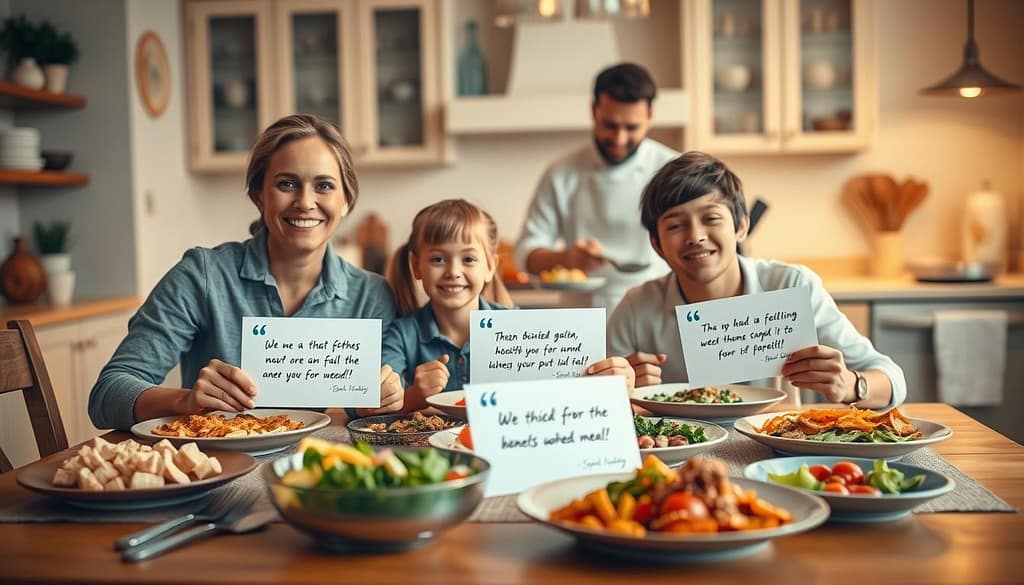
Let’s look at what makes a powerful review. Generic praise is just on the surface. Optimized feedback dives deep into the emotional specifics. It’s not just about the words; it’s about the emotional connection.
Consider this framework. It shows how to go from generic praise to a powerful marketing tool.
| Category | Generic Review Snippet | Optimized Review Snippet (The Goal) |
|---|---|---|
| Time Management | “The chef saved me a lot of time.” | “I’ve reclaimed the 5:00-7:00 PM window from utter despair. Instead of a frantic grocery run and arguing over chicken nuggets, I now use that time to help with homework or just breathe. That’s two hours of my life back, every single day.” |
| Family Dynamics | “My kids are eating healthier.” | “The ‘broccoli standoff’ of 2023 is officially over. Last Tuesday, my 8-year-old asked if the chef could make the roasted cauliflower with tahini again. I nearly cried. The dinner table has shifted from a battleground to a place of actual conversation.” |
| Nutritional Impact | “The meals are nutritious.” | “My husband’s ‘3 PM energy crash’ has vanished. The chef added more complex carbs and lean proteins to his lunches. His doctor even commented on improved bloodwork at his last physical. We have data, not just a feeling.” |
| Chef Relationship | “The chef is very nice.” | “She’s become a culinary therapist. She noticed my daughter’s aversion to ‘green things’ and started incorporating spinach into smoothies and zucchini into muffins. She doesn’t just cook for us; she problem-solves with us.” |
See the difference? Optimized reviews tell a story with stakes and transformation. They answer the question every prospect has: “Yes, but what will it actually feel like for my family?”
To get this kind of feedback, ask better questions. Frame your request around their specific journey. A simple follow-up email after a few months can be very powerful.
Try prompts like these:
- “What was the single biggest change in your household routine after we started working together?”
- “Can you describe a moment where you realized our service was about more than just food?”
- “What’s one worry about mealtime that has completely disappeared?”
- “If you were to tell another busy parent one tangible benefit, what would it be?”
These prompts help clients focus on specific, emotional, and practical benefits. The resulting family chef testimonials become powerful marketing tools.
Remember, specificity is key. “Saved time” is vague. “Reclaimed two hours for homework” is a life change. One is forgettable; the other is compelling to parents.
An optimized review is like a translation service. It turns your client’s relief into a language your next client understands. It makes satisfaction into a compelling argument. Stop collecting praise. Start curating proof.
Photo Release Strategy: Capturing Family Meals and Happy Dining Moments
Forget stiff family portraits. The real magic is in the moments when food and laughter come together. These are the shots that turn your service into a client success story. A signed release form lets you capture these special moments, showing respect and teamwork.
Photos are like trust money. They show, not tell. They prove your food is more than just a meal; it’s a part of family life. It’s not about creating a perfect scene. It’s about capturing the real, messy beauty you help create.
Getting permission and capturing real moments is key. Be clear, simple, and thankful. Use language that says, “We’d be honored to share the joy your family experiences.”
Creating this collection needs a photographer’s eye and a diplomat’s touch. Aim to capture real moments, not staged ones. A kid smiling with broccoli? Priceless. A quiet glance between parents? That’s the magic.
To show the difference between building rapport and causing anxiety, let’s compare them.
| Aspect | Respectful Release Process | Robotic Release Process |
|---|---|---|
| Communication Tone | Conversational, framed as an invitation and a privilege. “We’d love to capture the fun, if you’re open to it.” | Transactional, framed as a mandatory requirement. “We need you to sign this for our files.” |
| Release Form Language | Simple, clear English. Explains how photos will be used (website, social media) and respects boundaries. | Dense with legal jargon. Feels like a contract written by and for lawyers. |
| Photographer’s Approach | Discreet observer. Uses natural light, captures candid interactions, minimizes disruption. | Intrusive director. Uses flash, demands specific poses, turns mealtime into a photoshoot. |
| Client Comfort Level | High. The family feels like partners in telling their story, not subjects. | Low. The family feels scrutinized and performative, leading to stiff, awkward shots. |
| End Result | A library of authentic, emotive images that serve as powerful client success stories. | A folder of forced smiles that scream “stock photo awkwardness” and undermine credibility. |
Master this balance, and you’re not just collecting permissions. You’re building a collection of real happiness. This visual proof is your best marketing asset, showing others the joy you can bring to their table.
Anonymous Success Stories: Protecting Privacy While Sharing Powerful Results
Anonymity isn’t a barrier to powerful marketing; it’s a creative constraint that can sharpen your message. Some of the most profound healthy family transformations happen behind closed doors. Here, dietary restrictions and health concerns are treated with the seriousness they deserve. Think of it as witness protection for wellness.
Why the secrecy? The reasons are as valid as the results. A corporate executive managing a private health battle. A family navigating a child’s severe food allergies. Their journeys are monumental, but their identities are non-negotiable. The story is gold. The byline is classified.
The solution isn’t to hide the story, but to focus on what truly matters. The outcome and the emotional arc are key. Your job is to make the specific ‘who’ beautifully irrelevant. When you strip away the names, what’s left? The raw data of change and the universal feelings of relief and victory.
So, how do you craft this? You become a biographer of the outcome. Instead of “The Johnson family,” we have “A suburban family of four.” Instead of a name, we lead with the result: “Reversed prediabetes markers in 90 days through a tailored Mediterranean plan.” The specifics—the meals, the struggles, the triumphs—remain vivid. Only the faces are blurred.
This approach forces you to hone in on the emotional truth. This is what actually resonates with people. They’re not hiring “The Smiths of Suburbia.” They’re investing in the possibility of their own transformation. The anonymized story becomes a cleaner, more potent blueprint for hope.
These anonymous testimonials carry a unique weight. They speak of trust and discretion, signaling that you handle sensitive matters with care. They prove that your service delivers life-altering results, regardless of the spotlight. In the end, the most powerful proof isn’t always a smiling face. Sometimes, it’s the profound silence where a name used to be, echoing with the sound of a family’s health turning a corner.
Testimonial Distribution: Website Placement, Social Media, and Marketing Materials
A glowing parent review is like an unspent campaign war chest. Its power is huge but only if used right. Collecting the story is like gathering intel. Distributing it is like launching an attack. You need a plan for every channel.
Your website is your main base. It’s not just about a generic “Testimonials” page. It’s about placing stories where they matter most. For example, a story about family dinner time should be on your “For Busy Parents” page. Absolutely. A video testimonial about kid-friendly meal prep should be on your “Weekly Plans” page. Without a doubt. Match the story to the page where it solves a problem.
Social media is your ground game. Here, context is everything. A two-minute video is perfect for YouTube. For Instagram Reels, you need a quick, impactful shot. Turn a quote into a sleek graphic for your Feed. Save client meal photos to a “Happy Families” Story Highlight. Each platform needs a different approach.
Marketing materials are your final push. A compelling quote can be a strong point in your sales proposal. Use a powerful snippet in your email signature. Feature a before-and-after story in your one-sheet for corporate wellness programs. This is where social proof seals the deal.
The key is a strong narrative. A single parent testimonial is just a data point. But a well-placed set of them across all platforms tells a powerful story of trust. It answers objections before they’re even made. For more on using customer testimonials, check out these effective strategies.
The payoff? Every piece of social proof works as hard as you do. No more wasted effort. Just targeted, trust-building messages that turn browsers into clients. That’s how you win at the dinner table.
Long-Term Relationship Tracking: Following Families Over Months and Years
Think of your client’s life as a series of sequels. The first month gets all the attention. But time and consistency are the real critics. They review the whole series.
Long-term relationship tracking is like a longitudinal study. It’s about checking in gently and strategically. A text after six months or a birthday note feels like care. It shows you’re invested.
This approach turns a service into a partnership. You’re there for all the big moments. Each milestone adds to your portfolio of success stories. These aren’t just reviews; they’re stories of lasting impact.
The best marketing asset you have is a family who can’t imagine their story without you. That’s the ultimate credential. It turns a satisfied client into a lifelong advocate and your best source for real success stories.