
Let’s be honest, selling these sessions can be tough. It feels like trying to convince a tiny dictator to eat broccoli. You face folded arms and deep skepticism, like a philosopher’s debate.
But there’s a different story hidden in the data. One provider shares a secret: “We use real food with real kids. And they eat it! What’s our secret? Kids are more excited about tasting foods that they have washed, whisked, measured, mixed, sliced, diced, minced, mashed, torn, or tossed.”
So, what if the secret sauce isn’t in the brochure? It’s not about a lecture. It’s about marketing a cultural moment—the messy, glorious act of creation.
We’re moving beyond dry bullet points. This analysis uses wit and data to explore how to turn meal prep into a family’s kitchen story. The best campaign leaves flour on the floor and a genuine smile on their faces.
Workshop Format Development: Hands-On vs Demonstration-Style Classes
In the world of family healthy cooking education, you face a choice. It’s between a hands-on workshop and a demonstration class. The first lets you get your hands dirty, while the second is more like a show.
Hands-on classes are where the real learning happens. Programs like ‘Everybody Can Cook’ show that doing is learning. Measuring flour teaches math, and whisking eggs teaches physics.
This method isn’t just about cooking. It’s about building a positive relationship with food. It’s perfect for kids of all abilities. It’s a hands-on experience they won’t forget.
Demonstration classes, on the other hand, are like a cooking show. The teacher cooks, and the family watches. It’s clean and safe, great for parents who worry about mess.
The marketing for these classes focuses on fun and learning without stress. It’s perfect for introducing new ideas or for young kids. But, it might feel less engaging than hands-on learning.
So, how do you choose and market your workshop? Data shows hands-on learning is more effective. But, consider your audience’s comfort level.
| Format | Core Experience | Ideal Marketing Angle |
|---|---|---|
| Hands-On | Active participation, skill-building, sensory engagement. | “Create memories, not just meals.” Sells transformation and confidence. |
| Demonstration-Style | Observational learning, concept introduction, low-mess. | “Learn the secrets from a pro.” Sells inspiration and expert access. |
Hands-on classes are a stronger brand promise. They offer the excitement of real learning. Your nutrition workshop becomes a place for true education.
Demonstration classes are a product. Hands-on classes are an event. In a crowded market, which story will families choose?
Age-Appropriate Programming: Separate Sessions for Different Child Development Stages
Think of a nutrition workshop for families like a movie. You wouldn’t show a toddler ‘Inception’ and expect them to understand it. It’s like mixing puzzle pieces that don’t fit.
The answer isn’t just louder instructors or simpler recipes. It’s about dividing classes. This way, lessons are tailored for each age group. It’s not just organization; it’s a smart plan.
Pixar knew this long ago. Their movies have fun colors and silly stories for kids. But they also have deeper themes for adults. Your nutrition workshops families can do the same. Offer one experience but give different content for each age.

How do you divide the classes? Start by separating the young explorers from the older learners. For toddlers, it’s about safe, fun discovery. It’s about touching, smelling, and even squishing foods.
For tweens, it’s about learning life skills and growing up. The focus is on practical skills like making snacks. The mess is part of the learning, not the main goal.
| Age Group | Developmental Focus | Workshop Activities | Key Marketing Message to Parents |
|---|---|---|---|
| Toddlers (2-5) | Sensory exploration, fine motor skills, following simple instructions. | Washing veggies, tearing herbs, using safe cookie cutters, taste-testing colorful fruits. | “Turn messy play into nutritional learning. We handle the chaos, they discover the joy.” |
| School-Age (6-9) | Reading simple recipes, measuring ingredients, basic knife skills (with safety tools), teamwork. | Assembling no-cook wraps, creating fruit kabobs, mixing smoothies, decorating healthy pizzas. | “Build confidence and competence. Watch them read, measure, and create their first real dish.” |
| Tweens (10-12) | Independence, understanding nutrition labels, executing multi-step recipes, kitchen safety. | Preparing simple stovetop items (supervised), reading nutrition facts, meal planning for a balanced plate. | “Equip them with real-life skills. They’ll gain independence, and you’ll gain a helpful kitchen ally.” |
This table is more than a schedule. It’s a marketing guide. Each row targets a different group with their own needs. Your messages must speak directly to them.
A flyer for toddlers might show messy hands and promise fun. The tween class promo should look like a cooking show, focusing on skills and coolness.
This approach works well for many. A broad “family cooking class” is vague. But specific events like “Tiny Taste-Bud Explorers” attract different ages. Families can grow with your offerings.
Ultimately, age-appropriate programming makes your service a partner in a child’s growth. You’re not just teaching a skill today. You’re building a lifelong understanding of nutrition. And that’s a story every parent wants to hear.
Parent Education Integration: Combining Kid Activities with Adult Nutrition Learning
Imagine your child kneading dough while you learn about quick weeknight dinners. This is the power of family meal prep class. It’s a smart way to learn together, without leaving anyone out.
In a typical kids’ cooking class, parents often just drop off their kids. But, a better model offers both kids and adults learning at the same time. Kids get to cook, while parents learn about nutrition.
Kids learn math and science through cooking, while parents learn about nutrition. They figure out how to plan meals that work all week.
This approach is more than just extra learning. It’s a big improvement. It taps into every adult’s desire to get better at things. The class becomes a chance for the whole family to grow together.
| Aspect | Traditional Kids-Only Class | Integrated Family Workshop |
|---|---|---|
| Parent/Caregiver Role | Passive observer or absent | Active learner in dedicated support session |
| Primary Child Focus | Basic cooking skills & fun | Cooking skills + applied STEM/motor skill development |
| Family Habit Change Potal | Low (knowledge siloed with child) | High (shared language & goals created) |
| Perceived Value & Justification | Childcare or enrichment activity | Family investment in health & life skills |
In the caregiver support sessions, you learn practical things. Like how to budget for meals, spot hidden sugars, and cook in bulk. It’s real-world learning.
When families come together after class, they share what they’ve learned. Kids talk about healthy fats, and parents have meal plans. It’s more than just cooking; it’s changing family habits.
Marketing this idea is easy. You’re not just selling a family cooking workshop. You’re selling a smarter way to spend family time. It’s a chance to overcome the guilt of not knowing enough about nutrition. It’s a way to make a lasting change.
Safety Protocol Marketing: Highlighting Child-Safe Kitchen Practices and Supervision
Safety is not just a disclaimer; it’s a key feature. It’s like a safety net in a cooking class for kids. Parents are looking for a safe place where their kids can learn without risks.
They want to know their child is safe from dangers like hot stoves and sharp edges. Your marketing should address these fears. Then, show how your program is the solution.
By saying you’re hosting kids cooking workshops, you’re actually running a safety lab. This is where your marketing really shines.
Your ads should feel like a detailed safety plan. Talk about the adult-to-child ratio. Say something like, “One certified instructor for every four young chefs.”
Also, describe the tools you use. Use plastic knives and pre-measured ingredients to keep things safe. Show off your oven mitts that are fun but also safe.
Highlighting inclusivity is key. Talk about how your program works for all kids. This shows you’ve thought of everything.
Make your instructors seem like experts in safety. They should know about nutrition, child development, and emergency response. This makes parents feel like their kids are in good hands.
When you combine safety with a good cooking program, you create something special. It’s not just about following rules. It’s about letting kids learn and grow in a safe place.
The main thing you’re teaching is how to handle risks. This is a valuable skill. In your kids cooking workshops, kids learn more than just how to make food. They gain confidence and learn in a safe environment.
Group vs Private Sessions: Pricing and Experience Differences
Think of it like a big dinner party versus a quiet chef’s table tasting. This choice is key for your family cooking classes. It’s about what you’re selling. Are you hosting a culinary event or a private cooking session? Let’s look at the options.
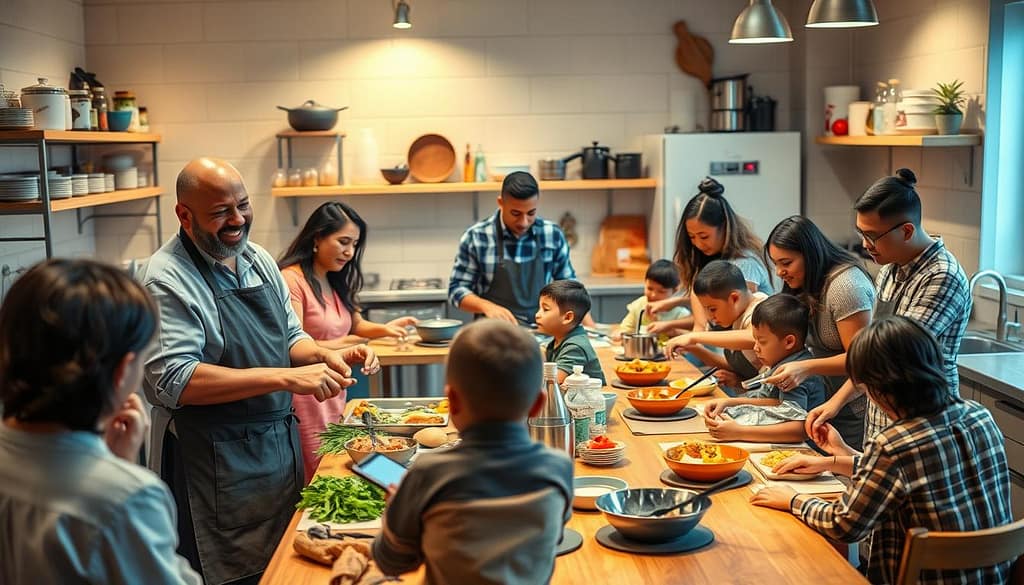
Marketing group sessions is about selling fun together. You’re talking about laughter, flour fights, and everyone learning to make sauce from scratch. It’s like a group fitness class, but for cooking. It’s affordable, fun, and builds a community.
Private sessions, on the other hand, are all about personalization. You can make Brontosaurus Burgers for a picky eater or focus on food allergies. The price is higher because it’s exclusive and tailored just for you. It’s not just a class; it’s a special cooking experience.
| Aspect | Group Session | Private Session |
|---|---|---|
| Core Experience | Communal energy, social learning, shared discoveries. | Focused, tailored instruction, addressing specific family goals. |
| Ideal For | Families seeking fun, social activity and general nutrition skills. | Families with specific dietary challenges, schedules, or learning paces. |
| Pricing Model | Per-person or per-family rate; inherently more accessible. | Premium flat fee or hourly rate for exclusive, customized time. |
Your marketing should show the big difference. For groups, talk about the fun and learning together. For privates, focus on the special, personal experience. One builds a community, the other adds prestige. A good program offers both, knowing what your audience prefers.
Seasonal Workshop Themes: Holiday Baking, Summer Picnic Prep, and School Lunch Solutions
Seasonal workshops aren’t just about the weather. They tap into the family’s changing needs. In mid-August, people aren’t looking for “generic cooking classes.” They’re searching for “how to pack a lunch my kid won’t trade for fruit snacks.”
Your workshop themes are not just decorations. They’re precise targets for your marketing.
A December “Healthy Holiday Cookie Swap” workshop is more than a class. It’s a tradition-in-the-making. It offers memory creation, a bit of nutritional knowledge, and a way to avoid too much sugar. Market it as a special, festive event. The urgency is clear.
In June, switch gears. “Summer Picnic Prep” is about giving kids the skills to make their own bento boxes. It’s about freedom, sunshine, and hassle-free outings. You’re not just teaching knife skills; you’re selling a smoother Saturday.
August brings the “School Lunch Solutions” workshop. This is your chance to sell peace of mind. Your healthy cooking education directly addresses the challenge of packing lunches for school. Parents are looking for tested, kid-approved recipes. Your workshop is a lifeline.
Your recipes are designed for group settings, for kids from two to teens. They’re perfect for these themed workshops. The curriculum is built for the chaos of a kitchen, whether it’s holiday time or a weekday morning.
The outcome? Perpetual relevance. Your marketing never stops. You move from one cultural touchpoint to the next, always with a solution. You’re not just selling cooking lessons. You’re selling a way to ease seasonal stress. That’s how you keep families coming back year after year.
Community Partnership Strategy: Collaborating with Schools, Libraries, and Community Centers
Going it alone in family nutrition education is tough. It’s like running for office without a party. But, smart marketing for nutrition workshops families want is different. It’s about whispering your message in the right places.
Partnering with schools, libraries, and community centers is key. It’s not just renting a room. It’s using their trust to reach more people. With over 14 years of experience, you’re seen as a trusted resource.
Every conversation should help both sides. You offer a up-to-date program that solves their problems. They provide a trusting audience and credibility. Your marketing becomes strategic diplomacy.
Start with your syllabus, not sales talk. Show how your workshop meets their needs. Schools need engaging STEM or health education. Libraries want family programs. Community centers aim to boost member value. You’re the answer.
| Institution Type | Audience Access | Trust Factor | Your Key Offerings | Their Primary Benefits |
|---|---|---|---|---|
| Public & Private Schools | Captive student body & parent networks | Very High (Seen as an extension of curriculum) | Aligned, educational modules that complement health/science standards | Enhances educational offerings without straining staff; satisfies parent demand for practical life skills. |
| Local Public Libraries | Families seeking free/affordable educational activities | High (Seen as a neutral, community-focused space) | Literacy-linked programs (e.g., “Reading Recipes,” food story times) | Drives foot traffic and positions the library as a modern community hub for family wellness. |
| Community/Recreation Centers | Members of all ages focused on holistic health | Moderate to High (Seen as a wellness authority) | Hands-on, multi-generational workshops that promote active living | Adds value to membership, supports broader wellness initiatives, and fosters community engagement. |
Each place needs a different approach. With schools, it’s about learning outcomes. With libraries, it’s about community engagement. With centers, it’s holistic health. Your experience lets you speak their language.
What’s the first step? Don’t start with a price list.
- Research: Find the program coordinator or community outreach manager.
- Propose: Write a one-page brief on how your workshop solves their problem.
- Demonstrate Value: Offer a free, short demo to show your engaging style.
- Structure the Deal: Suggest a revenue-share or flat fee that fits their budget.
This is organic marketing at its finest. Success in one place leads to more opportunities. You’re not just selling a class; you’re becoming part of the community’s health infrastructure. This is backed by research on effective family nutrition interventions.
Stop thinking like a solo entrepreneur. Start thinking like a community diplomat. Your expertise is the currency. Their trust is the platform. Together, you build a coalition that makes your nutrition workshops for families a cornerstone.
Equipment and Ingredient Provision: What’s Included vs What Families Bring
Imagine showing up for a cooking class and realizing you forgot your knife. It’s a small thing, but it can ruin the whole experience. In family meal prep classes, knowing what to bring is key. Get it right, and you’re a hero. Get it wrong, and you’re in for a last-minute shopping trip.
Being clear about what’s included is not just about rules. It’s about setting the right expectations. Are you selling a luxury cooking getaway or a DIY-friendly adventure? Your answer shapes your customer base.
The fully-catered experience offers a high-end service. You get everything from spices to blenders ready to go. It’s all about convenience.
The BYO-ingredients potluck model is for the hands-on family. It’s cheaper and makes you feel like you’re practicing for real life. It’s about empowerment and making things accessible.
Using data to design your program is smart. Offer 15 recipes with detailed plans. Each recipe comes with a clear list of what to buy and what tools you need. This makes planning easy for parents, saving them time and stress.
The game-changer is the “pre-ordered grocery list” with delivery. It’s not just a nice feature; it’s a key selling point. It makes your family meal prep class a complete service, not just an event.
| What’s Typically Included (The “All-Inclusive” Model) | What Families Typically Bring (The “BYO” Model) |
|---|---|
| All core ingredients, pre-portioned | Base ingredients from a provided shopping list |
| Specialized kitchen equipment (blenders, mixers, scales) | Basic personal tools (chef’s knife, cutting board, apron) |
| Recipe booklets and step-by-step lesson plans | Containers for taking finished food home |
| Pre-ordered grocery delivery option | A willingness to prep and organize beforehand |
| On-site safety equipment (cut-resistant gloves, etc.) | Any specific dietary substitute items |
To market this, be transparent. Your website should clearly list what’s included. For the all-inclusive model, say “Everything Provided, Just Bring Your Appetite.” For the BYO model, say “Genuine Home Kitchen Practice—Here’s Your Simple List.”
This honesty attracts the right customers. The luxury-seeker loves the all-inclusive option. The DIYer prefers the BYO model. Either way, you’ve built trust before you even start cooking.
The way you provide equipment and ingredients defines your meal prep program. It’s the difference between a luxury getaway and a hands-on workshop. Both have their merits, but confusing them can disappoint everyone.
Success Measurement: Tracking Family Behavior Changes Post-Workshop
If a tree falls in the forest, it makes a sound. But if a family goes to your cooking workshops and nothing changes, it’s just noise. Satisfaction surveys are like the trophy for showing up.
True success is something you can see and feel. It’s when a child beams with pride after making their own stir-fry. It’s when a parent feels a win by adding new fruits and veggies to the shopping list.
Move from just planning events to making real changes. Set up simple challenges after the workshop. Ask them two weeks later which recipe they made again. This turns one class into an ongoing journey.
Show your dedication to lasting change. Share stories of real shifts in behavior, not just smiles. This makes your workshops seem like the start of a healthier chapter for families. The real value is in a lunchbox full of veggies that weren’t there before.
You’re not just selling an hour of fun. You’re writing a new story for their kitchen, filled with real, tasty changes.