
Let’s cut through the kaleidoscopic noise of the wellness industrial complex. You’re not just selling quinoa to clean eating families. You’re selling a narrative. It’s a set of values and a promise of purity in a world of adulterated avocado oil.
This is the high-wire act. You must position your authentic culinary brand between two groups. The aspirational “premium health” crowd and the pragmatic, budget-conscious household. It’s like the difference between a TED Talk on regenerative agriculture and a harried parent in aisle seven.
We’ll dissect this tension with wit and market analysis. Take a cue from legacy brands like Marianne’s. Their CEO, Wayne Adams, leads with story: “Good food can’t be rushed and we’ve been doing this for five generations.”
That’s the foundation. It’s about building a brand that feels both elevated and essential. You must become the sage in the supermarket, not just another shout in the farmer’s market.
Organic Positioning Strategy: Premium Health Benefits vs Budget-Conscious Messaging
Let’s clear up the marketing confusion. Positioning your organic family chef brand is a big decision. It’s like choosing between a health insurance policy and a weekly grocery coupon. You have to decide if you want to focus on luxury or necessity.
Take Marianne’s avocado oil lineup. It shows the dilemma clearly on the shelf.
The Classic costs $15.99. The Organic is $18.99. Then, the Regenerative Organic Certified® (ROC®) is $22.99. That’s a $7 difference for the same size bottle. Is the ROC® oil like a Tesla, while the Classic is like a Toyota?
The premium option talks about exclusive badges like ROC® and top-notch performance. It’s not just oil; it’s an investment in your family’s health. You’re avoiding pesticides and building nutritional strength. It’s like buying a gut airbag.
The budget-friendly side talks about the high cost of groceries. For many, an extra $7 per bottle is too much. This approach makes organic a must-have, not a luxury. It’s like asking, “Why pay more for water?” when it comes to sustainable family nutrition.
| Product | Key Feature | Price (500mL) | Positioning Angle |
|---|---|---|---|
| Classic Avocado Oil | High-heat, neutral taste | $15.99 | Budget-Conscious Performance |
| Organic Avocado Oil | USDA Organic Certified | $18.99 | Trusted Clean Standard |
| ROC® Avocado Oil | Regenerative Organic Certified® | $22.99 | Premium Ecological Investment |
Can you be both Tesla and Toyota? The key is to sell a value proposition, not just a product. For the premium tier, show how the certification benefits your family’s health. ROC® is like “soil health insurance” for your kids.
For the budget tier, frame the extra cost as a smart health investment. Compare it to a weekly latte. This changes how we think about organic meal planning.
The goal is to make every tier feel essential. The classic is for daily meals. The organic is for growing bodies. The regenerative is for the eco-conscious family. Each tier answers a different “why” within the same mission.
Creating this message means your brand doesn’t just list benefits. It frames them as necessities. It answers the parent’s question about the real cost of cheaper options. When you position your brand this way, you’re not just selling oil. You’re selling clarity in the confusing world of sustainable family nutrition.
Supplier Relationship Marketing: Showcasing Local Organic Farm Partnerships
Forget the faceless supply chain. In the organic food world, your farmers tell your story. They turn a simple box of ingredients into a cast of characters. Your supply chain is your brand’s heart.
Think about it. Saying “beef tallow” is just a fact. But saying “tallow from the Smith family’s pasture-raised herd in Wyoming” tells a story. This story builds trust and answers the question: “Who grew my food, and do I trust them more than a government sticker?”
Marianne’s, for example, focuses on “multi-generational farmers and ranchers.” This isn’t a coincidence. It’s a smart marketing move. They partner with farmers who care about clean food and land.
So, how do you, as an organic family chef, make your suppliers stars? Move beyond the usual “sourced from” line. Create a story that shows your values.
Start with a photo essay from the farm. Show the farmer’s hands in the soil. Show their knowledge and passion. This is more powerful than any certification for families wanting pesticide-free family meals.
Next, publish a Q&A with the rancher. Ask them about their farming methods. Let them share their story. This isn’t a report. It’s a profile piece that gives your brand a human touch.
Send harvest updates that feel like a travelogue. “The heirloom tomatoes at Johnson Farm are two weeks early this year, thanks to a warm spring.” This connects customers to the season and the soil. It makes them feel part of a virtuous circle.
This strategy sells more than food. It sells a relationship. It gives customers the proof they need. They’re not just buying a meal kit. They’re investing in a network of trusted stewards.
For your organic family chef business, highlight the who as much as the what. A list of ingredients is just chemistry. The story behind those ingredients is culture, heritage, and trust. This is the foundation for pesticide-free family meals that families trust.
In the end, your supplier partnerships are your most authentic content. They prove your claims aren’t just marketing fluff. They are the living, breathing proof of your commitment. And in a market full of labels, that genuine connection is your ultimate competitive edge.
Certification Display: Organic Handling and Clean Food Preparation Standards
Think of your kitchen as a crime scene and that bottle of oil as the prime suspect. The label is its alibi. Is it airtight, or full of holes?
For clean eating families, the alphabet soup of seals—USDA Organic, ROC®, Non-GMO Project Verified—can be as confusing as a tax form. Your job isn’t to be a billboard plastered with logos. It’s to be the translator. This is certification literacy.
Let’s investigate. The “pure” claim on a label is about as meaningful as a campaign promise without the “low and slow” processing details to back it up. Why does that matter? High-heat processing can create harmful contaminants. It’s the culinary equivalent of a cover-up.
Marianne’s approach is forensic. Each batch is processed ‘low and slow,’ a deliberate choice to prevent the formation of those unwanted compounds. Then, they test every single batch for 100% purity. This isn’t a spot check; it’s a full audit. This rigor has earned them specific, hard-won badges like the Seed Oil Free and Clean Label Project Purity Award.
These aren’t participation trophies. They are direct counters to the silent scandal of adulterated oils in the marketplace. By showing this level of testing, you’re not displaying a badge. You’re providing the courtroom evidence that your product is exactly what it claims to be.
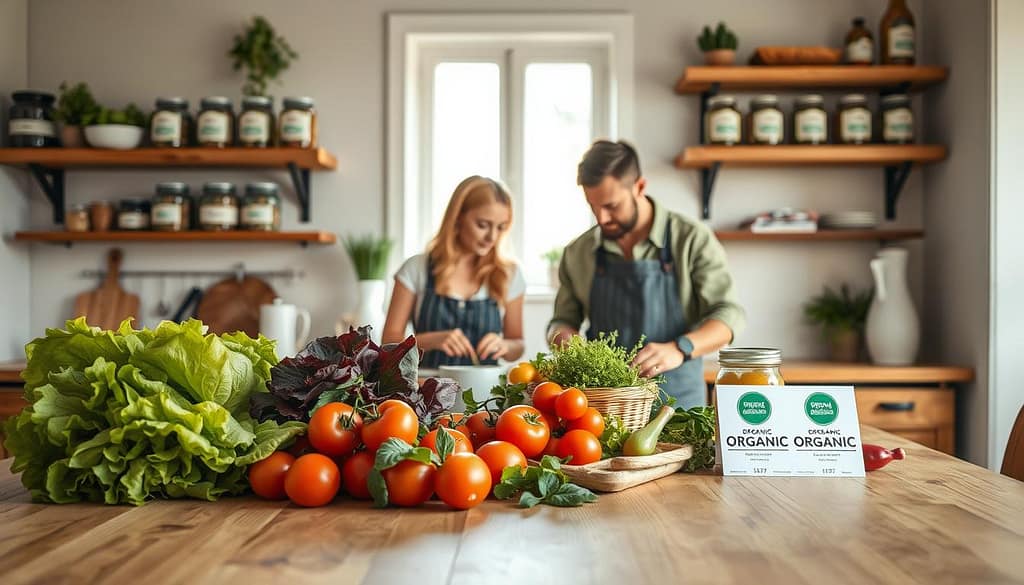
This is credibility engineering. You’re transforming bureaucratic seals into a narrative of integrity. For parents focused on sustainable family nutrition, this transparency is the foundation of trust.
So, how do you translate the seals? Let’s decode the lineup. This table turns jargon into judgment.
| Certification | What It *Really* Means | The Marianne’s Standard |
|---|---|---|
| USDA Organic | Meets federal production and handling standards. A good baseline, but just the starting line. | The foundation. It’s the law they not only follow but build upon with their own stricter protocols. |
| Non-GMO Project Verified | The ingredients aren’t genetically modified. Important, but it says nothing about processing purity. | A given. Their focus goes deeper, to how the oil is extracted and preserved after the seed is harvested. |
| Clean Label Project Purity Award | Third-party testing confirmed the product is free from heavy metals and other toxic contaminants. | The star witness. This external validation proves their batch testing isn’t an internal marketing gimmick. |
| Seed Oil Free Certification | The product contains no refined high-PUFA seed oils like canola, sunflower, or soybean oil. | A core philosophy. It directly addresses a major concern for health-conscious families avoiding processed oils. |
| ROC® (Regenerative Organic Certified) | Goes beyond “organic” to include soil health, animal welfare, and social fairness. | The gold standard for holistic impact. It signals a commitment to the entire ecosystem, from farm to family. |
Notice the pattern? The most meaningful certifications are about handling and testing, not just sourcing. This aligns with the new strengthening organic enforcement rules, which crack down on fraud and demand traceability. You’re not just complying; you’re leading.
When you display certifications this way, you do more than inform. You educate. You empower a parent to become a forensic label reader. You turn a moment of scrutiny into a moment of confidence. That’s how you build a brand that clean eating families rely on, not just buy from.
It’s the ultimate promise kept. And in today’s market, that’s the most powerful ingredient of all.
Seasonal Organic Menus: Highlighting Peak Produce and Sustainability Education
The global supermarket promised us everything, everywhere, all at once. But the seasonal organic menu says: ‘Not so fast.’ It’s about enjoying what the earth offers right now.
A strawberry in December is not the same as one in summer. It’s pale and tastes of disappointment. But asparagus in May is a revelation. It’s not just about taste; it’s about the science of growing food.
Your role is to teach this rhythm. Organic meal planning is a dynamic map, not a static list. It changes with the harvest. One week, you focus on root vegetables and greens. The next, you celebrate local peaches.
Start with the “why” before the “how.” Create content that’s part science lesson, part kitchen manifesto. Explain food miles in simple terms. A tomato flown 3,000 miles has a big carbon footprint.
This leads to creating superior pesticide-free family meals. When you start with great ingredients, you need less seasoning. The food speaks for itself.
Practical application is key. Your menu system might look like this:
- The Seasonal Anchor: Build each week’s plan around 2-3 produce items at their absolute peak.
- The Flexible Framework: Provide template recipes that can adapt to different vegetables (e.g., a hearty grain bowl formula, a versatile roasting method).
- The Preservation Principle: Teach simple techniques like freezing or drying summer’s bounty for winter use, extending the seasonal connection.
This isn’t about limitation. It’s about depth. You’re providing a calendar for the conscientious palate, reconnecting eating to nature. You’re not just selling a meal plan. You’re selling a smarter, more delicious, and sustainable way to eat.
Ultimately, this approach to organic meal planning teaches families that the best pesticide-free family meals come from asking: What is the land giving us today?
Environmental Impact Messaging: Teaching Families About Sustainable Food Choices
What if the most powerful tool against climate anxiety was your family’s meal plan? The doom-scrolling won’t stop, but your brand’s message can help. It’s not about adding to the noise. It’s about making sustainable family nutrition personal and empowering.
Think of it as stewardship, not sacrifice. The story changes from “you can’t have that” to “look what this choice creates.” Marianne’s partners, those farmers, are more than suppliers. They’re co-authors of a better food story. Their work in clean food and land stewardship is a thread from your kitchen to the soil.
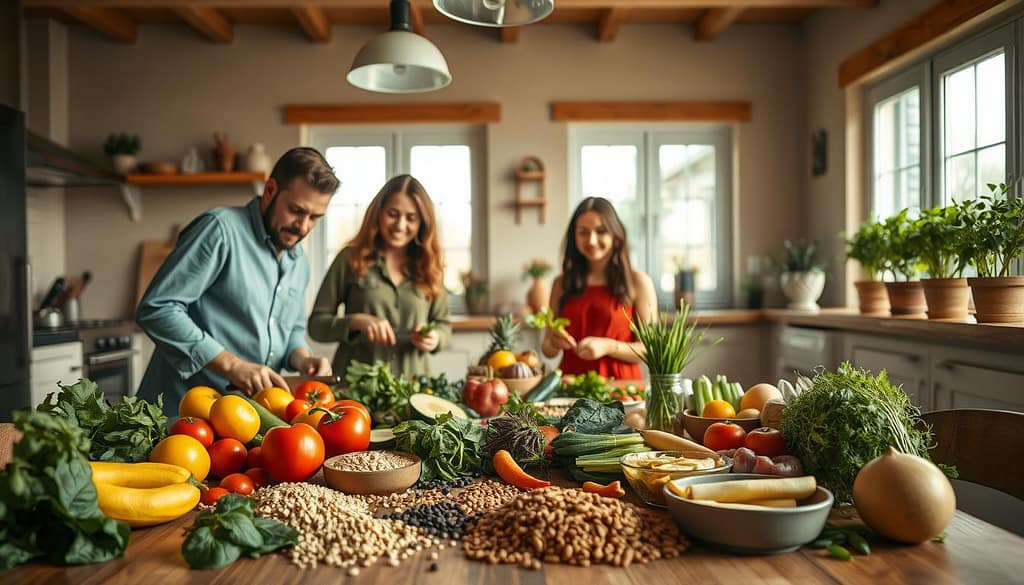
Choosing regenerative organic avocado oil isn’t just for a better sear. It’s a vote for soil that captures carbon. Opting for grass-fed tallow supports a system where animals help sequester carbon. This is where organic family meal branding becomes environmental storytelling. You’re not selling a product; you’re giving a legacy.
The trick is to make big concepts into small, positive actions. Guilt doesn’t help. Instead, focus on smart, obvious choices.
Consider this simple comparison:
| Aspect | Conventional Choice Impact | Sustainable Choice Impact |
|---|---|---|
| Water Usage | High irrigation demand, often from depleted sources. | Supports farming methods that improve soil water retention, reducing overall need. |
| Biodiversity | Monoculture fields that create silent, pesticide-treated landscapes. | Partner farms with crop rotations and hedgerows that become habitats for pollinators and wildlife. |
| Packaging | Single-use plastics that linger for centuries. | Prioritizing compostable or reusable materials, closing the loop from farm to fork to earth. |
It’s not a lecture. It’s a menu of better outcomes. Make the sustainable option feel like the smart, obvious choice. Talk about water to preserve local watersheds for your kids’ future. Discuss biodiversity to ensure bees pollinate their favorite fruits. Make waste reduction a fun family challenge.
This approach turns sustainable family nutrition into a discovery. It’s the joy of knowing your dinner supports a farmer who knows their land. It’s the empowerment of understanding every purchase helps a healthier ecosystem. That’s the core of modern organic family meal branding: weaving environmental integrity into daily meals, without the doom.
You’re not just teaching families about food miles or carbon footprints. You’re giving them a script for hope, one meal at a time. The future isn’t written by distant politicians. It’s plated up in your kitchen, tonight.
Budget Education: Helping Families Prioritize Organic Spending for Maximum Health Impact
Starting an organic lifestyle doesn’t mean cutting out all conventional food. It’s about making smart choices with your budget. For clean eating families, the goal is to get the most health benefits for your money. We’re here to guide you on how to do that.
Think of your grocery budget like a political campaign fund. You spend on what really matters, not just fancy things. Your health is the most important campaign. We’re here to help you succeed.
The key to smart organic meal planning is the Pantry Priority List. It’s like your “Organic Dirty Dozen” for your shelves. Some items are essential for your health, while others are nice but not necessary.
Your Non-Negotiable Investments (The Mattress):
- Oils & Fats: These are the building blocks of your diet. Organic, cold-pressed oils are better for your cells.
- Thin-Skinned Berries & Leafy Greens: These foods soak up pesticides. Paying more for organic is worth it to avoid toxins.
- Staple Grains & Legumes: You eat these a lot. Buying organic ensures they’re free from harmful chemicals.
Your Acceptable Compromises (The Pillows):
- Thick-Skinned & Peeled Produce: Foods like avocados and pineapples are naturally protected. Buying conventional is a budget-friendly choice.
- Frozen Vegetables for Cooking: Using frozen broccoli in soups is a smart way to save money. It’s nutritious and affordable.
This approach isn’t about feeling guilty. It’s about being clear and strategic. It makes organic living more affordable and achievable. You’re making smart choices that benefit your health.
Brands that earn your trust understand this. They help you see your spending as a tool for better health. This is real-world marketing that works.
Garden-to-Table Integration: Incorporating Family Gardening into Meal Planning
Turning a customer into an active co-creator starts in the garden, not the kitchen. Think about it. The best brand loyalty isn’t about points or discounts. It’s about getting dirt under their fingernails.
Your clean eating philosophy gets real proof in the garden. When a family grows a tomato, they know it’s organic. They see the journey from seed to salad. Your role as an organic family chef changes from service provider to guide.
Start small to avoid overwhelm. A patio herb garden is a great start. Basil, mint, rosemary, and thyme in pots are easy to care for. They teach the basics of gardening.
Next, try a few vegetables. Choose plants that are easy to grow and require little care. These plants are fast-growing and give lots of produce.
Here’s a list for beginners:
- Cherry Tomatoes: Sweet and fun to pick.
- Zucchini: Produces a lot and is easy to grow.
- Snap Peas: Sweet and fun to eat right from the garden.
- Radishes: Grow fast and are ready in a month.
- Leafy Greens (Lettuce, Kale): Provide weeks of salads from a few plants.
This process changes the customer relationship. You’re not just delivering pesticide-free family meals. You’re teaching families to grow their own food.
Take a zucchini as an example. It’s not just a vegetable. It’s a meal-prep challenge with tasty solutions. You can make zucchini noodles with pesto, grill it, or add it to muffins.
One plant can make three different pesticide-free family meals. This education is practical and empowering. It makes kids more likely to eat what they grow.
To help families start, here’s a list of beginner crops. It’s not just a list. It’s a plan to make a small plot into a constant supply of fresh ingredients.
| Crop | Time to Harvest | “Kid-Friendly” Factor | Meal-Prep Multiplier |
|---|---|---|---|
| Cherry Tomatoes | 60-70 days | High (Sweet, snackable, fun to pick) | Salads, sauces, roasting, fresh snacks |
| Zucchini / Summer Squash | 50-60 days | Medium (Large, fun to find) | Very High (Noodles, grills, bakes, breads) |
| Basil | 30-40 days for first harvest | Medium (Fun to smell and pinch) | High (Pesto, caprese, garnish, infused oils) |
| Snap Peas | 50-60 days | Very High (Sweet, edible pod, crunchy) | Medium (Snacks, stir-fries, salads) |
| Radishes | 25-30 days | High (Fast, colorful, peppery crunch) | Low (Salads, garnishes, quick pickles) |
This garden-to-table approach is your brand’s most authentic marketing. You’re teaching families to host their own farmer’s market. It creates stories, lessons, and flavors that packaged products can’t offer. For the organic family chef, this is the ultimate step: when your clients grow your philosophy themselves.
Clean Label Education: Teaching Families to Read Ingredients and Avoid Additives
Learning to read food labels is a key step in clean eating. It’s like analyzing a story in your pantry. We’re moving beyond just counting calories to understand the real story behind our food.
Today’s ingredient lists can look like a mad scientist’s lab. This is not by accident. It’s a clever design. Your job is to become a label detective. You’re not just buying food; you’re learning to read the story behind it.
Take Marianne’s, for example. They promise 100% purity in every batch. That’s a simple, one-ingredient story. It’s the highest standard. When you see “slow-rendered in small batches” from U.S. cattle, you know it’s clean.
Now, let’s look at some tricky terms. “Natural flavors” is a legal loophole. It can mean anything from a real botanical to a synthetic copy. The word “natural” sounds good, but “flavors” hides the truth.
Gums like xanthan or guar are texture stabilizers. They keep your dressing smooth and your ice cream scoopable. But for clean eating, they’re often unnecessary.
Preservatives like BHA, BHT, and sodium benzoate keep food fresh for months. But they’re chemicals that your body doesn’t need. Your fridge and fresh shopping can handle it.
“Spices” is another vague term. In clean labels, it means real spices like paprika or cumin. But in food science, it can hide additives. True transparency names every ingredient.
To fight back, use simple rules. Shorter ingredient lists are better. Can you pronounce every ingredient? Does it sound like food your ancestors would recognize? If not, put it back.
Here’s a quick guide to help you:
| Label Lingo (Red Flag) | What It Often Means | Your Clean Alternative |
|---|---|---|
| “Natural Flavors” | A proprietary blend of flavor compounds, which can be derived from both natural and processed sources. | Specific herbs, spices, or extracts listed by name (e.g., “organic rosemary extract”). |
| “Spices” | A catch-all term that may include non-herb/spice additives for color or preservation. | Individual spices clearly listed (e.g., “turmeric, black pepper”). |
| Various “Gums” (xanthan, guar) | Industrial thickeners and stabilizers used to create uniform texture and mouthfeel. | Ingredients that naturally thicken, like avocado, nut butters, or pureed vegetables. |
| Chemical Preservatives (BHA, BHT, Potassium Sorbate) | Synthetic compounds added to prevent spoilage and extend shelf life dramatically. | Natural preservation via citric acid, vinegar, salt, or simply buying fresh and using quickly. |
| “Enriched” or “Fortified” | Nutrients stripped during processing are added back in synthetic forms. | Whole foods that naturally contain those nutrients (e.g., whole wheat vs. enriched flour). |
This isn’t about being paranoid. It’s about being informed. Choosing products with simple, honest ingredients is a vote for transparency. It’s building a kitchen that reflects your values.
Start with one product you use every week. Read its label tonight. Then, find a cleaner version. This is how change happens, one informed swap at a time. Your brand can be that first, trustworthy swap. It sets the standard for a kitchen where the ingredient list tells a story you’re proud to serve.
Community Building: Connecting Organic-Focused Families Through Food Events
The true measure of an organic family chef isn’t just a great meal. It’s the conversations and connections made around the table. Your brand’s strength comes from becoming a community hub, not just a service provider. It’s about creating spaces for families to share values and experiences.
Don’t just host cooking classes. Try a backyard fermentation workshop or a “bring your own jar” pantry club. Organize volunteer days at a farm or an online supper club with seasonal recipes. These events turn you from a private chef to a community leader. A recent organic pop-up event in Manhattan showed the demand for these connections.
Building your brand online is key. Use your website and social media to connect with your community. Share stories from your events. This turns solo clean eating into a fun, shared journey.
Your work as an organic family chef is more than just cooking. You’re creating a community of families who eat well together. This is the real recipe for making a difference.