
Rising menu prices are changing how clients think about dinner out, and that creates a practical opening for personal chef value. The point is not to position a chef as a cheap replacement for restaurants. It is to show clients what they receive for the money: planning, shopping, cooking, clean handoff, and meals that fit the household. Food costs are part of the pressure. Tomato prices, for example, rose by about 40% over the past year, the highest increase among food products in the Consumer Price Index, according to The Washington Post.
For chefs, this is a marketing conversation with a finance backbone. Clients may feel the cost of a restaurant meal before they understand the cost of your service. Your job is to make the comparison fair, specific, and calm. That means explaining what is included, what can be adjusted, and where a household may save time or reduce waste without promising a result you cannot control.
Why Restaurant Costs Are Changing Client Conversations
Ingredient Prices Are Easier To Explain Than Vague Inflation
Clients know prices are higher, but broad talk about inflation can feel abstract. A chef can make the issue easier to understand by pointing to ingredient pressure in plain terms. If a staple ingredient rises sharply, restaurants, caterers, grocers, and private cooks all feel it in different ways. That does not mean every menu needs to become more expensive in the same way. It does mean a chef should be ready to explain why a tomato-heavy menu in peak demand may cost more than a menu built around grains, legumes, seasonal vegetables, or slower-cooked proteins.
This is where menu design becomes part of the sales conversation. Instead of saying, “prices went up,” describe the choices available. A client may accept a higher grocery budget for a special dinner, while a weekly client may prefer a plan that uses fewer costly ingredients and more repeatable base preparations. Both are reasonable. The chef who explains the tradeoff builds trust.
Operating Pressure Affects What Diners See
Restaurants are not only paying for food. They carry rent, labor, utilities, insurance, equipment, payment fees, and other fixed costs. The same pressure is visible outside the United States as well. In the UK, hospitality businesses have faced steep cost increases, with the average hotel seeing a 30% rise in business rates, equal to an extra £28,900 annually, and one in five hospitality businesses fearing collapse as costs surge, according to The Guardian.
A personal chef has costs too, but the structure is different. There is no dining room to fill every night, no front-of-house staff for the client to support through menu pricing, and no need to design a meal around table turns. That difference does not make private cooking inexpensive. It makes the value easier to separate into clear parts: labor, groceries, planning, service, and convenience.
Where Personal Chef Value Fits The Budget
Personal Chef Value Starts With Transparent Scope
Personal chef value starts with a scope that a client can understand before they book. A vague package creates doubt. A clear one gives the client a basis for comparison. If a weekly cook date includes menu planning, grocery shopping, preparation of several meals, labeling, storage guidance, and kitchen cleanup, say that directly. If groceries are billed separately, explain that too. If you charge for travel outside a service area, do not hide it in fine print.
Many chefs lose pricing power because they present only the cooking hours. That understates the work and encourages the client to compare your fee to a single restaurant check. A better comparison is the full dining task. Who plans the menu? Who shops? Who adapts the meal to preferences? Who cleans the prep space? Who leaves the client with something useful for tomorrow?
Compare The Full Meal, Not Just The Entrée Price
Restaurant spending can include appetizers, entrées, drinks, dessert, tax, service charges, tips, parking, delivery fees, or rides. Not every client pays all of those costs, so avoid making a sweeping claim. Instead, invite the client to compare a real night out with a real chef proposal. A family dinner, a birthday meal at home, or a weekly prepared-meal plan each has a different comparison point.
That is personal chef value in practical terms: the client can see what they are buying. For one household, the value may be a calmer weeknight. For another, it may be hosting friends without managing the kitchen. For a third, it may be reducing the number of last-minute restaurant orders. A chef does not need to promise savings every time. The stronger promise is clarity.
Marketing The Service Without Sounding Cheap
Build Offers Around Control
Price-sensitive clients often want control more than luxury language. Give them choices that protect your margin while helping them feel in charge. A chef might offer a core weekly menu with optional add-ons, a small dinner party format with a defined number of courses, or a family meal plan with a set range of servings. The client gets boundaries. The chef gets fewer surprises.
- Good: “Four dinners for a household of four, with groceries billed at cost and menu approval before shopping.”
- Better: “Choose from two menu paths: comfort meals with pantry overlap or dinner-party dishes with premium ingredients.”
- Weak: “I can make anything you want, and we will figure out the price later.”
Use personal chef value as a message about choice, not discounting. If a client has a firm budget, you can discuss ingredient swaps, simpler plating, fewer courses, or a repeatable service schedule. If the requested menu does not fit the budget, say so politely and offer a practical alternative. A chef who protects the numbers protects the business.
Speak To Occasions Clients Already Understand
Clients do not always wake up thinking they need a private cook. They think about a stressful Friday, parents visiting, a birthday dinner, a busy work month, or a week when takeout has become too frequent. Marketing works better when it names those moments.
A short service page might say: “If dining out has become expensive and unpredictable for your household, a planned cook date can give you a clear menu, known labor fee, and meals ready at home.” That sentence does not attack restaurants. It respects the client’s concern and gives them another option.
For chefs who want to strengthen the business side of that offer, the discussion of profitable revenue streams is a useful companion to pricing work. Client value and chef profit should be planned together, not treated as opposites.
Packaging Choices That Protect Your Margin
Menu Constraints Can Feel Like Service
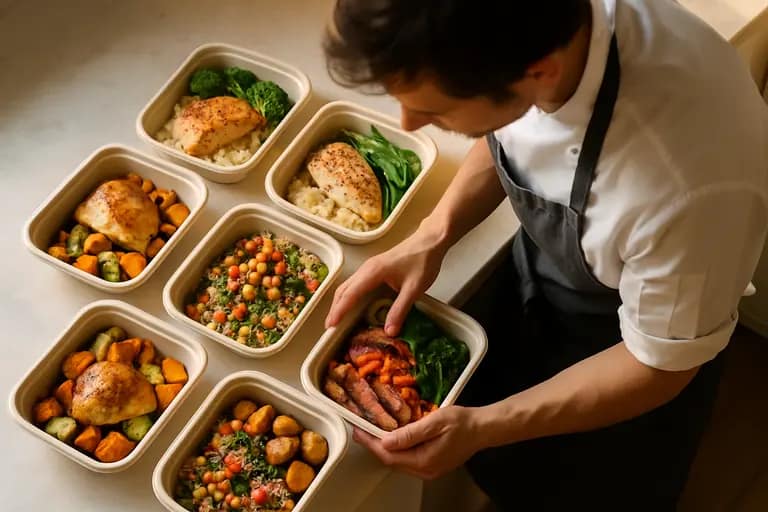
Some chefs fear that limits will make a service feel less personal. In practice, smart limits often improve the client experience. A seasonal menu board, a short list of preparation styles, or a few tested dinner-party formats can help clients decide faster. It also helps the chef shop with less waste and cook with more predictable labor time.
For example, a weekly service could include one roasted protein, one grain or pasta base, two vegetables, one sauce, and one soup or stew. That structure still leaves room for flavor changes. It also gives the chef a labor pattern that can be priced with confidence. The client sees variety, while the business avoids building every cook date from zero.
Track Waste, Rework, And Client Requests
Good marketing depends on good records. If you do not know how long a service takes, how often clients request changes, or which ingredients are commonly left unused, pricing becomes guesswork. Track the planned hours against actual hours. Track grocery ranges by service type. Track which menus lead to repeat bookings.
This data does not need to be fancy. A simple spreadsheet can show whether a “simple family dinner” package is quietly taking the same time as a special-event meal. It can also show which clients need a revised scope. Chefs who want repeat business may find it useful to pair pricing clarity with stronger client communication, as covered in this article on lasting client relationships.
Restaurants also offer lessons for personal chefs. A chef can study how a dining room presents occasion, comfort, and hospitality without copying the restaurant model. For insights into similar dining styles and hospitality options, check out De Novo Montclair.
Personal Chef Value In A Price-Sensitive Market
Make The Next Step Simple
Personal chef value becomes easier to sell when the first step is low-friction. A short inquiry form can ask for household size, desired service, dietary preferences, target date, and budget range. A follow-up email can explain what is realistic at that level before either side invests too much time. This protects the chef and respects the client.
A helpful proposal should show the service fee, grocery treatment, expected menu style, number of meals or courses, timing, and what is not included. If a client wants a lower price, respond with options rather than apology: fewer dishes, shared ingredients, a simpler service format, or a different date with easier shopping. That keeps the conversation professional.
Rising restaurant costs do not guarantee that every household will hire a chef. They do make many clients more aware of what a meal truly costs. A personal chef who explains price, controls scope, and presents service in clear everyday language can meet that moment with confidence. The goal is not to win on price alone. The goal is to show what the client receives, why it costs what it costs, and how the service can fit the way they actually eat.